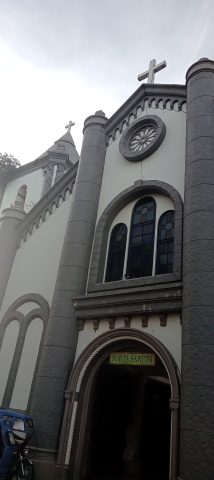
Perched on a gentle hill in the quiet town of Tumauini, the Church of Saint Matthias feels like a place where time has softened its pace. Built in the late 1700s, it stands apart from the more austere Spanish colonial churches scattered across the Philippines. There’s a lightness to its design, an almost playful intricacy that makes it seem less like a fortress of faith and more like a delicate piece of craftsmanship. The church doesn’t dominate its surroundings with heavy stone or rigid lines; instead, it blends into the landscape as if it grew there naturally, shaped by the hands of those who built it and the land that inspired them.
The story of Saint Matthias is woven into the broader history of Spanish rule in the Philippines, a time when missionaries erected churches in even the smallest settlements to mark their presence. Tumauini was little more than a cluster of homes in Isabela province when the Dominicans arrived, and the church became both a spiritual anchor and a symbol of colonial authority. What makes it unusual is how local influences crept into its design. The facade, in particular, reveals a dialogue between European styles and Filipino craftsmanship, where stone carvings echo the patterns of nature—vines, leaves, and flowing water—rather than the strict geometries of European cathedrals.
The church’s most striking feature is its facade, a confection of Baroque and Rococo elements that feels almost weightless despite being carved from volcanic tuff. Intricate scrolls, floral motifs, and saints’ figures emerge from the stone, their details so fine they seem to ripple in the sunlight. The entrance is framed by columns that appear to support the airy pediment above, while a small dome crowns the structure, hinting at Eastern influences. It’s as if the builders took the lush landscapes of Luzon—the curves of rivers, the density of forests—and translated them into stone. The result is a facade that feels alive, as though the carvings might sway in the breeze.
Inside, the church is quieter but no less expressive. The walls bear faded frescoes, their colors muted by time, while the altar retains its Baroque grandeur. The wooden pews, darkened by decades of use, line the nave, and the ceiling is a canvas of biblical scenes rendered in a folk-art style. Unlike the precise, symbolic paintings of European churches, these images feel personal, almost improvisational. A local artist, working with limited materials and training, reinterpreted sacred stories through a Filipino lens. Some of the paintings have worn away, but what remains offers a glimpse into how the church once looked—vibrant, intimate, and deeply connected to the community.
Saint Matthias has endured its share of hardships. Earthquakes in the 19th century damaged its structure, and World War II left scars that are still visible in places. Yet each time, the church was repaired, not modernized or altered, but restored to its original form. This dedication speaks to how deeply it’s embedded in the town’s identity. Today, it’s both an active place of worship and a historical monument, a reminder of the Philippines’ layered past. In 2006, it was added to UNESCO’s tentative list of World Heritage Sites, a recognition of its cultural significance and the way it embodies the fusion of Spanish and Filipino traditions.
Visiting the church is as much about the journey as the destination. Tumauini sits off the well-trodden tourist paths, a place where life moves at its own rhythm. The church overlooks rice fields that stretch toward the Sierra Madre mountains, their peaks hazy in the distance. There’s no grand entrance or tourist infrastructure here—just a quiet road leading to the hill where the church stands. The locals treat it with reverence, but not as something set apart from their daily lives. It’s where they gather for Mass, where weddings and baptisms are celebrated, where the cycle of life unfolds under its vaulted ceilings.
On weekends, the church comes alive in a way that feels both ordinary and extraordinary. Families arrive in their best clothes, the women often wearing traditional *terno* dresses with butterfly sleeves, their fabrics bright against the stone. After services, the square in front of the church transforms into a small market. Vendors sell fresh mangoes, sticky rice cakes wrapped in banana leaves, and *bibingka*—a coconut milk rice cake baked in clay pots over charcoal. The scent of food mingles with the sound of laughter and conversation, and for a moment, the church feels less like a relic and more like the heart of the town.
For those curious about Philippine history, Saint Matthias offers a rare window into the colonial era. It’s a place where Spanish architecture absorbed local sensibilities, where European religious art was reimagined through Filipino eyes. There’s no pomp or grandeur here, just a quiet authenticity that makes it all the more compelling. The church doesn’t demand attention; it invites you to slow down, to notice the details—the way the light filters through the windows, the texture of the stone, the stories etched into every corner. It’s a reminder that history isn’t just about grand narratives, but about the people who lived, prayed, and built something enduring in a small town on the edge of the mountains.