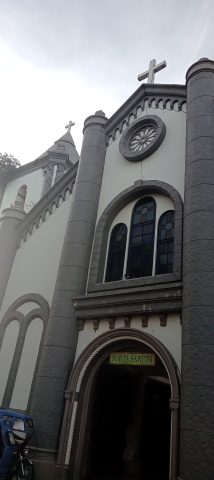
Tumauini Church, dedicated to Saint Peter, stands quietly on a gentle hill in the northern reaches of Luzon, far from the well-trodden paths of Philippine tourism. Built in the late 18th century, it overlooks a landscape of rice paddies and low-slung houses with terracotta roofs, a scene that has changed little over the centuries. Unlike the grand cathedrals of Manila or the crowded pilgrimage sites of Cebu, this church exists in a world apart, where the pace of life slows and the weight of history lingers in the air.
The architecture of Tumauini Church is striking for its departure from the typical Spanish colonial style found elsewhere in the Philippines. Instead of the usual heavy stone walls and austere lines, the church’s facade is adorned with intricate stucco work that resembles delicate lace. Swirling patterns, floral motifs, and cherubic figures seem to dance across the surface, giving the building an almost ethereal quality. The most distinctive feature is its octagonal bell tower, crowned with a dome, which lends the structure a sense of lightness and grace. Inside, the church feels spacious and airy, with high vaulted ceilings and whitewashed walls that create an atmosphere of serene simplicity.
Construction began in 1783 under the guidance of Dominican friars, who sought to strengthen Catholic influence in the region. Local Ilocano laborers played a crucial role in building the church, using materials sourced from the surrounding area—coral stone, brick, and timber. Remarkably, the church has withstood numerous earthquakes that have shaken Luzon over the centuries, remaining largely intact. Some suggest that its resilience lies in the unique construction techniques of the time, where lime mortar was mixed with sap from local plants to give the structure added flexibility.
For the people of Tumauini, the church has always been more than just a place of worship. During the Spanish colonial period, it served as the heart of community life, where decrees were announced, gatherings were held, and festivals were celebrated with processions and markets. Even today, the church remains a vital part of local identity. On Sundays, worshippers from nearby villages fill the pews, and during religious festivals, the street in front of the church transforms into a lively square, bustling with vendors selling sweets, flowers, and traditional dishes.
The interior of the church is modest but meaningful. The main altar is dedicated to Saint Peter, the patron saint of fishermen, a fitting tribute in a region where many families depend on the sea. The wooden carvings of saints, some dating back to colonial times, are remarkable for their craftsmanship. Among them, a statue of the Virgin Mary holding the infant Jesus holds special significance for locals, who believe it to be miraculous. According to legend, during a 19th-century raid by Muslim pirates, the statue is said to have wept, frightening the invaders into retreat.
Despite its historical importance, Tumauini Church rarely appears on tourist itineraries. There are no crowds, no souvenir stalls, and no guides hustling for attention. Those who make the journey here are often drawn not by the promise of Instagram-worthy photos but by the chance to experience something authentic. A small park surrounds the church, shaded by ancient trees, where visitors can sit on benches and watch children playing in the shadow of the bell tower. From the hill behind the church, the view stretches across green valleys to the distant Sierra Madre mountains, a natural barrier that seems to shield this corner of Luzon from the rush of the modern world.
Over the years, the church has undergone several restorations, with efforts made to preserve its original character. However, not all changes have been seamless. In the mid-20th century, a small modern chapel was added to the structure, its stark lines clashing slightly with the historic architecture. Yet even this minor disruption does little to diminish the church’s overall charm. Tumauini remains a living monument to an era when the Philippines was part of the Spanish Empire, and Catholicism was taking root in the local culture.
For those with an interest in Philippine history, Tumauini offers a quiet revelation. There are no museums or informational plaques here, but the church itself tells its story more eloquently than any exhibit could. Every stone, every crack in the walls carries the memory of the people who built, prayed, and lived within these walls over generations. As the sun sets and the bell tower casts long shadows across the square, time seems to stand still, offering a glimpse into what life might have been like two or three centuries ago.