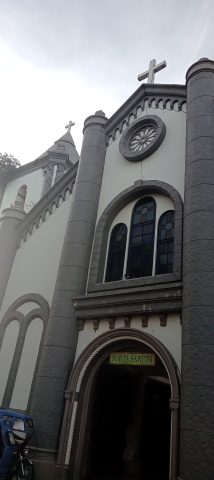
Tumauini is one of those quiet places in the Philippines that most travelers overlook, tucked away in the northern reaches of Luzon. There are no crowded beaches or bustling markets here, just the kind of slow, unassuming charm that comes with a town that has seen centuries pass without much fanfare. At its heart stands the Church of Saint Matthias, a building that has witnessed the ebb and flow of history since the late 1700s, when the Philippines was still under Spanish rule. Today, it serves as a museum, but it’s not the kind of place where artifacts are locked behind glass—the entire structure is a living record of the past, its walls made of local stone and brick telling stories of faith, craftsmanship, and the resilience of a community far from the colonial center.
What makes this church stand out is its architecture, which defies the usual expectations of Philippine colonial churches. Most were built with a certain austerity, their lines clean and symmetrical, but Saint Matthias is different. Its facade is a riot of baroque details, with intricate patterns that seem to twist and turn like vines climbing toward the sky. The columns are wrapped in carved grapevines, and the niches hold statues of saints so finely crafted they almost feel alive. Inside, the grandeur is more subdued, but traces of its former splendor remain: faded frescoes on the ceiling, wooden panels with delicate carvings, and religious relics that have survived the test of time.
The church was built during a period when Spanish missionaries were expanding their influence across northern Luzon. The local Ilocano people, while adopting Christianity, held onto their own traditions, and the church became more than just a place of worship. It was a gathering spot where disputes were settled, deals were made, and people sought refuge during hard times. Over the years, earthquakes tested its strength, but each time, the community rebuilt it, often adding new details that made the structure even more distinctive. The result is a building that feels layered with history, each restoration leaving its mark.
Now a museum, the church still feels alive with the past. The former nave displays everyday objects from the colonial era—old coins, pottery, farming tools—while the altar area preserves elements of its religious heritage, including wooden statues and icons darkened by age. One of the most compelling sections features photographs and documents that chronicle the town’s history, including its role during World War II, when Tumauini found itself on the front lines. The exhibits don’t just show artifacts; they tell the story of a place that has endured, adapted, and carried on.
Visiting the museum is as much about soaking in the atmosphere of Tumauini as it is about learning its history. The town moves at its own unhurried pace, and it’s easy to imagine how, on Sundays, the square in front of the church would fill with people chatting, sharing news, or simply enjoying the day. That square is still the heart of the town, surrounded by old wooden houses with balconies where laundry dries in the sun. In the mornings, vendors sell fresh produce, and if you’re lucky, you might stumble upon a local festival, where the streets come alive with music, dance, and the scent of traditional food.
What makes this place special is its authenticity. There are no crowds, no guided tours rushing you along—just the quiet invitation to explore at your own pace. You can take your time noticing the small details: the cracks in the walls from past earthquakes, the subtle signs of restoration where new work was blended into the old, or the Latin inscriptions carved into the stone. Every corner of the building holds a piece of the story, one that isn’t just about the past but about the people who have kept it alive.
Tumauini and its church are a reminder of how many places in the Philippines exist outside the usual tourist trail. There’s no luxury here, no flashy attractions—just a quiet, enduring presence that offers a glimpse into a way of life that has remained largely unchanged. Visiting this museum isn’t just about seeing history; it’s about stepping into it, feeling the weight of the years in the worn stone and hearing the echoes of the past in the stillness of the old church. It’s the kind of place that lingers in your memory long after you’ve left.