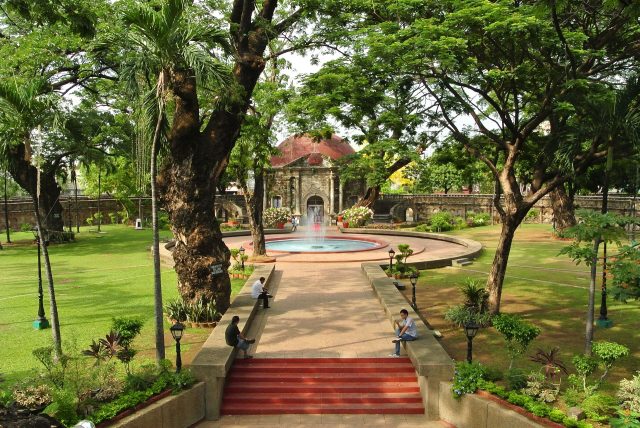
Paco Park is one of those quiet corners of Manila where history lingers in the air, not as something distant or forgotten, but as a living presence. Tucked away in the Paco district, it began as a cemetery in the late 19th century, when the city was expanding under Spanish rule and burial grounds were moved beyond the old walls. Over time, it evolved into something more than a resting place for the dead—it became a space where the past and present coexist, where the weight of history feels tangible without being overwhelming.
The park’s origins are tied to a pivotal moment in Philippine history. When the Spanish colonial administration decided to relocate cemeteries outside the city limits, Paco was one of the first areas chosen. The graves here tell stories of revolutionaries, writers, and ordinary citizens whose lives were shaped by the country’s turbulent journey toward independence. Some of the most prominent figures of the era are buried here, their names etched into weathered stone alongside those of families who lived through wars, uprisings, and the slow, uneven march of progress. Walking among the tombs, you sense the layers of time—each generation leaving its mark in the form of a name, a date, or a simple inscription worn smooth by decades of rain and sun.
The architecture of Paco Park reflects the cultural shifts that have defined Manila. The oldest graves bear the hallmarks of Spanish colonial design: heavy stone crosses, arched mausoleums, and wrought-iron gates adorned with religious motifs. Over the years, American and Filipino influences crept in, visible in the more modern tombs and the occasional Art Deco flourish. Some family vaults resemble miniature temples, their facades still striking despite the creeping vines and peeling paint. Others are modest, almost forgotten, their stories fading along with the inscriptions. The park’s beauty lies in its imperfections—the way time has softened the edges of marble, the way roots have cracked through pathways, the way sunlight filters through the leaves of ancient trees, casting shifting patterns on the ground.
One of the most solemn sections of the park is the World War II memorial, a simple obelisk surrounded by an eternal flame. The Philippines suffered greatly during the Japanese occupation, and many who perished in those years found their final resting place here. For locals, the memorial is more than a monument; it’s a place of personal connection. Families still gather on anniversaries to honor those who were lost, their voices quiet but steady as they lay flowers at the base of the obelisk. The war may have ended decades ago, but its echoes remain in the stories passed down through generations, in the names on the headstones, in the way the past refuses to stay buried.
Yet Paco Park is far from a gloomy place. On any given day, you might see children playing near the old walls, their laughter mingling with the rustle of leaves. Students sit on benches with books or sketchpads, drawing inspiration from the crumbling beauty around them. Elderly men and women chat under the shade of trees, watching the world go by at a slower pace. On weekends, photographers wander the paths, searching for the perfect shot among the moss-covered graves, while musicians practice in quiet corners, their notes drifting through the air. There’s a sense of life here, not in spite of the park’s purpose, but because of it—a reminder that memory and daily existence aren’t separate, but intertwined.
The park has also become an open-air museum of sorts, where art and history intersect in unexpected ways. Some tombs are works of craftsmanship in their own right, adorned with intricate carvings of angels, biblical scenes, or even portraits of the deceased. One family mausoleum features bas-reliefs depicting moments from the lives of those buried inside, as if their stories were meant to be seen, not just remembered. The details vary—some graves are grand, others unassuming—but each holds a piece of the past, waiting to be noticed by those who take the time to look.
Over the years, Paco Park has woven itself into the fabric of local folklore. Stories of ghostly encounters are common, especially at dusk, when the light fades and the shadows stretch long across the paths. Locals whisper about figures seen out of the corner of the eye, about the faint sound of footsteps when no one is there. Whether these tales are true or not, they add to the park’s mystique, giving it an atmosphere that’s equal parts eerie and peaceful. For some, it’s a place of quiet reflection; for others, a sanctuary from the noise of the city, where the only sounds are the wind in the trees and the occasional birdcall.
Unlike the meticulously maintained cemeteries of Europe or North America, Paco Park has a raw, organic quality. Nature has reclaimed parts of it—roots crack the pavement, vines climb the walls, and birds nest in the branches of towering acacias. The paths are uneven, the grass untrimmed in places, and yet there’s a strange comfort in that. In a city where so much is polished and controlled, the park feels alive in a different way, as if the land itself is breathing. It’s not a place for grand gestures or dramatic displays, but for small, quiet moments—sitting on a bench, tracing a name with your fingers, listening to the hum of the city in the distance.
If you find yourself in Manila, Paco Park is worth a visit, not because it’s grand or spectacular, but because it offers something rare: a chance to step outside the rush of modern life and simply be. There are no crowds here, no souvenir stands, no guided tours urging you to hurry along. Just the weight of history pressing gently against your shoulders, the scent of damp earth and flowers, and the quiet understanding that some places aren’t meant to be admired from afar—they’re meant to be felt.