The Honoured Dead Memorial in Kimberley is one of those quiet places where history feels tangible, not just something read in books. It stands as a reminder of the Siege of Kimberley, a four-month ordeal during the Anglo-Boer War when the city found itself at the heart of a brutal conflict. Though the Boers never breached its defenses, the siege left deep scars—on the landscape, the people, and the collective memory of the place. The memorial doesn’t glorify war; it simply marks the lives lost, a silent acknowledgment of the cost of endurance.
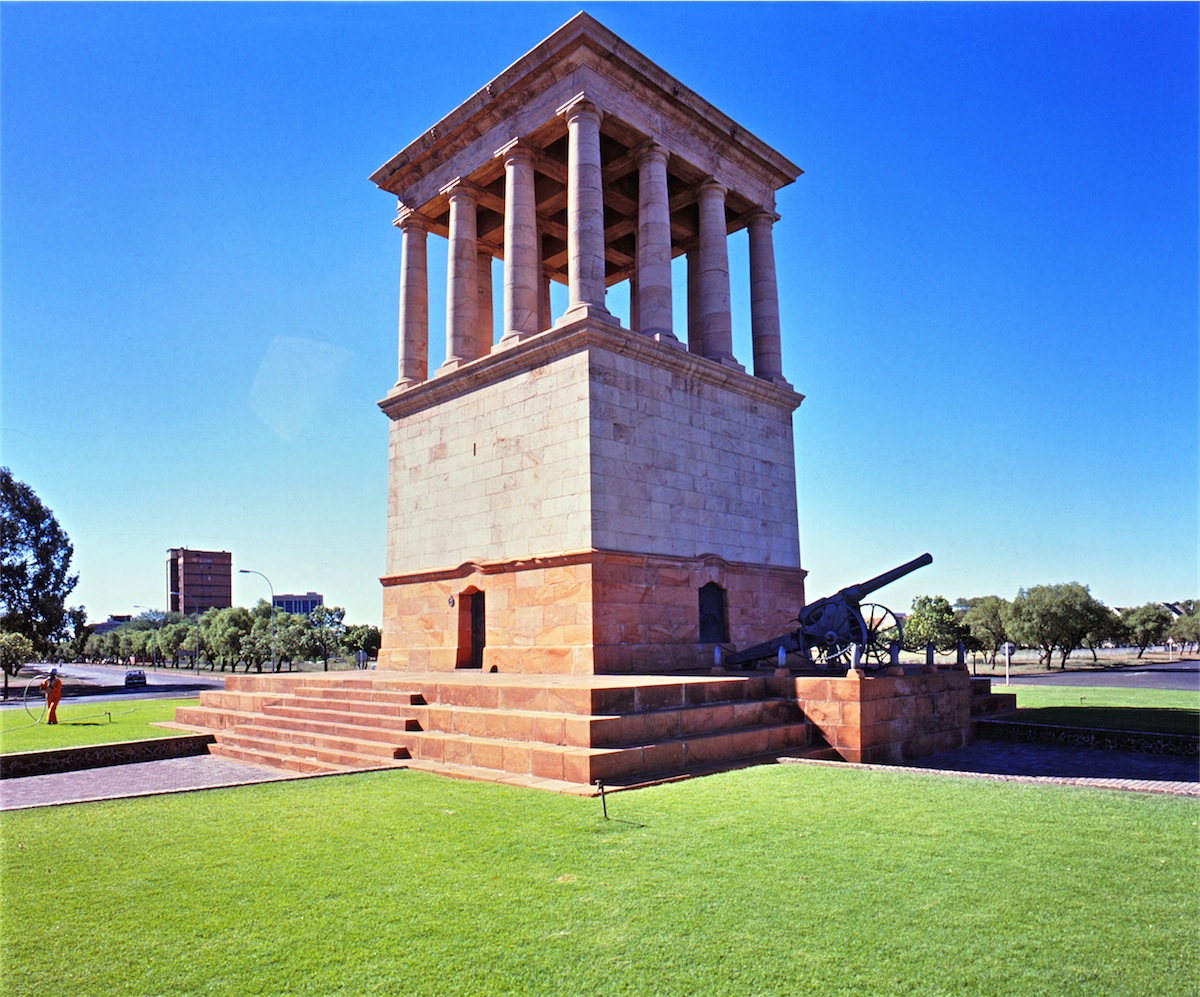
The design of the memorial is understated but deliberate. A simple obelisk, carved from local stone, rises from a small, well-kept garden, its base surrounded by a low fence. At its peak, a bronze angel holds a palm branch, a symbol often associated with peace, though here it feels more like a quiet lament. The figure doesn’t soar or command attention; it stands in stillness, as if pausing to reflect. The names of the fallen are inscribed on plaques at the base, a stark reminder that behind every conflict are individuals whose stories were cut short. There’s no grandeur here, no attempt to overwhelm—just a place to stop and think.
Kimberley in the late 19th century was a city transformed by fortune and friction. The discovery of diamonds turned it from a dusty outpost into a boomtown, drawing prospectors, speculators, and settlers from across the world. But wealth brought tension. The struggle for control over the mines, the clash between British colonial ambitions and Boer independence—these forces collided in Kimberley, making it a flashpoint in a war that would reshape South Africa. The siege was one of the defining moments of that conflict, and the memorial is a small but significant marker of its legacy.
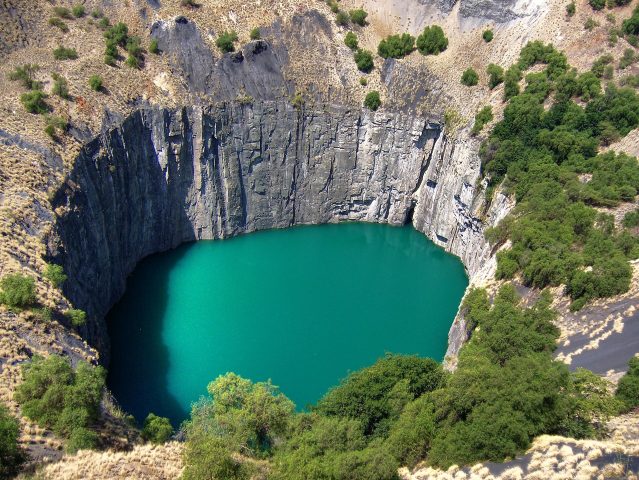
Today, the memorial sits in the heart of Kimberley, not far from the Big Hole and the diamond museum, though it draws far fewer visitors. Those who do stop often linger, reading the names on the plaques or simply sitting on one of the benches in the surrounding garden. The city moves around it—people hurrying to work, children playing, the hum of daily life—but the memorial remains a quiet counterpoint, a place where the past isn’t just remembered but felt. It’s not a tourist attraction in the usual sense; it’s more like a pause in the rhythm of the city, an invitation to step out of the present for a moment.
What makes the memorial striking is its lack of judgment. It doesn’t take sides or assign blame. There’s no triumphalism, no political statement—just the names of those who died, a reminder that war, no matter the cause, leaves behind the same human cost. In that sense, it’s universal. It doesn’t matter whether you’re British, Boer, or neither; the memorial speaks to the shared experience of loss. That simplicity is its strength. It doesn’t need to explain or justify—it just asks you to remember.
Visiting the Honoured Dead Memorial isn’t about ticking off a sightseeing box. There’s no guided tour, no audio commentary, no gift shop. It’s a place for quiet reflection, a chance to connect with a piece of history that’s often overshadowed by Kimberley’s diamond legacy. The city itself is full of stories—of fortune seekers, of battles, of resilience—and this memorial is one of them. You don’t need to be a history buff to appreciate it. Just standing there, reading the names, is enough to make you wonder about the lives behind them, about the city as it was over a century ago, about the echoes of the past that still linger in the present.
Time has a way of smoothing over the rough edges of history, but some things endure. The memorial is one of them. It’s not the most famous landmark in Kimberley, nor the most visited, but for those who take the time to seek it out, it offers something rare: a direct, unfiltered connection to the past. It doesn’t demand your attention; it earns it. And in a world where history is often reduced to soundbites or forgotten entirely, that’s no small thing.
Kimberley today is a city that has moved on, but it hasn’t turned its back on its past. The Honoured Dead Memorial is a small but important part of that continuity. It reminds us that history isn’t just something that happened—it’s something that lives on in the places where it unfolded. If you find yourself in Kimberley, it’s worth a visit. Not because it’s grand or spectacular, but because it’s real. And sometimes, that’s enough.