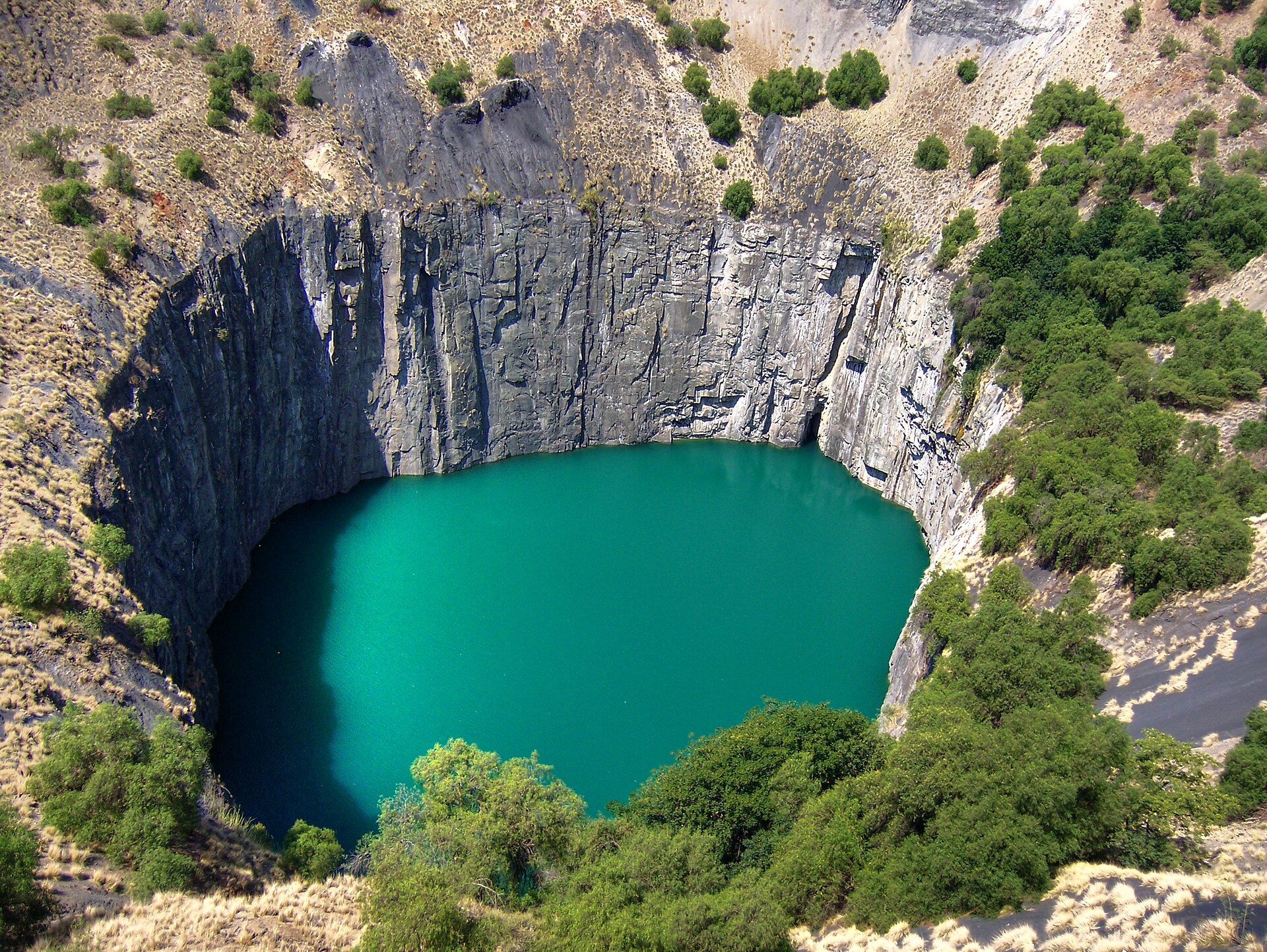
The Big Hole in Kimberley isn’t just an enormous pit in the ground—it’s one of those rare places where geology, history, and human ambition collide in a way that feels almost surreal. What was once an unremarkable patch of farmland is now a gaping crater over two hundred meters deep, a scar left by the diamond rush that reshaped an entire region. From above, it looks like the earth itself was torn open, and in a way, it was. This is where Kimberley’s fortune was made, where thousands of lives were upended, and where the modern diamond industry was born.
The story begins in 1871, when the first diamond was discovered on the De Beers brothers’ farm. Word spread fast, and within months, the area was overrun with prospectors—dreamers, gamblers, and desperate men all chasing the same impossible fortune. The town of Kimberley sprang up almost overnight, and the hole grew with it. What started as a shallow excavation quickly became a monstrous open mine, dug entirely by hand with picks and shovels. Over the next few decades, more than three tons of diamonds were pulled from the earth here. The scale of it is hard to grasp, even now. The work was brutal, the conditions appalling, and the human cost staggering.
This wasn’t just mining—it was a gold rush on steroids, a frenzy that consumed everything in its path. The Big Hole stands as a monument to an era when diamonds were worth more than human life. Workers, mostly Black laborers from across southern Africa, toiled in unbearable heat and dust, with little regard for safety. Many died from accidents, disease, or sheer exhaustion. Meanwhile, the mine owners—most notably the De Beers company—amassed vast fortunes. The hole is inseparable from South Africa’s colonial past, a stark reminder of how wealth was extracted at the expense of those who did the digging.
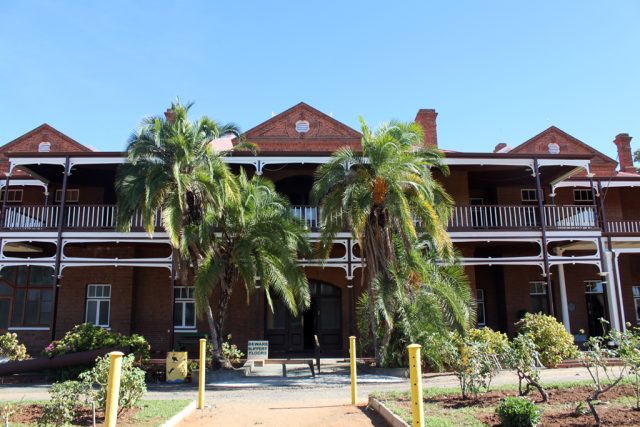
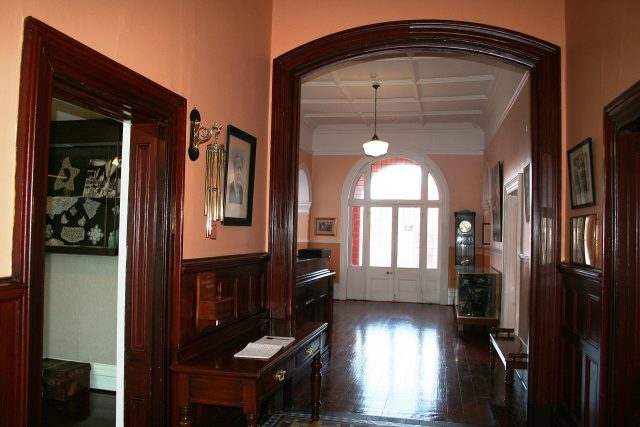
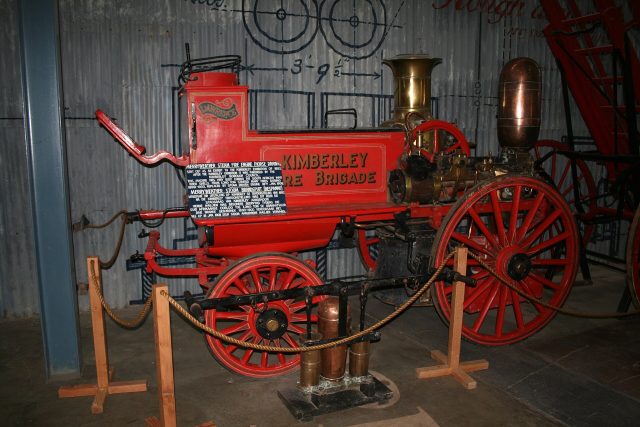
Today, the Big Hole is part of a museum complex that preserves not just the crater itself but the atmosphere of the diamond rush. The site includes restored miner’s barracks, old equipment, photographs, and documents that paint a vivid picture of life in Kimberley during its boom years. One of the most striking experiences is descending to the viewing platform, where you can look down into the water-filled depths of the hole. The still, dark surface gives it an eerie quality, as if the pit is holding onto secrets from another time.
Next to the hole, a reconstructed 19th-century mining town offers a glimpse into the past. The streets are lined with wooden buildings, period storefronts, and even a pub that looks like it hasn’t changed since the 1880s. Walking through it, you can almost hear the clatter of wagons and the shouts of prospectors, feel the mix of hope and desperation that defined the era. It’s a carefully curated snapshot of history, but it works—you get a sense of the madness that gripped people when they realized what lay beneath their feet.
The Big Hole isn’t just about diamonds; it’s the reason Kimberley exists at all. The city was built on the back of the rush, thriving for decades before the diamonds began to run out. When the mines closed, Kimberley faded, but the hole remained as a testament to its former glory. Today, the city is quiet, a far cry from its chaotic heyday, but the Big Hole keeps its story alive. It’s a place where you can see firsthand how a single discovery could alter the fate of a region.
There are other diamond mines in the world, but none quite like this. The sheer scale of the Big Hole, the speed at which it was dug, and the intensity of the rush make it unique. Other mines might have produced more diamonds, but none have the same raw, almost mythic quality. This was where fortunes were made and lost in a matter of months, where men risked everything for a chance at wealth, and where the modern diamond trade was forged in sweat and blood.
Visitors to the Big Hole aren’t just tourists—they’re witnesses to a chapter of history that shaped South Africa’s economy and identity. The site isn’t just a curiosity; it’s a lesson in how greed can reshape landscapes and lives. There are plenty of stories about the hole—some say diamonds are still buried in its depths, others claim you can hear the echoes of miners who died in cave-ins. Whether those tales are true or not, the place has a weight to it, a sense of history that lingers in the air.
If you find yourself in Kimberley, the Big Hole is worth a few hours of your time. This isn’t a place for a quick photo op. To really understand it, you need to listen to the guides, examine the exhibits, and try to imagine what it was like to stand on the edge of that abyss, hoping for a stroke of luck. The Big Hole isn’t just a hole in the ground—it’s a symbol of an era that changed South Africa forever, a reminder of how quickly the world can shift when people catch the scent of fortune.