The Murambi Genocide Memorial sits quietly among the rolling green hills of southern Rwanda, not far from the town of Gikongoro. It was once a technical school, built in the late 1980s to train young people in agricultural skills—a place of hope and progress for the region. But in April 1994, during the hundred days of genocide that tore through Rwanda, this school became something else entirely. Thousands of Tutsi sought refuge here, believing the promises of local authorities that they would be safe. Instead, on April 16, militias stormed the grounds. Over the course of a few days, more than forty thousand people were killed within these walls. The bodies remained where they fell until years later, when the decision was made to transform the site into a memorial.
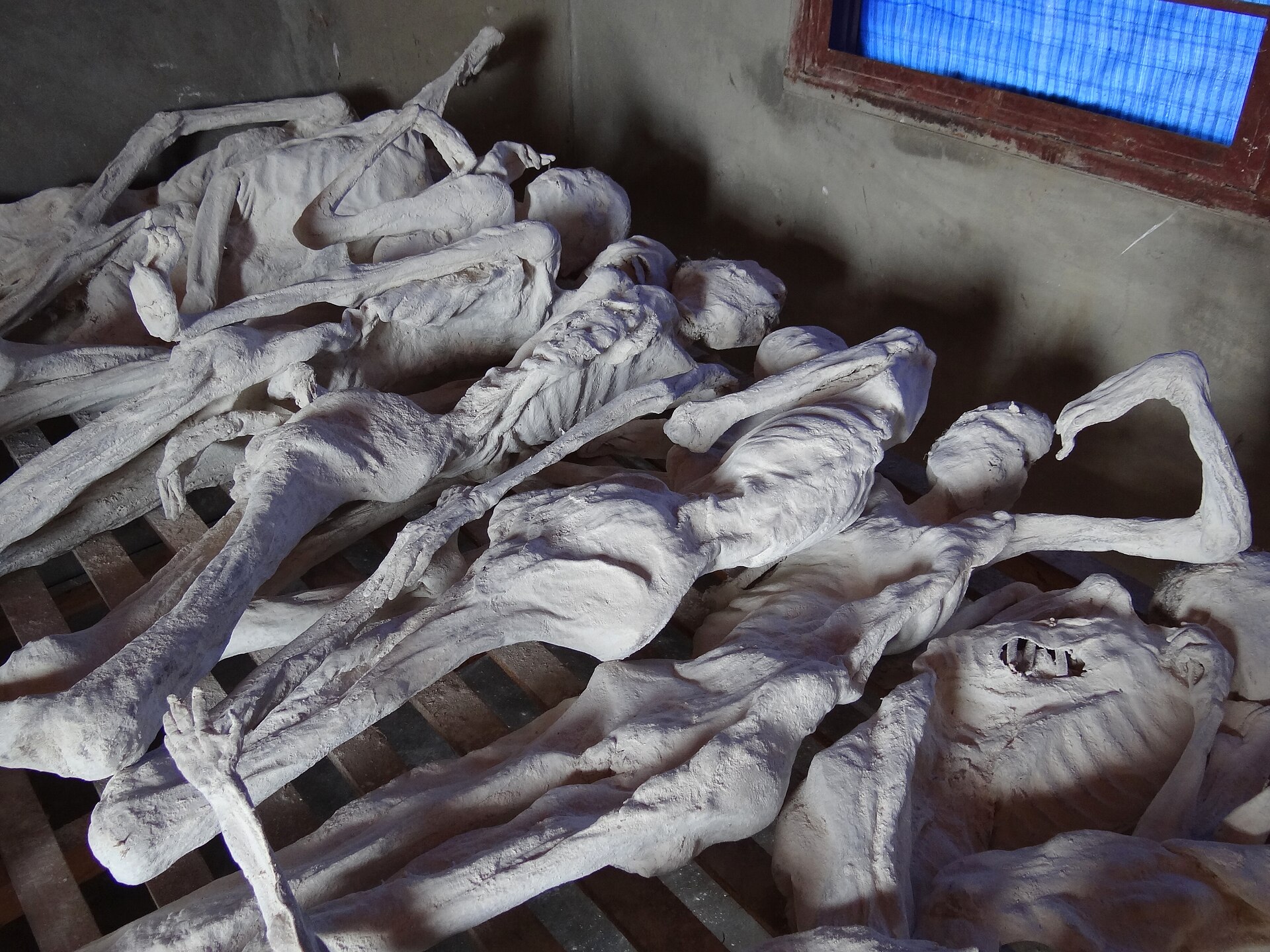
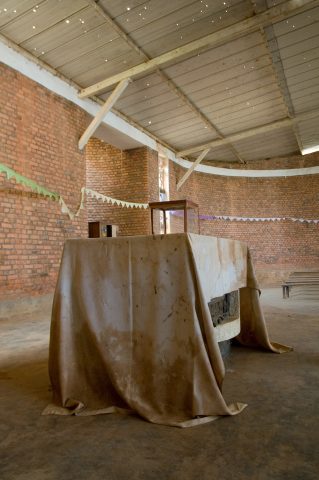
Today, the school buildings stand much as they did in 1994, their classrooms left almost untouched. The walls still bear the marks of bullets, and scattered across the floors are the belongings of those who died—shirts, shoes, identity cards, the small, personal things that were left behind. In a separate pavilion, the remains of victims are preserved in lime, a stark and unflinching display meant to convey the scale of what happened. Outside, a mass grave holds the remains of thousands more, recovered from the surrounding area. There are no grand monuments here, no sweeping narratives etched in stone. The memorial lets the place speak for itself, its silence heavy with meaning.
Visiting Murambi is not like visiting a museum. There are no neatly labeled exhibits or carefully curated displays. Instead, the weight of history presses in from all sides—the scent of earth, the sound of wind through the empty corridors, the way the light falls across the chalky remains. For many Rwandans, this is a place of mourning, a site where they come to honor family members lost during the genocide. For others, it is a place of education, a way to understand how such violence could unfold in the late 20th century. The memorial does not offer easy answers. It simply presents the facts, leaving visitors to grapple with what they see.
Murambi is one of six major genocide memorials in Rwanda, but it stands apart in its rawness. Unlike other sites, where remains are buried out of sight, here they are openly displayed. This choice has sparked debate. Some argue that it is necessary to confront the reality of the genocide in its most visceral form, while others believe it is too harsh, too painful for survivors and their families. Yet for many Rwandans, Murambi remains an essential place of remembrance, a space where the past is not hidden away but acknowledged in all its brutality.
The memorial is also tied to Rwanda’s long and difficult process of reconciliation. After the genocide, the country faced the enormous task of rebuilding not just its infrastructure, but its social fabric. Murambi became part of that effort. Today, it hosts educational programs for students, discussions with survivors, and events that encourage dialogue about the past. For some, visiting the memorial is a step toward healing, a way to confront what happened and begin to move forward. It is not an easy place, but it is an important one, a reminder that recovery is possible even after unimaginable loss.
The architecture of Murambi is deliberately understated. There are no grand statues or elaborate designs, just the simple, functional buildings of the former school. The focus is on the site itself, on the stories it holds. The surrounding landscape—lush hills, quiet fields—only deepens the contrast between the beauty of the land and the horror that unfolded here. That tension is part of what makes Murambi so powerful. It is a place where the past and present exist side by side, where the natural world’s tranquility is constantly at odds with the weight of history.
For those who travel to Rwanda, a visit to Murambi can be a profound experience. It is not a tourist attraction in the usual sense, not a place for snapshots or selfies. There are no guided tours with scripted narratives, no gift shops or cafes. Instead, there is only the space itself, the silence, and the opportunity to reflect on what it means to be human. Many who come here leave with a sense that they have witnessed something far greater than a historical site. They leave with questions, with a deeper understanding of how fragile peace can be.
Murambi is a reminder that the past does not simply fade away. It lingers in the earth, in the memories of those who survived, in the stories passed down through generations. This is not a place for the faint of heart, but for those willing to face history head-on. In Rwanda, it is often said that you cannot truly understand the country without knowing its past. The Murambi Genocide Memorial is one of the places where that past is laid bare, where the weight of what happened is impossible to ignore. It is a place of memory, of mourning, and, ultimately, of truth.