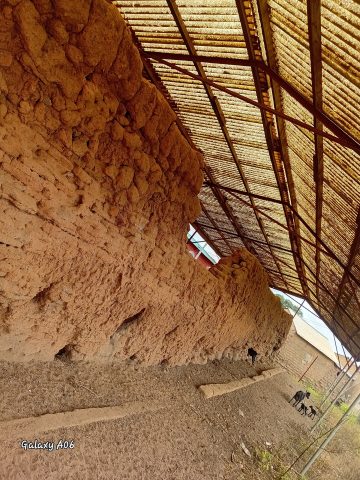
The Wa Mosque sits quietly in the heart of the town, its earthen walls blending into the low-slung buildings and dusty streets where life moves at an unhurried pace. Unlike grand mosques built for spectacle, this one emerged from necessity and faith, and that simplicity gives it a quiet power. It doesn’t demand attention, but those who take the time to notice find something enduring in its presence.
The architecture is unassuming yet striking in its own way. Built from clay and wood, like most structures in the region, the mosque’s design goes beyond mere function. Thick walls reinforced with buttresses, narrow windows that let in just enough light, and a flat roof all contribute to a sense of solidity and shelter. There’s no attempt at grandeur—no towering minarets or ornate facades—but in its restraint, the building feels deeply rooted, as if it has always been part of the landscape.
The mosque’s history is woven into the story of the Wala people, who have lived in this area for centuries. Islam arrived in Wa as early as the 17th century, carried by traders and scholars moving through West Africa. The current structure dates to the early 1900s, though its design echoes older Sahelian styles found across Mali, Burkina Faso, and Niger. What makes Wa’s mosque distinct are the small, local touches—the way the clay is worked, the subtle patterns on the walls, the way the building settles into its surroundings. It’s a place shaped by the hands of those who built it, not by architects seeking to impress.
Inside, the mosque is just as understated as it is outside. The space is divided into prayer halls, with separate areas for men and women, though the latter often gather in side rooms or galleries. The floors are covered with woven mats, and the walls are bare, free of the gilding or mosaics found in other mosques. The focus here is on prayer itself—the quiet, the stillness, the way the cool interior offers respite from the heat. During the rainy season, the thick clay walls keep the space dry, a practical detail that also adds to the sense of refuge.
Beyond its religious role, the mosque is a vital part of community life. The area around it buzzes with activity—vendors selling fruit and fabric, children playing in the square, elders sitting in the shade exchanging stories. Fridays are especially lively, with worshippers arriving from nearby villages, some on foot, others by motorcycle or bicycle. After prayers, people linger to talk, share news, or simply sit in silence. For locals, the mosque is more than a place of worship; it’s where disputes are settled, traditions are passed down, and connections are strengthened.
Despite its modest appearance, the Wa Mosque holds a significant place in the town’s cultural identity. It represents how Islam has integrated with local customs rather than replacing them. In a region where traditional beliefs still hold sway, the mosque stands alongside animist shrines without tension. People here respect different paths to faith, and the mosque is seen as part of the shared heritage, not something foreign or imposed.
Visiting the mosque offers a chance to experience a different kind of sacred space—one that isn’t polished for tourists or designed to awe. The building feels lived-in, its walls holding the echoes of generations of worshippers. If you’re lucky, you might witness preparations for a festival or children learning to recite the Quran under the guidance of the imam. In those moments, it becomes clear that the mosque isn’t just a structure; it’s a living part of the community, evolving alongside the town.
The mosque isn’t always open to visitors, especially during prayer times or religious holidays. If you do get the chance to step inside, it’s worth remembering a few courtesies: dress modestly, remove your shoes, and keep noise to a minimum. Locals are generally welcoming to those who show genuine interest, and many will gladly share stories if asked politely. Even if you don’t go inside, sitting nearby and watching the rhythms of daily life can be just as meaningful. There’s no rush here, no tourist traps, just the quiet hum of a place that has stood the test of time.