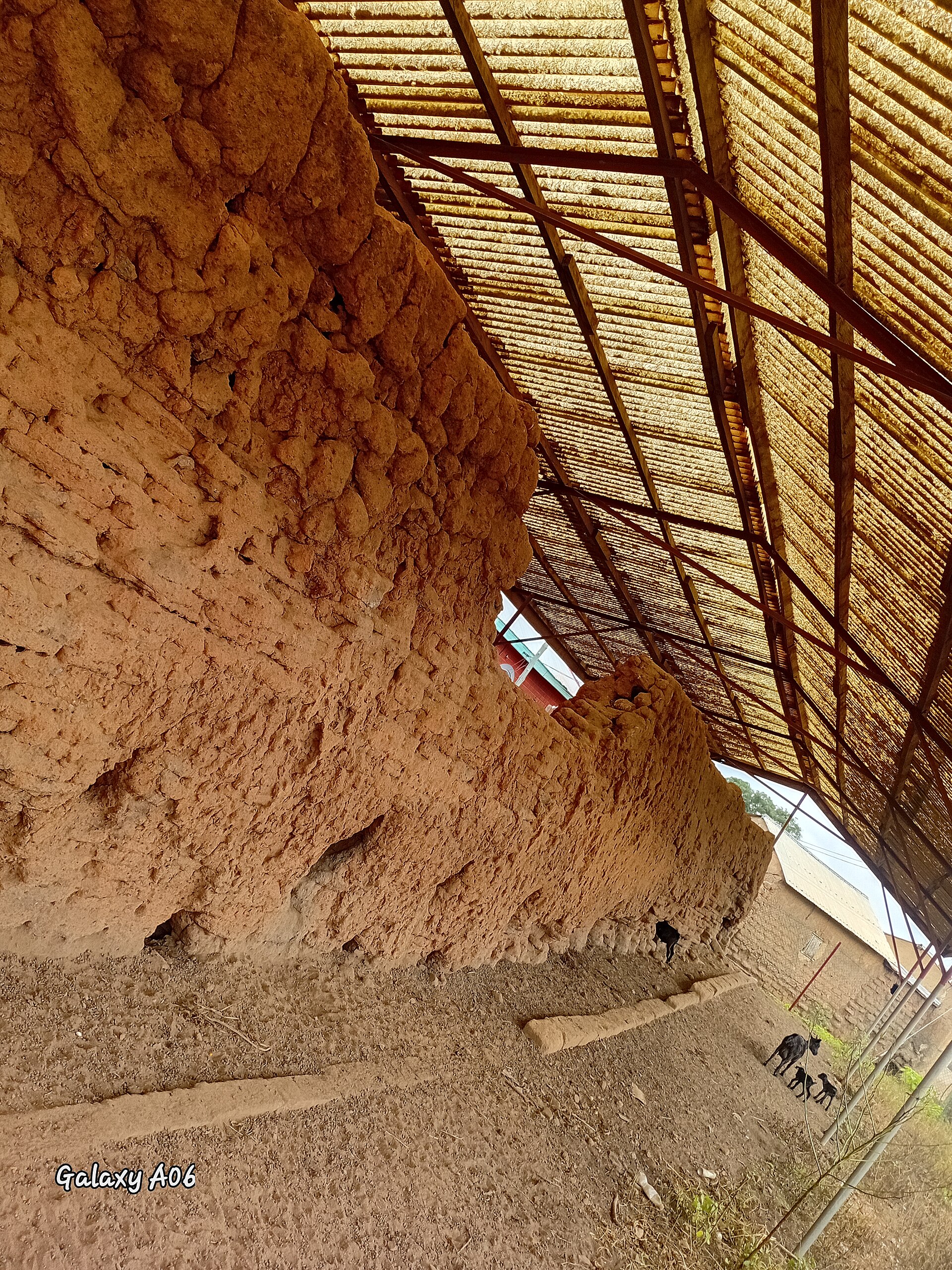
Gwollu is a quiet town in northern Ghana, where the pace of life feels slower, as if the world beyond the savanna has forgotten to hurry. Here, among low hills and scattered baobabs, stands a structure that locals simply call the defence wall. At first glance, it’s nothing more than a mound of earth encircling part of the settlement, but its unassuming appearance hides a story that stretches back through the region’s turbulent past.
Built in the late 19th century, the wall emerged during a time of upheaval in what is now northern Ghana. The area was then part of the Wa state, one of several traditional kingdoms that shaped the region’s history. Conflicts between local communities and advancing colonial powers were growing more frequent, and raids by neighbouring groups or slave traders posed constant threats. The wall was constructed from whatever materials were at hand—clay, stones, and water—mixed into a sturdy barrier. Over time, wind and rain have worn it down, but its outline remains visible if you know where to look.
Unlike the grand fortresses of Europe or Asia, the Gwollu wall was never meant to be a monument. Its design is practical, built for immediate need rather than lasting grandeur. The earthen rampart is low but wide enough for defenders to move along its length, and in places, remnants of watchtowers or platforms hint at how sentries once scanned the horizon for danger. A ditch once surrounded the wall, reinforced with thorny bushes to slow down intruders. It wasn’t an impenetrable fortress, but it was enough to buy time and deter attacks.
Today, Gwollu is a place where life unfolds at its own rhythm, far from the noise of cities. The wall no longer serves its original purpose, yet it remains a point of pride for the community. There are no grand restoration projects here, no attempts to turn it into a polished tourist attraction. Instead, the wall is left as it is—a fading but still tangible link to the past. Locals treat it with quiet respect, a reminder of the resilience of those who came before them.
For visitors, the wall might not seem like much at first. There are no towering ruins or intricate carvings, no plaques explaining its significance. But that’s part of its appeal. Standing beside the earthen embankment, it’s easy to imagine the scene a century ago: people reinforcing the defences, children playing in its shadow, elders recounting tales of past conflicts. This isn’t a place of legendary battles, but of everyday endurance, of a community doing what it could to protect itself.
Gwollu and its wall are a reminder that history isn’t always recorded in textbooks. Sometimes, it lingers in overlooked corners of the world, where time moves differently. Northern Ghana is a region where tradition still shapes daily life, where the past isn’t just remembered but lived. The defence wall is one of many such traces, a silent witness to the struggles and survival of the people who called this land home.
If you find yourself in Gwollu, take your time. Walk along the wall, listen to the sounds of the savanna, and notice the mud-brick houses built much as they have been for generations. You might be lucky enough to hear a local share the story of this place—not from a guidebook, but as it has been passed down through the years. There’s a weight to those stories, something that can’t be captured in photographs or descriptions.
Ghana is a country where history is never far away, but in the north, it feels especially close. There are no crowds here, no souvenir stalls selling trinkets. Just the land, the people, and the quiet persistence of the past. The Gwollu defence wall isn’t just a landmark; it’s a piece of living culture, one that endures despite everything.