Perched on the slopes of Sulayman Mountain, the Ravat Abdulla-Khan Mosque is one of those quiet places in Osh that carry the weight of centuries. Built in the 16th century, it stands as a remnant of a time when the city was a vital crossroads on the Silk Road, where trade routes, religious traditions, and local legends intersected. Unlike many other medieval mosques in Central Asia, this one has preserved not just its architecture but also an atmosphere of seclusion, a rare quality in today’s well-trodden tourist paths.
The building itself is unassuming, and that’s precisely what makes it special. A modest rectangular structure with a flat roof and a single minaret, it was once used not only for the call to prayer but also as a watchtower. The walls are made of adobe brick, a material long favored in the Fergana Valley, where the climate swings between harsh winters and sun-drenched summers. Inside, there are no lavish decorations or gilded domes—just silence, broken only by the footsteps of occasional visitors and the whisper of wind through the wooden lattice windows.
The mosque’s history is tied to Abdulla-Khan, a ruler from the Shaybanid dynasty who, in the 16th century, united much of Mavarannahr under his rule. Osh was more than just a city then—it was a frontier post where nomadic and settled worlds met, where merchants from China, Persia, and Rus traded goods and stories. The mosque likely served as both a religious center and a gathering place for travelers, a spot to rest, negotiate deals, and pray before continuing their journeys. Around it, the bazaar would have buzzed with activity, languages mixing in the air, and oil lamps flickering at dusk, casting light on faces from distant lands.
Over the centuries, the mosque has seen its share of restorations. In the 19th century, when Osh became part of the Russian Empire, many medieval structures fell into disrepair, but the Ravat Abdulla-Khan Mosque endured, though not without changes. The Soviet era left its mark too—at one point, the building was used as a warehouse, later as a workshop. Only in recent decades, as interest in Kyrgyzstan’s cultural heritage grew, was the mosque restored, stripped of later additions, and returned to something close to its original form. Today, it looks much as it did four hundred years ago, though time has left its traces on the walls.
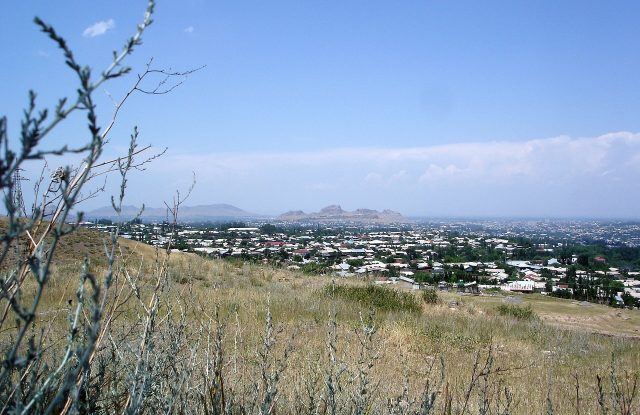
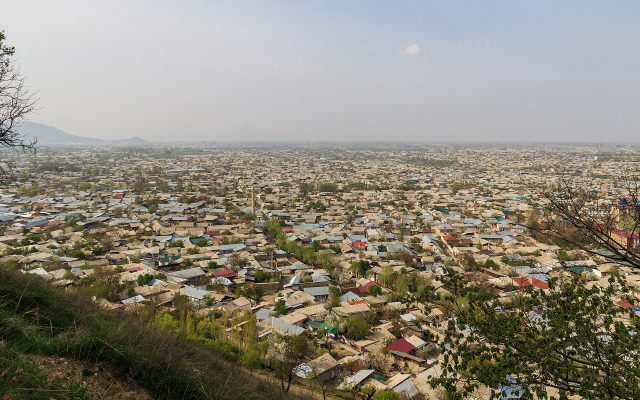
What makes this place unique is its lack of pretension. There are no crowds, no guided tours, no souvenir stalls. The Ravat Abdulla-Khan Mosque is more like a quiet refuge where history feels tangible, uncluttered by modern distractions. If you climb the minaret, the view unfolds over Osh below—the old quarters with their clay houses, the minarets of other mosques, and beyond them, the vast expanse of the Fergana Valley. On clear days, the snow-capped peaks of the Alay Range appear on the horizon, a reminder that the city has always been tied to the mountains, whether as a trade route or a source of inspiration.
Visiting the mosque isn’t just about admiring its architecture; it’s about understanding how people lived here centuries ago. The narrow streets around it still hold traces of old Osh, where artisans work with traditional methods and teahouses serve green tea in bowls, just as they have for generations. The mosque is one piece of a larger puzzle that makes up the city’s history, and anyone who visits becomes part of that story, even if only for a moment.
It’s worth noting that the Ravat Abdulla-Khan Mosque isn’t just a relic of the past—it remains an active place of worship. Locals come here for prayers, especially on Fridays, when the building fills with the voices of the faithful. For visitors, it’s a chance to see how traditional culture continues to thrive in the modern world, not as a museum exhibit but as a living practice. There are no strict rules for tourists, but respect for the place and its visitors is expected.
Osh is often overlooked in favor of more famous destinations, but places like the Ravat Abdulla-Khan Mosque offer a glimpse of its true character. It’s not a site that dazzles at first glance, but it lingers in the memory, evoking the days when caravans rested here and merchants dreamed of distant horizons. Today, the mosque stands as a silent witness to change, waiting for those who want to connect with history—slowly, without rush.