The Nigerian National Mosque stands as one of Abuja’s most recognizable landmarks, not just for its striking architecture but for the role it plays in the spiritual and cultural life of the country. Completed in 1984, the mosque was conceived as a symbol of national unity, reflecting Nigeria’s identity as a nation where Islam holds deep significance for a large portion of its population. Unlike many religious structures tied to specific regions or ethnic groups, this mosque was designed to serve as a unifying space for Muslims from all corners of the country, a place where the diversity of Nigeria’s Islamic traditions could come together under one roof.
The building itself is a blend of modernist design and traditional Islamic elements, a combination that gives it a distinct presence in Abuja’s skyline. The central dome, flanked by four towering minarets, dominates the structure, while the expansive prayer hall can accommodate thousands of worshippers. The use of white marble and geometric patterns is subtle but deliberate, avoiding the ornate excess of some historic mosques while still adhering to the principles of Islamic architecture. The open courtyard, surrounded by arcades, provides a sense of space and tranquility, a quiet contrast to the bustling city beyond its walls.
What makes the National Mosque particularly interesting is its accessibility. While it remains a place of worship, it is also open to visitors of all faiths, offering a rare opportunity to observe Islamic practices and architecture in a country where religion is deeply intertwined with daily life. The mosque’s location in the heart of Abuja, near other key government buildings, underscores its importance not just as a religious site but as a part of Nigeria’s national identity. It’s a place where politics, faith, and culture intersect, though in a way that feels more organic than forced.
The mosque’s construction was a significant moment in Nigeria’s history, coming at a time when the country was still adjusting to its new capital. Abuja itself was a planned city, built to replace Lagos as the administrative center, and the National Mosque was one of the first major landmarks to take shape in this emerging metropolis. Its completion coincided with a period of political and social change, and while it was never intended to be a political statement, its very existence reflects the complexities of Nigeria’s relationship with religion and governance.
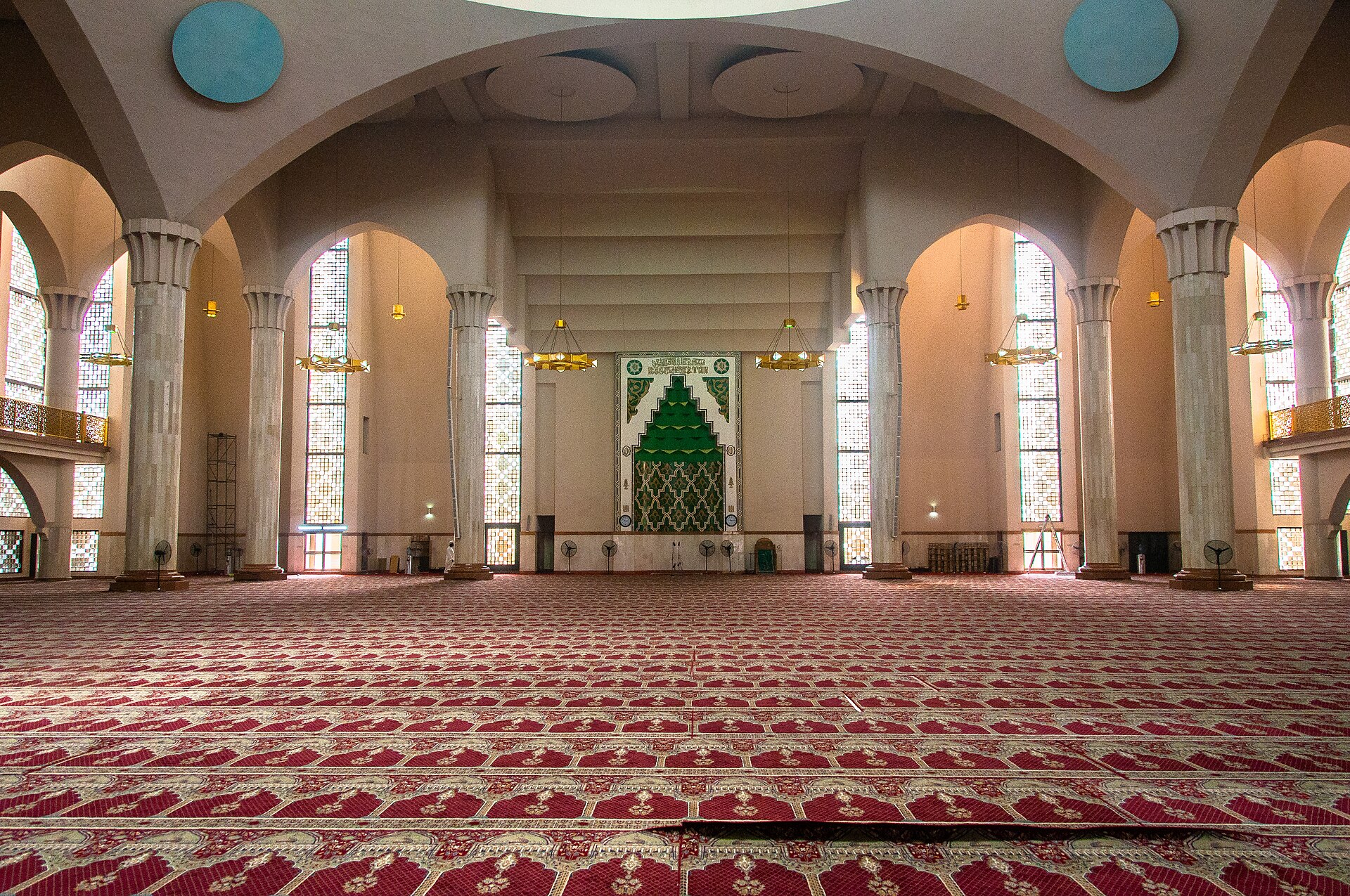
For those who visit, the experience is often one of quiet reflection. The mosque’s interior is spacious and uncluttered, with soft light filtering through the windows, creating an atmosphere of calm. The absence of elaborate decoration is noticeable but not jarring—it feels intentional, a nod to the idea that simplicity can be just as powerful as grandeur. Outside, the courtyard is a place where people gather, not just for prayer but for conversation, rest, or simply to enjoy the shade on a hot day.
The National Mosque is also a reminder of the diversity within Islam itself. Nigeria is home to a wide range of Islamic traditions, from the Sufi practices of the north to the more austere interpretations found in other regions. While the mosque doesn’t explicitly cater to any one of these traditions, its inclusive design allows for a variety of practices to coexist. This is particularly evident during major religious festivals, such as Eid al-Fitr or Eid al-Adha, when the mosque becomes a focal point for celebrations that draw people from across the country.
Despite its prominence, the mosque doesn’t feel like a tourist attraction in the conventional sense. There are no guided tours or informational plaques, and the experience is largely what you make of it. For some, it’s a place of worship; for others, a chance to learn about Islam in a country where religion shapes so much of public life. The lack of commercialization is refreshing, though it also means that visitors need to approach the site with a certain level of respect and awareness.
Abuja itself is a city of contrasts, where modern infrastructure sits alongside pockets of tradition, and the National Mosque embodies this duality. It’s a place where the past and present coexist, where the spiritual and the secular intersect. Whether you’re drawn by its architectural beauty, its religious significance, or simply its role in Nigeria’s story, the mosque offers a glimpse into a country that is still defining what it means to be a nation. It’s not just a building; it’s a living part of Abuja’s identity.