Abuja
Nigeria · 4 places
Photo: Wikimedia Commons, CC BY 3.0
Abuja is unlike any other capital city. It wasn’t shaped by centuries of history or the slow accumulation of traditions but by a deliberate decision in the 1980s, when Nigeria moved its administrative heart from Lagos into the country’s interior. There are no ancient fortresses here, no bustling markets with generations of stories woven into their stalls, no streets that still whisper of colonial rule. Instead, you’ll find wide boulevards, neatly planned districts, and buildings designed to house a government, its diplomats, and the people who keep it all running. Abuja was built from scratch, and that’s its defining trait—it’s a blank canvas, one where every day leaves its mark in real time.
Life in Abuja moves at its own unhurried pace, though it’s far from monotonous. Mornings bring a flurry of activity as civil servants, businesspeople, and employees of international organizations fill the streets, but by midday, the city seems to pause, surrendering to the heat that lingers almost year-round. As the sun dips toward the horizon, the parks and waterfronts come alive again. Families stroll along the paths, young people gather in cafes, and music spills from the squares. Millennium Park, stretching along the edge of an artificial lake, is a favorite spot, drawing both those who came to Abuja for work and those who’ve called it home since birth. The city is still young, and its culture is only beginning to take shape, evolving with each new resident who arrives.
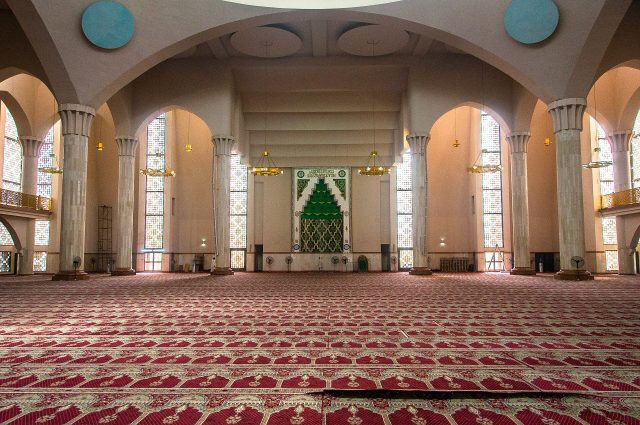
Architecture here is a blend of the modern and the traditional, a reflection of the city’s ambition to be a place where different faiths, ethnicities, and ideas coexist. The National Mosque, with its striking blue domes and towering minarets, stands near the Catholic Cathedral, its stained glass catching the sunlight. Not far away, the National Assembly complex rises like a colossal concrete flower, while the Aso Rock Presidential Villa is carved into the natural rock formation that gives it its name. These buildings aren’t just landmarks—they’re statements about what Abuja aspires to be. There’s no single architectural style, but there’s a clear effort to create harmony, even if it’s not always seamless.
Beyond politics, Abuja has a rhythm of its own. Markets sell vibrant fabrics, spices, and handcrafted goods, while small restaurants serve up dishes like jollof rice or suya—spicy grilled meat that’s a staple of Nigerian cuisine. On weekends, many escape to the surrounding countryside, where waterfalls, nature reserves, and rural villages offer a glimpse of life beyond the city. But even within Abuja, there are reminders of Nigeria’s rich cultural heritage. The National Museum houses artifacts from ancient civilizations, and theaters and festivals showcase traditional music and dance, keeping the country’s traditions alive in a modern setting.
What makes Abuja special is that it doesn’t try to be like other capitals. There’s no attempt to dazzle visitors with exoticism or opulence, no crowds of tourists or streets overflowing with history. Instead, there’s a sense of being somewhere that’s still becoming itself. The city hasn’t settled into a final form, and that’s part of its charm—it invites you to be part of something that’s still unfolding. Abuja isn’t a place that just shows you what it is; it’s a place that asks you to help shape what it will become.
See & Do
All of them

Places on the map
Marker colour follows the categoryClimate and weather
Detailed weather: Abuja- Average temperature
- 28 °C
- Precipitation per year
- 970 mm
- Sunshine hours per day
- 7.3 h
Average air temperature
°C
29
30
32
32
30
27
26
26
26
27
28
29
Jan
Feb
Mar
Apr
May
Jun
Jul
Aug
Sep
Oct
Nov
Dec