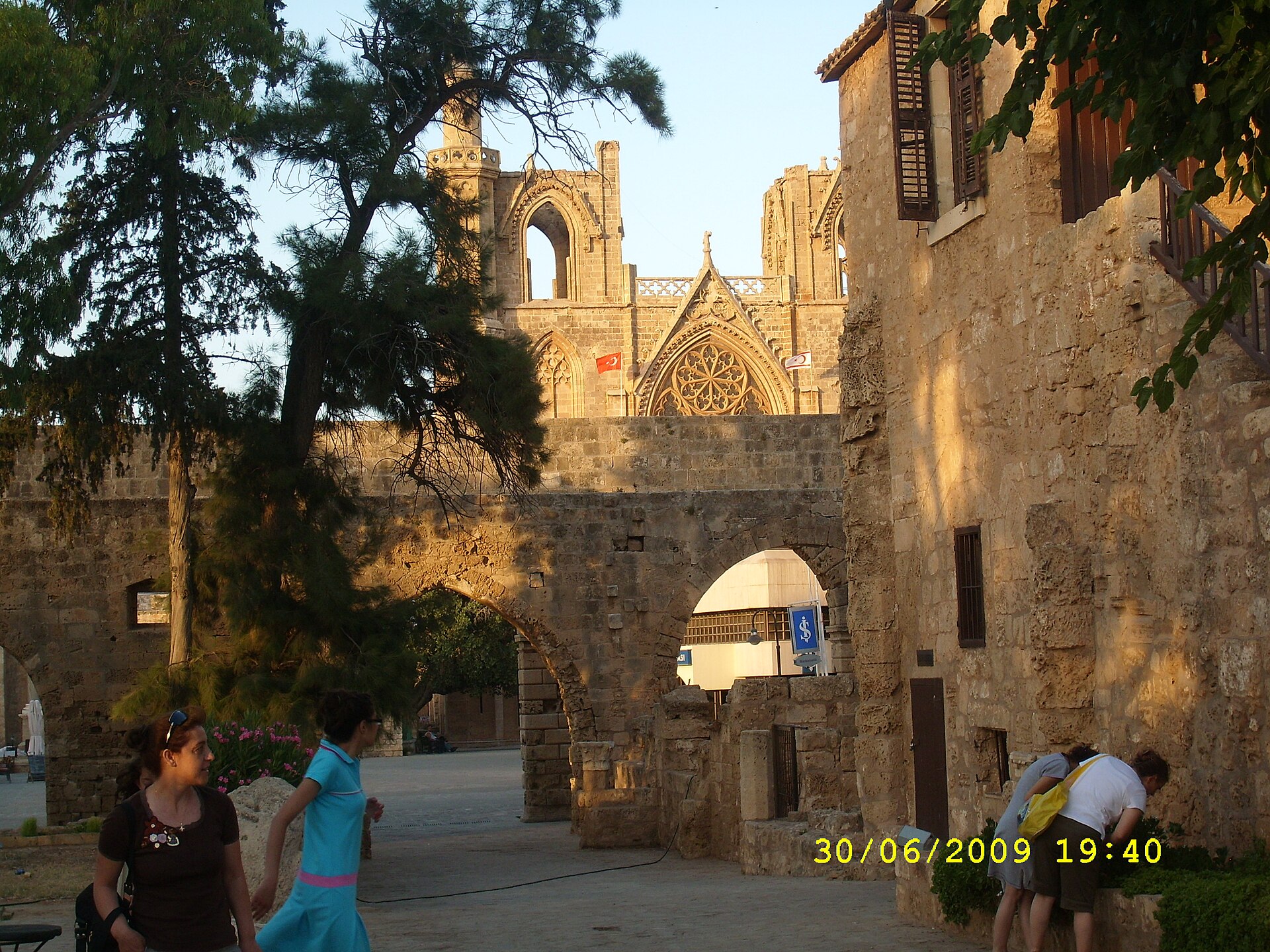
Famagusta’s Lala Mustafa Pasha Mosque stands as one of the most striking landmarks on Cyprus, not just for its grandeur but for the layers of history embedded in its walls. Originally built as a Catholic cathedral in the 13th century, it was later converted into a mosque after the Ottoman conquest in the 16th century. The building’s dual identity is impossible to ignore—Gothic arches and flying buttresses coexist with a minaret that rises above the old city, a quiet testament to the island’s shifting powers and cultures.
The cathedral, dedicated to Saint Nicholas, was constructed between 1298 and 1326, during the Lusignan period when Cyprus was a Crusader kingdom. Its design reflects the French Gothic style popular in Europe at the time, with pointed arches, ribbed vaults, and an imposing facade that once housed intricate sculptures. The interior, though now stripped of its Christian iconography, still hints at its former purpose. The nave, once filled with the murmur of Latin prayers, now echoes with the footsteps of visitors tracing the outlines of faded frescoes and the empty niches where statues once stood.
When the Ottomans took Famagusta in 1571 after a brutal siege, the cathedral was repurposed as a mosque, renamed in honor of Lala Mustafa Pasha, the commander of the Ottoman forces. The most visible change was the addition of a minaret, built from the same golden stone as the rest of the structure but standing apart in its slender, almost delicate form. Inside, the mihrab—a niche indicating the direction of Mecca—was installed, and the space was adapted for Islamic worship. The Ottomans also whitewashed the walls, covering the medieval frescoes that had adorned them for centuries. Some of these paintings have since been uncovered, offering glimpses into the building’s past life.
Walking through the mosque today, the contrast between its two eras is palpable. The Gothic windows, tall and narrow, still allow light to filter in, casting long shadows across the stone floor. The absence of pews and the presence of prayer rugs mark the shift in function, yet the building retains a sense of solemnity that transcends its religious transformations. The courtyard, once a gathering place for Christian processions, now serves as a quiet space for reflection, its ancient trees providing shade for those who pause beneath them.
Beyond its architectural significance, the mosque holds a place in the broader story of Famagusta. The city itself was once one of the wealthiest in the Mediterranean, a hub of trade and culture during the medieval period. The cathedral was a symbol of that prosperity, built to rival the great churches of Europe. When the Ottomans arrived, Famagusta’s fortunes changed, and the mosque became a symbol of a new era. Today, it stands as a reminder of the city’s resilience, a place where history is not just remembered but physically preserved.
For visitors, the mosque offers more than just a glimpse into the past. It’s a place where the weight of centuries feels tangible. The coolness of the stone, the play of light through the stained-glass windows, and the faint scent of incense that lingers in the air all contribute to an atmosphere that is both reverent and haunting. The minaret, visible from much of Famagusta, serves as a landmark, a silent guide for those exploring the old city’s labyrinthine streets.
The surrounding area adds to the experience. Famagusta’s old town is a maze of narrow alleys, crumbling palaces, and hidden courtyards, each corner revealing another fragment of history. Nearby, the ruins of the Venetian walls stand as a reminder of the city’s strategic importance, while the ghost town of Varosha, just beyond, offers a stark contrast—a modern-day relic of conflict and abandonment. The mosque, in this context, feels like a bridge between eras, a place where the past is not just observed but felt.
There’s a quiet dignity to the Lala Mustafa Pasha Mosque, a sense that it has witnessed more than most buildings ever will. It has survived sieges, conquests, and the slow passage of time, adapting without losing its essence. For those who take the time to explore it, the mosque is more than a tourist attraction—it’s a conversation between centuries, a place where history is not just told but lived.