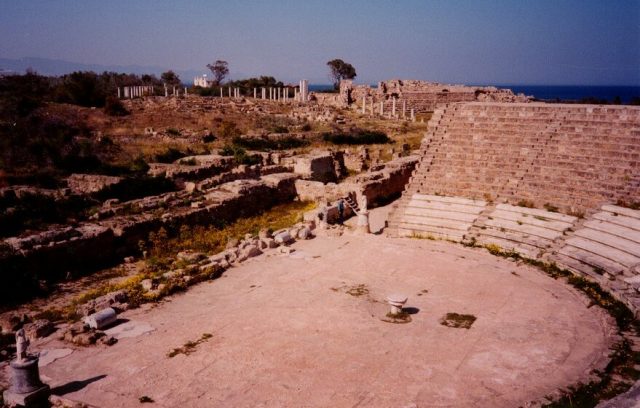
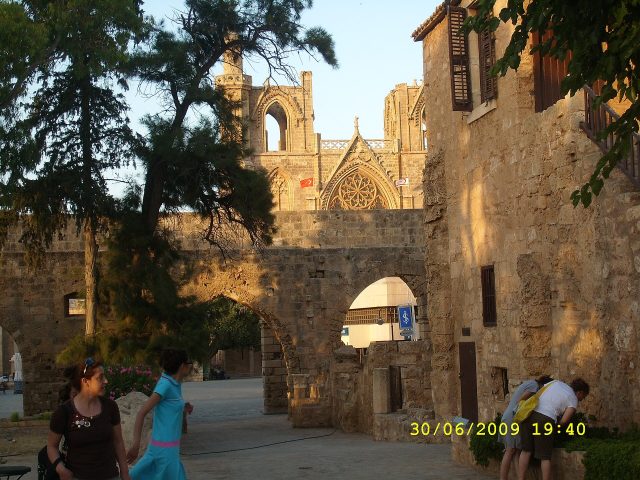
The Church of St. George of the Latins in Famagusta is one of those rare places where time seems to have paused, leaving behind a quiet witness to centuries of change. Built in the 14th century, it once served as the spiritual heart of the city’s Catholic community during Famagusta’s golden age as one of the Mediterranean’s most prosperous ports. Back then, the city thrived under the influence of Venetian and Genoese merchants who brought not just goods but their culture, faith, and architectural traditions. The church stood as a symbol of that era, its Gothic design a direct link to the European cities these traders had left behind.
Today, little remains of its former grandeur, yet even in ruin, the church tells a story. It suffered heavily during the Ottoman siege of Famagusta in the late 16th century, when the city, long under Venetian rule, fell to Turkish forces. Like many Christian sites in the region, it was abandoned or repurposed, its stones gradually claimed by time, earthquakes, and the hands of locals who reused them for their own buildings. What survives are fragments—tall, pointed windows, sturdy buttresses, and the faint traces of frescoes that once adorned its walls.
The church’s most striking feature is its main portal, where the craftsmanship of medieval stonemasons is still visible, though worn by centuries of wind and weather. Inside, the space feels intimate, a reminder that while it may have been modest in size, its design was anything but simple. The proportions and details reflect the elegance of Gothic architecture, a style that flourished in Europe but found a home here, on the edge of the Mediterranean.
Famagusta in the 14th and 15th centuries was a city of contrasts, where different faiths and cultures coexisted. Orthodox Greeks, Catholic Latins, Armenians, Maronites, and Muslims lived side by side, each leaving their mark on the city’s landscape. The Church of St. George of the Latins stood near the harbor, in a district dominated by European merchants. Nearby were other Catholic churches, while just beyond lay Orthodox chapels and mosques. This was the commercial heart of Famagusta, and the church was more than a place of worship—it was a statement of Latin presence in the eastern Mediterranean.
Now, the church lies within Varosha, the abandoned district of Famagusta that has been closed off since the Turkish invasion of 1974. For decades, the area was frozen in time, its streets empty, its buildings crumbling. Only recently has it begun to open to visitors, and the church, like the rest of Varosha, carries an eerie beauty. Walking through the silent, overgrown streets, it’s hard not to feel the weight of history pressing in. The ruins of St. George’s stand as a reminder of how quickly fortunes can shift—how a thriving city can become a ghost town, and how even the most enduring structures can fade.
Standing among the ruins, it’s impossible not to wonder about the lives that once filled this space. Weddings, baptisms, funerals—all the rituals of faith and community took place here. Latin prayers echoed within these walls, though later, under different rulers, the language and purpose may have changed. Famagusta has always been a crossroads, a place where civilizations met and mingled, and the church is one of many markers of that complex past.
Beyond tourists, the church also draws researchers. Archaeologists and historians study its remains, comparing them to other medieval sites to piece together its history. It’s more than just an old building—it’s a fragment of Cyprus’s layered past, shaped by trade, war, and shifting powers. Even in decay, it offers a glimpse into a world that no longer exists, a world where merchants from Venice rubbed shoulders with Ottoman soldiers and Greek fishermen.
A visit to Famagusta, especially to its abandoned quarters, leaves a strange mix of emotions. There’s a sadness in seeing a place so neglected, yet also awe at how well-built these structures were, how they’ve endured despite everything. The Church of St. George of the Latins isn’t just a tourist stop—it’s a place where history feels tangible. The stones beneath your feet, the wind through the empty windows, the silence of the streets—all of it invites reflection on how fleeting even the greatest cities can be. In its ruins, you can almost hear the echoes of the past, a reminder that every place has a story, and some stories are still waiting to be told.