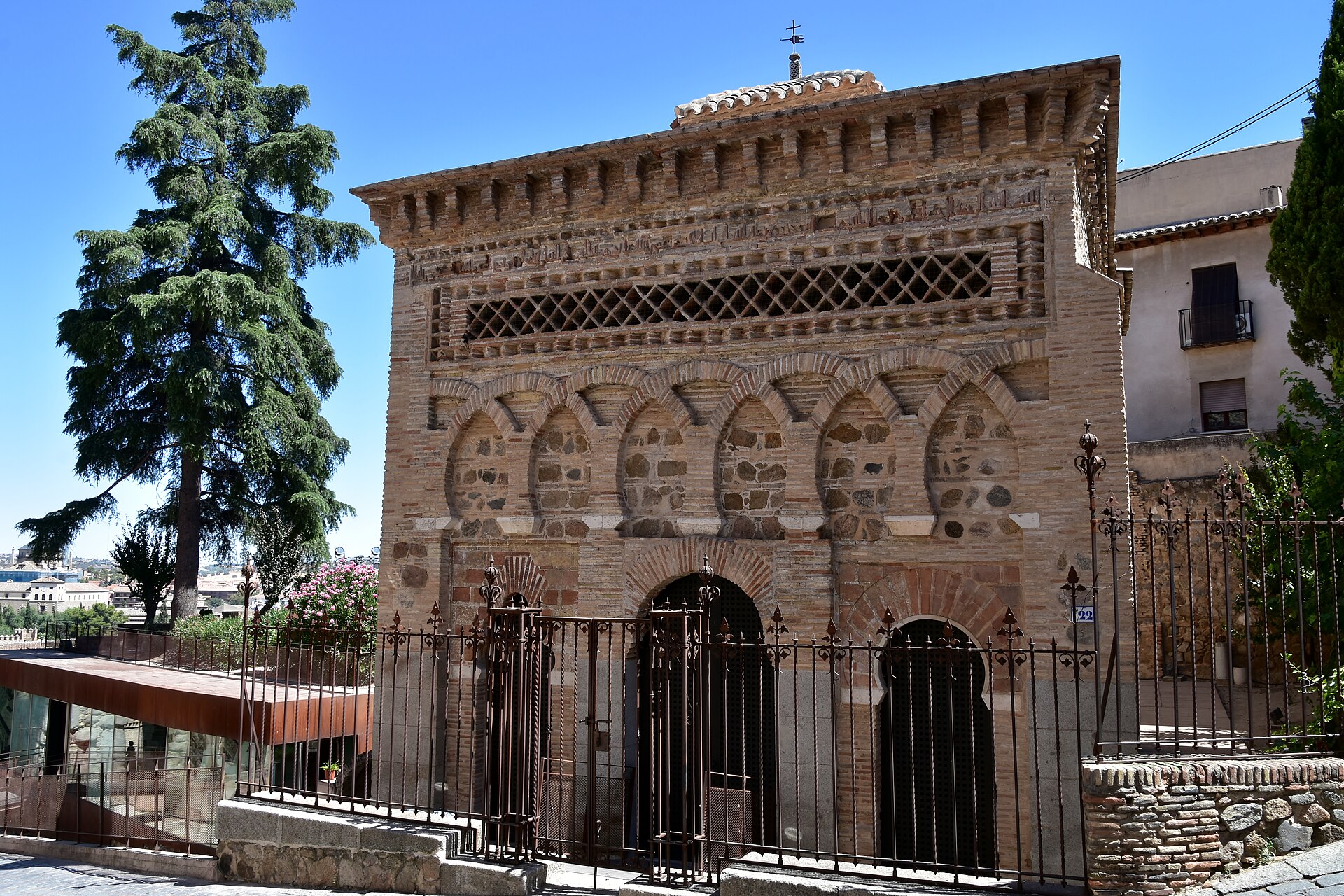
Toledo doesn’t let go of its past. The Cristo de la Luz Mosque is one of those places where history hasn’t just survived—it breathes. Built in the late 10th century under Muslim rule, it’s one of the few mosques on the Iberian Peninsula that wasn’t turned into a church. Its name, Christ of the Light, comes from a Christian legend, but the building tells a different story: brick, stone, and the quiet weight of centuries.
The mosque is small, a square of weathered brick with horseshoe arches that mark its origins. Inside, three narrow naves split by rows of columns—some scavenged from Roman ruins—hold the light like a secret. The mihrab, the niche pointing toward Mecca, still shows traces of its original decoration, though time has blurred the details.
It was part of the city’s defensive walls, opening directly onto the street. When Christian forces took Toledo in 1085, the mosque became a chapel, then a church. A legend says King Alfonso VI entered and touched a crucifix here, which glowed—historians call it a later invention, but the story sticks.
Now, the Cristo de la Luz sits in the heart of Toledo, ignored by tourists hurrying toward the cathedral or the synagogues. But this is where the city’s past feels closest. The air inside is cool, the stone walls holding the weight of a thousand years. Outside, a small garden offers a bench, the old walls framing the Tagus River valley below.
From here, the city spreads out. The Alcázar and the cathedral rise in the distance, their silhouettes sharp against the sky. At dusk, the mosque’s walls turn gold, shadows stretching across the hillside. It’s the same view people saw a thousand years ago.
Toledo was once a meeting place for Muslim, Christian, and Jewish scholars. They translated texts, debated ideas, and built a city where cultures overlapped. The mosque was part of that—small, but not insignificant. Stand beneath its arches, and you might hear the echoes of those voices, the hum of a city that thrived on conversation, not conflict.
There’s no crowd here, no guided tour. Just stone, light, and the quiet insistence of history. You can touch the columns, feel the roughness of the brick, and wonder who else has stood in this same spot, looking up at the same ceiling.
The Cristo de la Luz isn’t just old. It’s a piece of the past that hasn’t been polished or repackaged. It doesn’t ask for admiration—just a moment of your time, a pause in the rush. And if you’re trying to understand Toledo, that’s where the real story begins.