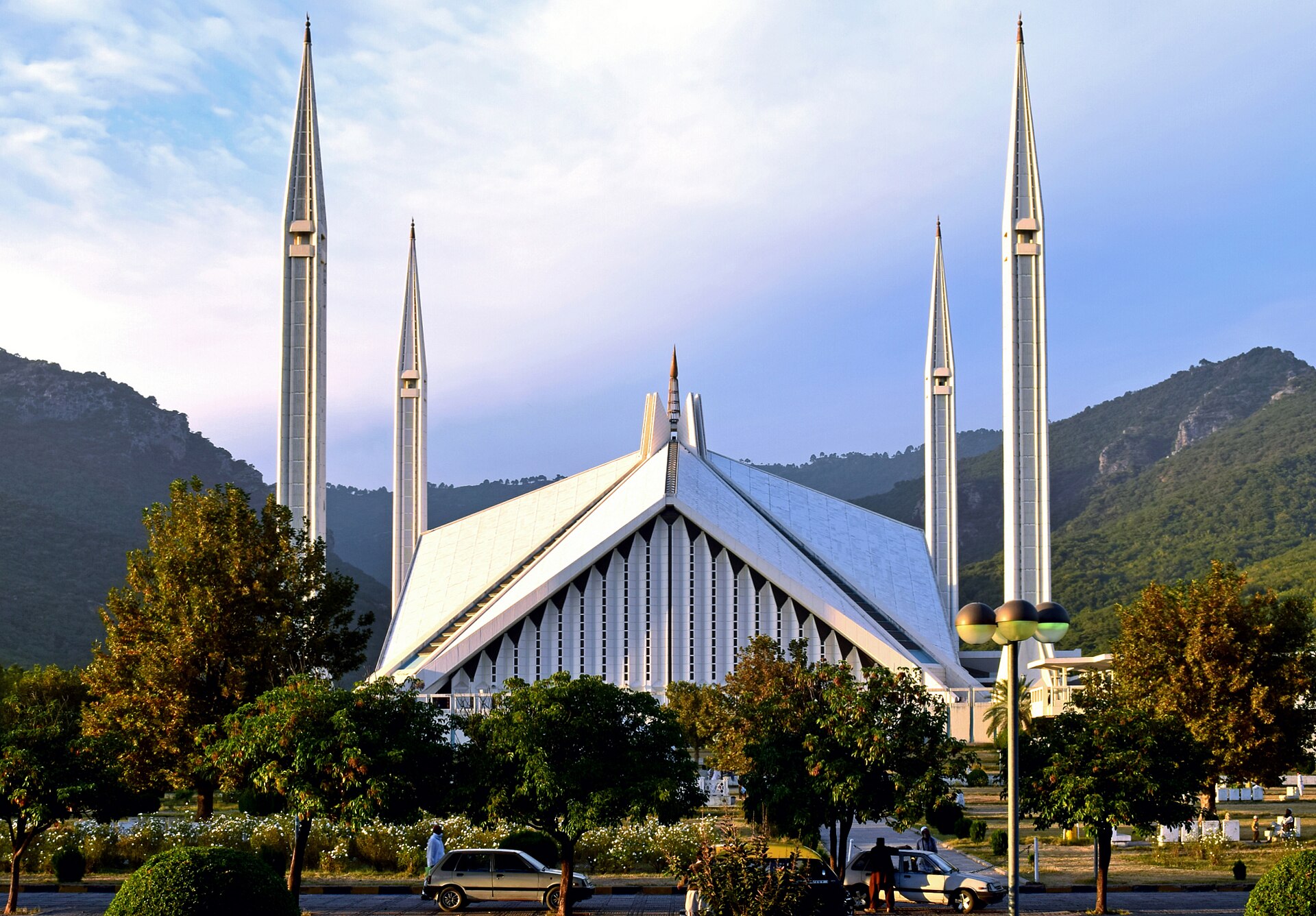
Faisal Mosque stands as one of Islamabad’s most recognizable landmarks, a place where modern architecture meets spiritual significance. Unlike traditional mosques with domes and arches, its design is striking and unconventional, shaped like a Bedouin tent with four towering minarets. The structure was completed in 1986 after nearly a decade of construction, funded largely by Saudi Arabia as a gift to Pakistan. Its vast prayer hall can accommodate tens of thousands of worshippers, making it one of the largest mosques in the world. The mosque’s location at the foot of the Margalla Hills gives it a commanding presence over the city, especially when sunlight catches its white marble surfaces.
The design of Faisal Mosque was the result of an international competition won by Turkish architect Vedat Dalokay. His vision broke away from the traditional Islamic architectural styles seen in South Asia, instead drawing inspiration from the simplicity of a desert nomad’s shelter. The four minarets, each over 80 meters tall, are slender and sharp, resembling the shape of pencils. Inside, the prayer hall is vast and open, with a chandelier that mimics the form of a Bedouin tent’s interior. The absence of a traditional dome is deliberate, a bold statement that redefines what a mosque can look like.
The mosque’s construction was a significant moment in Pakistan’s history, symbolizing the country’s ties with Saudi Arabia and its place in the Islamic world. King Faisal bin Abdulaziz, after whom the mosque is named, was a key figure in this relationship, and his assassination in 1975 led to the mosque being dedicated in his memory. The project was not without controversy—some critics argued that its modernist design strayed too far from Islamic architectural traditions. Yet over time, it has become a defining feature of Islamabad, a place where locals and visitors alike come to pray, reflect, or simply admire its scale.
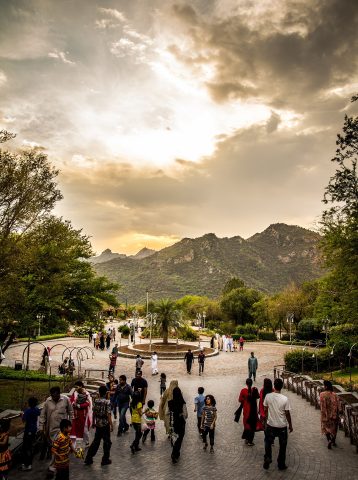
Visitors to Faisal Mosque often remark on the sense of tranquility that surrounds it, despite its size. The mosque is set within a large courtyard, where the sound of footsteps on marble and the distant call to prayer create a quiet rhythm. The surrounding gardens, though not as elaborate as those in older Islamic landmarks, offer a place to sit and take in the view. The Margalla Hills in the background add a natural contrast to the mosque’s geometric lines, especially at dawn or dusk when the light softens the starkness of the marble.
For many Pakistanis, Faisal Mosque is more than just a place of worship—it’s a symbol of national pride and a gathering point for major religious events. During Ramadan, the mosque is packed with worshippers, and its courtyard becomes a sea of people breaking their fast together. On Eid, the area around the mosque buzzes with activity as families come to pray and celebrate. Even outside of these occasions, the mosque remains a focal point for the city, drawing students, tourists, and locals who come to walk its grounds or attend lectures in its Islamic research center.
The mosque’s interior is just as impressive as its exterior, though in a more understated way. The prayer hall is carpeted in deep red, a color that contrasts with the cool white of the marble walls. The mihrab, the niche indicating the direction of Mecca, is simple but elegant, adorned with calligraphy rather than intricate tilework. Natural light filters in through large windows, illuminating the space without the need for artificial lighting during the day. The overall effect is one of serenity, a place designed to encourage contemplation rather than distraction.
Faisal Mosque also serves as a cultural and educational hub. The Islamic Research Institute, located within the mosque’s complex, hosts seminars and publishes works on Islamic studies. Visitors can explore its library or attend public lectures, though access to certain areas may be restricted during prayer times. The mosque’s role in fostering dialogue and learning reflects its broader significance—not just as a religious site, but as a center for intellectual and spiritual exchange.
Despite its modern design, the mosque has aged gracefully, its white marble still gleaming under the Islamabad sun. Over the years, it has become a familiar sight for residents, a landmark that marks the city’s skyline. For first-time visitors, the sheer scale of the structure can be overwhelming, especially when standing in the courtyard and looking up at the minarets. Yet there’s also a sense of openness, a feeling that this is a place meant to welcome people from all walks of life.
Faisal Mosque is not just a monument to faith, but a testament to the idea that tradition and innovation can coexist. Its design challenges expectations while still fulfilling the core purpose of a mosque—to provide a space for prayer and community. Whether you come for spiritual reasons, architectural curiosity, or simply to experience a piece of Islamabad’s identity, the mosque offers a moment of quiet in a bustling city. It stands as a reminder that even in a rapidly changing world, some places remain timeless.