Islamabad Zoo opened in the mid-1970s, when Pakistan’s capital was still taking shape. Back then, the city was a patchwork of construction sites and empty lots, and the zoo was little more than a small corner of greenery where locals could escape the chaos of a growing metropolis. Over the decades, it expanded into one of the few places in Islamabad where visitors could see animals not just from Pakistan but from around the world. There are no grand enclosures or high-tech exhibits here—just a quiet sense that nature and the city exist side by side, even if the balance isn’t always perfect.
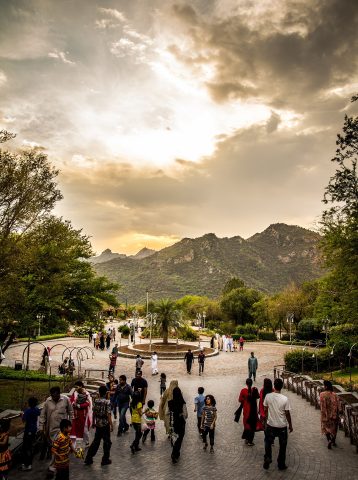
The zoo sits in the northern part of Islamabad, not far from the Margalla Hills, which rise in the background like a natural curtain. Unlike many urban zoos, it isn’t hemmed in by buildings. Instead, the space is open, with winding paths, trees, and enclosures that try—sometimes successfully, sometimes not—to mimic the animals’ habitats. Some cages feel cramped, and the conditions aren’t always what they should be. But for most of Islamabad’s residents, this is the closest they’ll ever get to seeing lions, tigers, or elephants in person, especially if a trip to one of Pakistan’s national parks isn’t an option.
The animals here come from near and far. There are species native to Pakistan, like the elusive leopard, which has nearly vanished from the wild, as well as Bengal tigers brought from India. African elephants and giraffes share space with a pair of polar bears—an unusual sight in this part of the world. Birds are a highlight, from vivid parrots to birds of prey kept in large, netted aviaries. Children are often drawn to the monkeys, which are always lively, swinging from branches or chattering at visitors.
Beyond being a place to walk and observe, the zoo serves as an educational hub. School groups come for guided tours, where they learn about animal behavior and the threats these species face in the wild. Occasionally, there are lectures or exhibits on conservation, though these depend on funding and staff enthusiasm, so they’re not always consistent. Still, for many children in and around Islamabad, the zoo is their first real encounter with wildlife—not just something they read about in books.
The zoo’s architecture is simple and practical. The main buildings are administrative offices, a small museum with taxidermy displays, and a few cafés where visitors can grab a snack. The enclosures are mostly concrete and metal, designed more for durability than beauty. In recent years, there have been efforts to make them feel more natural—planting trees, adding artificial ponds—but the focus remains on function over aesthetics. Given that the zoo has been around for nearly fifty years, that’s not surprising. Places like this evolve slowly, and improvements come in small steps.
Weekdays are quiet, but on weekends and holidays, the zoo fills with families, school groups, and the occasional tourist. Some come just to stroll, others to take photos, and a few to watch the animals closely. The atmosphere is relaxed, without the crowds or rush of bigger zoos. You can wander the paths, sit on a bench, and listen to the calls of peacocks or the distant roar of a lion. In a city where life moves quickly, the zoo offers a rare moment of stillness.
Of course, the zoo has its challenges. Funding is always tight, the infrastructure is outdated, and animal rights advocates have raised concerns. But despite its flaws, it remains an important part of Islamabad. It’s not just a place for entertainment—it’s where people learn, reflect, and are reminded that wildlife isn’t some distant concept. For many Pakistanis, the zoo is proof that these animals exist in the same world as we do, and their future depends on how we treat them.
A visit to Islamabad Zoo isn’t so much a polished experience as it is a glimpse into a living, imperfect world. There’s no luxury here, just raw reality: animals, people, and nature trying to coexist amid concrete and noise. Maybe that’s why it still draws visitors. It’s not perfect, but it’s real—much like Islamabad itself, a city that’s far from flawless but always full of life.