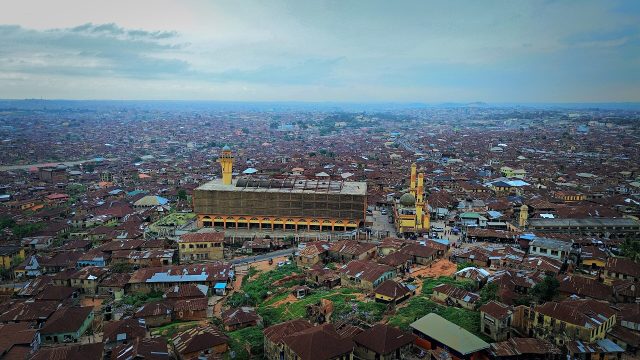
The Central Mosque of Osogbo doesn’t stand out with towering minarets or ornate domes. It sits in the city’s center, surrounded by the sounds of daily life—vendors shouting prices, motorbikes navigating traffic, children weaving between buildings. The mosque feels like a quiet corner, not because it demands silence, but because it fits naturally into the rhythm of the streets.
The design is simple. Concrete and light tiles make up its structure, catching the sun without overshadowing the neighborhood. The minaret is short, more like a watchtower than a spire. The dome is small, blending into the skyline rather than dominating it. This isn’t a place built to impress visitors; it’s a place for those who come here to pray, reflect, or find a moment of peace.
Osogbo is a city where history layers itself—Yoruba traditions, Islamic influences, and remnants of colonial rule. The mosque was built in the mid-20th century as the Muslim community grew and needed a permanent space. Before that, prayers were held in temporary spots or outdoors. Over time, the mosque became more than a building. It turned into a meeting point, a place where people shared news, supported each other, and shaped the community.
Inside, the mosque is practical. The prayer hall has carpets on the floor and bare walls with a few Arabic verses. There are no mosaics or gilded details. During prayers, the space fills with quiet sounds—whispers, the rustle of fabric, footsteps. When empty, it doesn’t feel cold; it feels like a pause in a busy city.
The mosque isn’t just for worship. It’s where lives overlap—locals, travelers, traders, students. For many, it’s a landmark, a place to meet friends or feel part of something larger. It’s not just a structure; it’s part of Osogbo’s daily life.
Osogbo is a city of contrasts. It’s known for Yoruba art, sacred groves, and traditional crafts. But it’s also changing—new neighborhoods, paved roads, schools. The mosque reflects this balance. It doesn’t erase the past; it exists alongside it, showing how faith and daily life intertwine.
Visiting the mosque isn’t like visiting a tourist site. There are no tours, no souvenir stalls. What you’ll see is the rhythm of the city—people coming and going, the quiet after prayers, the sense that this is a place where life happens. If you’re there at the right time, you might see festival preparations or locals chatting on the steps. These aren’t performances; they’re everyday moments.
There’s no grand story here. The mosque simply exists, and that’s its strength. You can stand at the entrance, look out from the minaret, or sit inside if you’re mindful of those praying. There are no strict rules, just an unspoken request to respect the space. In that way, the mosque reflects Osogbo—open, unobtrusive, full of life. It doesn’t ask for admiration; it offers a place to pause and belong, even for a moment.