Berbera’s Al-Qābir Mosque stands as one of the oldest and most enduring landmarks in this coastal city, a quiet witness to centuries of trade, faith, and shifting fortunes along the Gulf of Aden. Its exact origins are difficult to pin down, lost in the layers of time, but local tradition holds that the mosque was first built in the 13th century, when Berbera was already a bustling port connecting the Horn of Africa with Arabia, Persia, and beyond. The structure we see today is likely the result of multiple reconstructions, each one adapting to the needs of the community while preserving the essence of its original purpose. The mosque’s age is not just a matter of dates but of continuity—it has been a place of prayer, learning, and gathering for generations, surviving the rise and fall of empires, the ebb and flow of trade routes, and the slow transformation of Berbera itself.
The architecture of Al-Qābir reflects the practical and spiritual priorities of its builders. Unlike the grand, ornate mosques of later Islamic dynasties, this one is modest in scale but sturdy in construction, built to withstand the harsh coastal climate. The walls, made of coral stone and lime mortar, have a weathered, almost organic quality, as if they’ve grown from the earth rather than been imposed upon it. The prayer hall is simple, with a flat roof supported by thick columns that create a sense of rhythm and order. The mihrab, the niche indicating the direction of Mecca, is unadorned but precisely aligned, a reminder that devotion here is measured not in decoration but in intention. The minaret, though not particularly tall, rises just enough to be seen from the harbor, serving as both a landmark and a call to prayer for those arriving by sea.
What makes Al-Qābir remarkable is not just its age but its place in the life of Berbera. For centuries, the city was a crossroads where Somali merchants, Arab traders, and Indian Ocean sailors converged, bringing with them goods, ideas, and religious practices. The mosque was more than a place of worship—it was a center of knowledge, where travelers and scholars exchanged news from distant lands, where disputes were settled, and where the rhythms of daily life were marked by the call to prayer. Even today, it remains a focal point for the community, especially during Ramadan and Eid, when the streets around it fill with people and the air hums with the sounds of prayer and conversation. The mosque’s courtyard, shaded by a few hardy trees, is where elders gather to discuss matters of the day, where children play after school, and where the occasional traveler might pause to rest.
The history of Al-Qābir is also a history of Berbera’s resilience. The city has known periods of prosperity and decline, from its heyday as a key port in the medieval Islamic world to its later struggles under colonial rule and civil conflict. The mosque has seen it all—the arrival of Ottoman administrators, the brief British occupation, the boom of the frankincense trade, and the quiet years when the harbor silted up and the city’s fortunes waned. Yet through it all, the mosque endured, a constant in a landscape of change. Its walls bear the marks of time: patches where repairs were made, cracks where the earth shifted, and the faint outlines of older structures beneath the surface. These imperfections are not flaws but part of its character, telling a story of adaptation and survival.
Visiting Al-Qābir today is a lesson in humility. There are no grand tours or glossy brochures, no entrance fees or guided audio explanations. The mosque is simply there, as it has always been, open to those who wish to pray, reflect, or simply sit in its quiet shade. The atmosphere inside is one of understated reverence. The prayer hall is cool and dim, the light filtering through small, high windows, casting soft patterns on the floor. The scent of incense lingers in the air, mingling with the salt breeze that drifts in from the sea. Outside, the city moves at its own pace—fishermen mending their nets, women selling spices in the market, the occasional truck rumbling down the dusty road toward Hargeisa. The mosque is not separate from this life but deeply embedded in it, a place where the sacred and the everyday coexist.
For those who take the time to look, Al-Qābir offers a glimpse into a different kind of history—one that is not recorded in textbooks but lived in the daily rituals of a community. The worn prayer rugs, the handwritten Quranic verses on the walls, the way the light falls at different times of day—all of these details speak to a continuity that transcends the passage of time. The mosque is not a relic to be admired from a distance but a living space, still serving the same purpose it has for centuries. In a world where so much is built to be temporary, there is something deeply moving about a place that has stood firm through the centuries, not as a monument to the past but as a bridge to it.
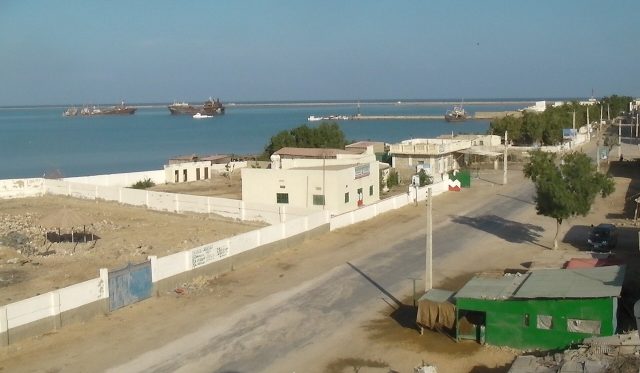
Berbera itself is a city that rewards those who look beyond the surface. It is not a place of grand attractions or polished tourist experiences, but of raw, unfiltered life. The harbor, once one of the busiest on the African coast, is now quieter, its cranes rusting and its warehouses half-empty. Yet there is a beauty in its decline, in the way the sea laps against the old stone quays, in the way the light plays on the weathered facades of the buildings. Al-Qābir fits perfectly into this landscape, neither grand nor neglected, but simply present. It is a reminder that history is not just about the big events but about the small, persistent things—the places that endure when empires fade, the traditions that outlast the rise and fall of nations.
If you find yourself in Berbera, the mosque is worth visiting not for what it offers in the way of spectacle, but for what it represents. It is a place where time feels different, where the past is not something to be studied but something to be felt. Sit in the courtyard for a while, listen to the call to prayer echoing over the rooftops, watch the way the light changes as the sun moves across the sky. You may not leave with a list of facts or a collection of photographs, but you will carry with you a sense of something deeper—a connection to the countless lives that have passed through this place, and to the quiet, unshakable faith that has sustained it.