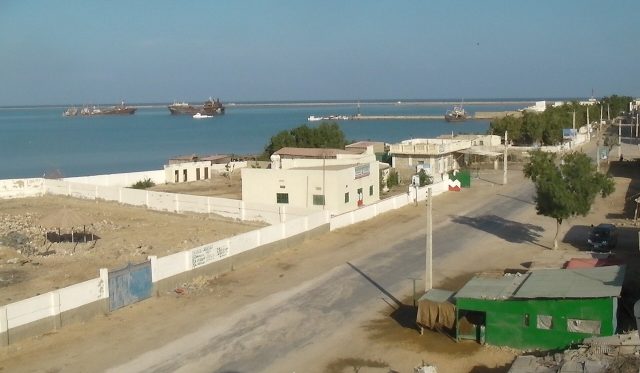
Dhaymoole is one of those rare places that exist almost entirely outside the usual travel narratives. Tucked along Somalia’s northern coast, just a short distance from the port city of Berbera, this small fishing settlement feels like a world apart. There are no crowds here, no souvenir stalls, no guides trying to sell you an experience. Instead, there’s the steady rhythm of the ocean, the quiet hum of daily life, and the sense that time moves differently—slower, more deliberately. The people who live here, mostly fishermen and their families, are reserved but not unwelcoming. They don’t expect visitors, but they don’t turn them away either.
The architecture in Dhaymoole is as straightforward as the lives of its residents. Houses are built from local stone and clay, their flat roofs designed to deflect the relentless sun. A few structures date back to the colonial era, when this region was under British control, but they blend seamlessly into the landscape, their age showing only in the weathered edges. The streets are narrow and unpaved, more suited to foot traffic or the occasional donkey than any modern vehicle. At the heart of the village stands a modest mosque with a slender minaret, a quiet landmark for those who pass through.
What draws people to Dhaymoole isn’t its buildings or its history, but the sea. The beaches here aren’t the kind you see in glossy brochures—no powdery white sand, no perfectly clear water. Instead, the shore is lined with dark volcanic sand, scattered with shells and the occasional fishing net. The water shifts from turquoise to deep blue depending on the light, and the boats pulled up on the beach tell their own story. Early mornings are the best time to see the village come alive, as women clean the day’s catch on the sand while fishermen mend their nets. Seafood isn’t just food here; it’s a way of life, passed down through generations. If you’re lucky, you might taste freshly grilled fish, seasoned simply but unforgettably.
Dhaymoole’s past is woven into the broader history of the region. Centuries ago, these shores were part of ancient trade routes, where frankincense, myrrh, and other goods changed hands between merchants. Later, Arab traders stopped here, and in the 19th century, the British established Berbera as a key port, turning it into a strategic hub. Dhaymoole, though, remained a quiet fishing village, untouched by the larger events unfolding nearby. Even during Somalia’s civil war in the late 20th century, life here carried on much as it always had—fishing, surviving, enduring.
Today, Dhaymoole offers a glimpse of Somalia stripped of pretense. There are no luxury hotels, no fancy restaurants, no carefully curated experiences. What you’ll find instead is a place where life moves to its own rhythm, much as it has for centuries. In the evenings, when the heat finally eases, locals gather on the beach, sipping tea and talking. Sometimes, the air fills with the sound of traditional music—a drumbeat or the plucked strings of a lute-like instrument. For those who seek authenticity over entertainment, Dhaymoole can feel like a revelation.
The climate here is harsh and unyielding, much like the rest of the region. The best time to visit is between November and February, when temperatures are slightly more bearable and the sea is calm. Outside of those months, the heat can be oppressive, especially at midday when the sun is directly overhead. The water stays warm year-round, but swimming is best in the early morning or late afternoon, when the sun isn’t quite so punishing. Rain is rare, and when it does come, it’s an event—something to be remarked upon and remembered.
A trip to Dhaymoole isn’t for everyone. There’s no tourist infrastructure here, no guarantees of comfort or convenience. Electricity is unreliable, clean water isn’t always available, and the idea of "amenities" feels almost foreign. But that’s precisely what makes the village compelling. It’s a place where you can see Somalia not as it’s portrayed in headlines or stereotypes, but as it actually is—a country of quiet resilience, where life persists in its most unfiltered form. For those willing to look beyond the obvious, Dhaymoole offers something far more valuable than a typical travel destination. It offers a chance to step into a world that has remained largely unchanged, where the past and present coexist in a way that feels almost timeless.