Acre is a city where history doesn’t just unfold—it piles up in layers so thick that one era blurs into the next. Its labyrinthine alleys, crumbling fortifications, and bustling souks tell stories of empires, traders, and conquerors, but few landmarks stand out as distinctly as the Al-Jazzar Mosque. More than just a place of worship, it’s a monument to a time when Acre was a cornerstone of Ottoman power in the Levant, a city where rulers left behind grand structures to assert their authority and faith.
Commissioned in the late 18th century by Ahmed al-Jazzar, the governor of Acre, the mosque bears the name of a man whose legacy is as complex as the city itself. Known as "the Butcher" for his ruthless governance, al-Jazzar was also a patron of architecture, overseeing the construction of fortifications, aqueducts, and public buildings that reshaped Acre. His rule came at a turning point for the Ottoman Empire, which was already in decline, yet Acre remained a vital port—a gateway between the Mediterranean and the inland regions of the Levant. The mosque was meant to be more than a religious site; it was a statement of enduring Ottoman presence in a shifting world.
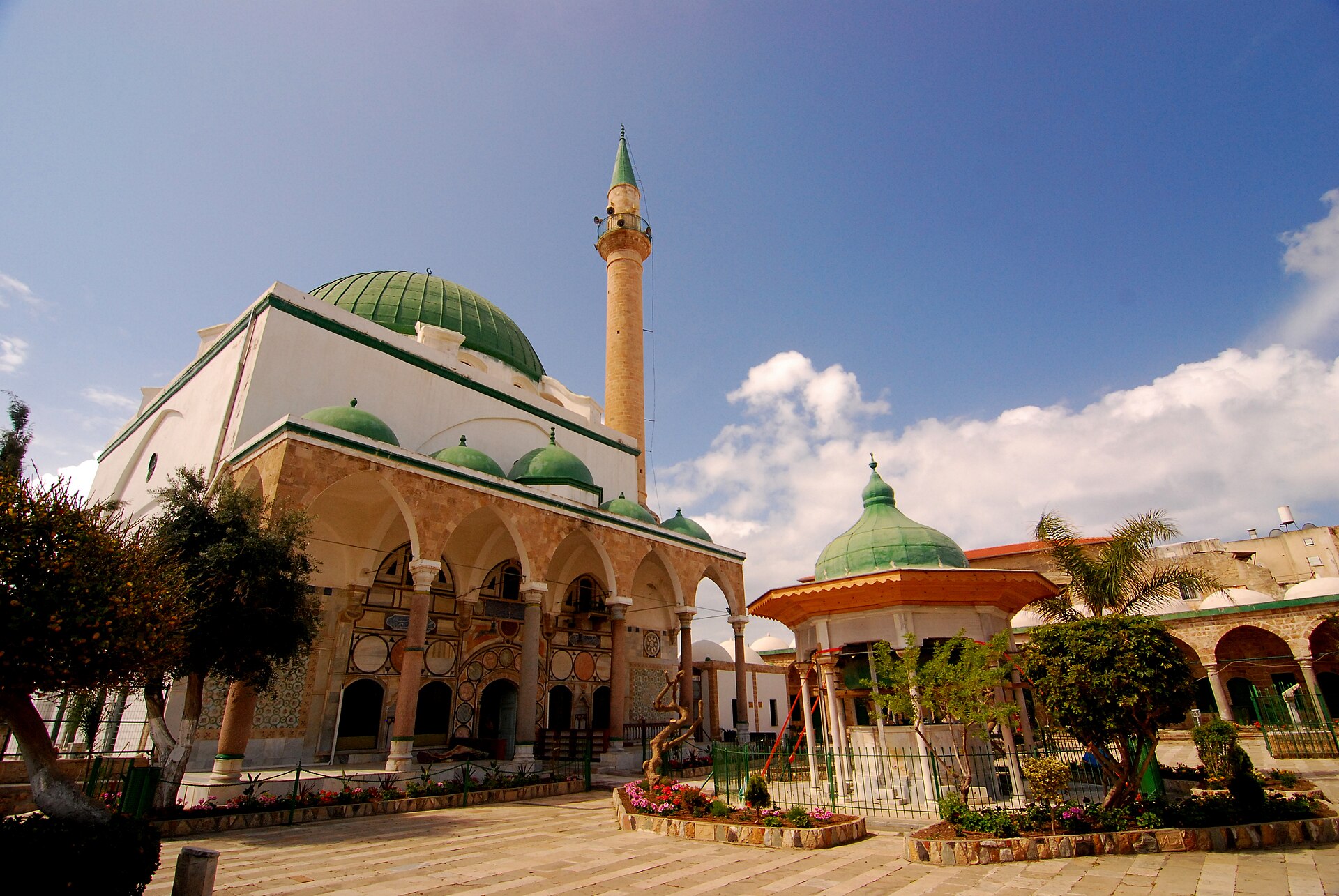
The architecture of Al-Jazzar Mosque blends classical Ottoman design with local influences, creating a structure that feels both imposing and harmonious. Its large central dome, flanked by smaller half-domes, dominates the skyline, while the towering minaret serves as a beacon for travelers approaching the city. Inside, the prayer hall is a study in light and space, with high arched windows casting sunbeams across marble columns and the intricately carved mihrab. The minbar, a masterpiece of stonework, and the grand chandelier suspended from the ceiling add to the sense of grandeur. The walls are adorned with geometric tilework, a hallmark of Ottoman craftsmanship, though the hands of local artisans give the patterns a subtle, regional twist.
The mosque’s courtyard is as much a part of its character as the prayer hall. Here, a fountain for ablutions sits beneath an arcade, offering a quiet respite from the heat. Old trees provide shade, their branches swaying gently over the graves of al-Jazzar and his inner circle, buried in a small cemetery tucked into one corner. The tombstones, inscribed with Arabic calligraphy, are simple yet dignified, each one a silent testament to the lives they mark. The atmosphere is one of stillness, as if the courtyard exists slightly outside of time, inviting visitors to pause and reflect.
Beyond its religious significance, the mosque played a central role in Acre’s civic life. During its heyday, it housed a madrasa where students studied the Quran, law, and other sciences. It was also a gathering place for the city’s elite, where disputes were settled and decisions made. Even after al-Jazzar’s death, the mosque remained a symbol of unity for Acre’s Muslim community, enduring through the city’s turbulent transitions—from Ottoman rule to Egyptian occupation, and later, British control.
Today, the mosque continues to serve as an active place of worship, its courtyard filling with the faithful during prayer times. Yet it also welcomes visitors, who can explore its halls between services. It’s worth remembering that this is not just a historical site but a living space where people come to pray, so respect for its traditions is essential. Women are advised to cover their heads and shoulders, and all visitors should remove their shoes before entering the prayer hall.
Acre itself is a city of contrasts, where a single street might lead past a Crusader fortress, a Christian monastery, a Jewish synagogue, and a Muslim mosque. In this context, Al-Jazzar Mosque is more than just an architectural landmark—it’s a reminder of how different cultures and faiths have coexisted here for centuries. It stands at the crossroads of history, where every stone holds the memory of those who built, worshipped, and lived within its walls.
A visit to the mosque pairs naturally with a walk through Acre’s Old City. From here, it’s a short stroll to the Crusader fortress, the Templar tunnels, and the lively market where vendors sell spices, fabrics, and fresh seafood. As evening falls, the minaret is illuminated, its silhouette mirrored in the waters of the harbor. In moments like these, Acre reveals itself not just as a dot on a map, but as a place where history, faith, and daily life intertwine in ways that feel both timeless and immediate.