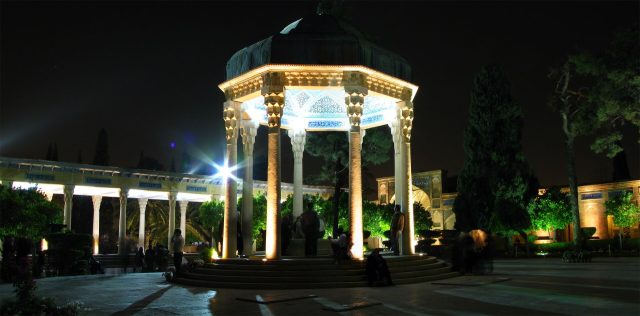
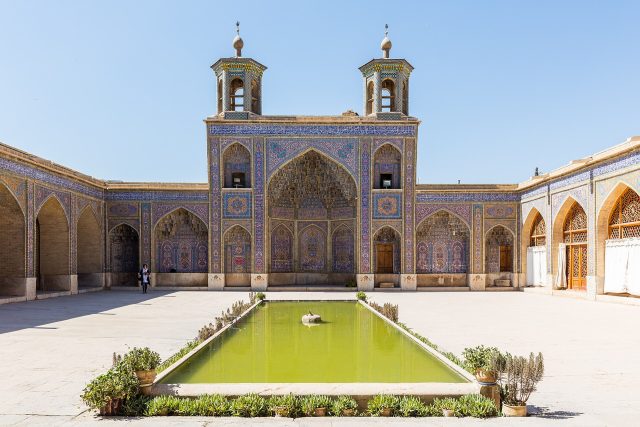
This place doesn’t feel like a tourist attraction. It feels like a quiet conversation with history. The architecture and gardens matter, but what stays with you is the sense of standing near someone whose words outlasted empires. Saadi, the 13th-century poet, is buried here. His verses on love, wisdom, and human nature are still read today, and the tomb carries that legacy without heaviness.
Saadi’s life shaped his poetry. Born in Shiraz when Persia was both flourishing and fractured, he spent decades traveling—North Africa, India, across the Islamic world. When he returned, he wrote the *Bustan* (Orchard) and the *Golestan* (Rose Garden). His writing isn’t grand or abstract. It’s immediate, almost like advice from a friend. Centuries later, his words are still quoted in everyday speech, taught in schools, and used as proverbs.
The tomb is modern. For most of its history, Saadi’s grave was a modest marker. In the 20th century, a structure was built to honor him. The blue-tiled dome nods to Persian architecture, while the open courtyard with fountains invites visitors to stay. Inside, the atmosphere is hushed. The poet’s marble tomb lies beneath a glass canopy, etched with his verses. There’s no grand monument, just a quiet acknowledgment of a life that still speaks.
The gardens are part of the experience. Designed in the Persian style, they’re symmetrical and tranquil—paths lined with cypress and plane trees, flowerbeds in geometric patterns, water flowing through narrow channels. On any day, you might see students debating under the trees, elderly men playing backgammon, or families picnicking. The gardens feel shared, where past and present coexist. The air smells of roses and damp soil.
Shiraz is a city of poets. Hafez is buried here too, and visitors often see both tombs in a day. But Saadi’s resting place feels different. It’s not about spectacle. People come, sit, read, reflect. Some leave flowers, coins, or handwritten notes near the tomb, continuing a dialogue that began centuries ago. The place doesn’t demand attention; it earns it.
The tomb is unassuming. No grand declarations explain its importance. Instead, the space lets the words speak. Lines from the *Golestan* and *Bustan* are carved into the walls. One of the most famous—"The children of Adam are limbs of one body, / For in their creation they are of one essence"—feels fitting here. Saadi’s work wasn’t just about beauty; it was about connection, about shared humanity.
The tomb has changed over the years, with additions reflecting different eras. Yet its core remains: a tribute to a man who captured something universal. Locals visit too, some out of habit, others out of affection for a poet whose words still feel relevant. On certain days, you might hear someone reciting his verses aloud, their voice low, as if the words are meant more for themselves than for others. In these moments, the tomb feels alive—not a relic, but part of Shiraz’s cultural heartbeat.
You don’t need special knowledge to visit. No strict rules, no rituals. Wander the gardens, sit by the fountains, or stand in the quiet inner chamber. Early morning or late afternoon is best, when the light is soft and crowds are thin. If you’re lucky, you’ll catch the scent of roses or the sound of water. Even without those, the place slows you down. It reminds you that some things—like the search for meaning, the need for kindness—are timeless. Saadi knew that. His tomb keeps the conversation going.