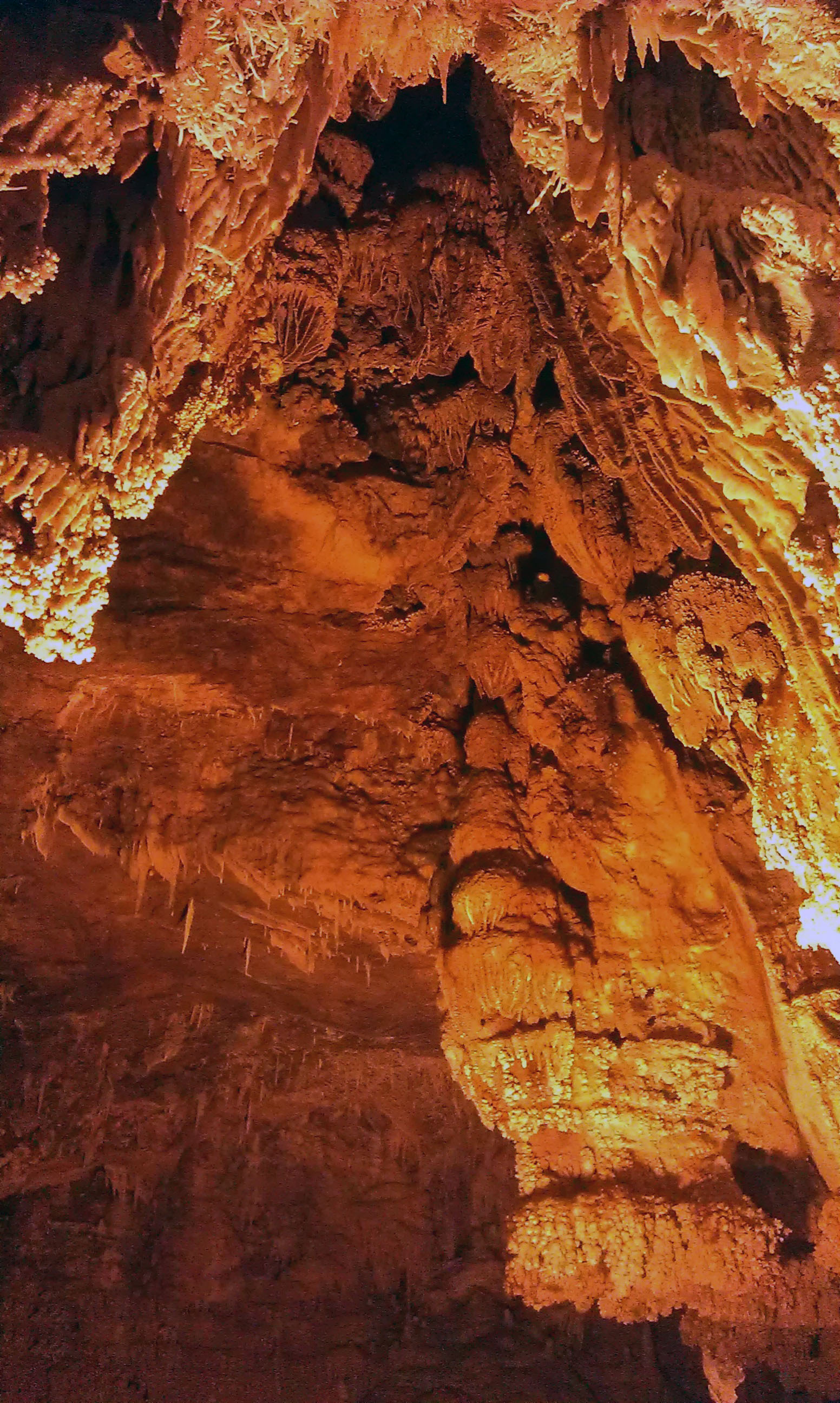
Ali-Sadr Cave is one of those rare places where time seems to stand still. Tucked away in the mountains north of Hamadan, it feels like stepping into another world entirely. The journey there winds through rugged terrain, the road curling around rocky outcrops before revealing a modest entrance hidden behind a low hill. But the moment you descend underground, the familiar fades away. Instead of the usual damp gloom of caves, Ali-Sadr greets visitors with softly lit chambers where still, mirror-like lakes reflect the glow of artificial lights. The water is so clear that the boat beneath you seems to float in midair, the boundary between surface and depth dissolving into illusion.
The cave’s origins stretch back millions of years, shaped by ancient rivers carving through limestone to create a labyrinth of tunnels and vast, echoing halls. Locals have known about it for centuries, though the wider world only learned of its existence in the mid-20th century. Since then, it has become one of Iran’s most visited natural wonders, yet it retains an air of mystery. Unlike other caves, Ali-Sadr lacks the jagged stalactites and stalagmites that usually define such places. Here, the walls are smooth, polished by water over millennia, their surfaces gleaming under the light. The chambers are so vast that a whisper can carry for what feels like miles, bouncing off the stone before fading into silence.
Exploring Ali-Sadr is less about sightseeing and more about experiencing something beyond the ordinary. The main attraction is the underground waterway, where visitors glide along in flat-bottomed boats. There are no oars—local guides use long poles to push off the walls, steering the boats through narrow passages that suddenly open into expansive caverns. The water is eerily still, disturbed only by the occasional ripple from the pole. At times, the ceiling seems to press down so close that you instinctively duck, only for the tunnel to widen again, revealing another breathtaking chamber. In one of these spaces, a small viewing platform offers a moment to pause and watch the play of light on the water’s surface, the reflections shifting with every movement.
What sets Ali-Sadr apart from other caves is its atmosphere. There’s no damp chill or musty air here—instead, the cave maintains a cool, almost crisp freshness year-round, like a natural air conditioner. The water in the lakes is so pure it’s drinkable, though visitors are advised against it. The temperature hovers around twelve degrees Celsius regardless of the season, making it a refreshing escape from the summer heat. In winter, snow might blanket the entrance, but inside, nothing changes. The same quiet, the same cool air, the same sense of timelessness.
The cave’s history goes far beyond its modern discovery. Archaeological evidence suggests humans have used this space since prehistoric times. Faint drawings on the walls depict hunters and animals, while inscriptions in Aramaic hint at the people who once sought shelter here. Some believe early settlers took refuge in these chambers, hiding from invaders or harsh weather. Others think the cave held spiritual significance, a place for rituals and ceremonies. Whatever the truth, Ali-Sadr carries the weight of those who came before, their presence lingering in the stillness.
Today, the cave is well-equipped for visitors, with safe pathways, lighting, and even a small market near the entrance where you can buy souvenirs or grab a bite. Yet despite these modern touches, it hasn’t lost its raw, untouched feel. The boatmen, many of whom have worked here for decades, know every twist and turn of the underground rivers. They share stories—some passed down through generations, others based on fact—that add layers to the experience. Whether it’s a local legend or a historical detail, their tales make the cave feel alive in a way that guidebooks never could.
Ali-Sadr isn’t just a tourist attraction; it’s a place where nature and history intersect in unexpected ways. It reminds you how little we truly know about the world beneath our feet, how much remains hidden in the dark. That sense of discovery is what draws people back, time and again. You don’t have to be the first to set foot here to feel like an explorer. The real magic lies in the moment you step inside, when the familiar world above fades away, and for a little while, you’re part of something much older, much larger than yourself.