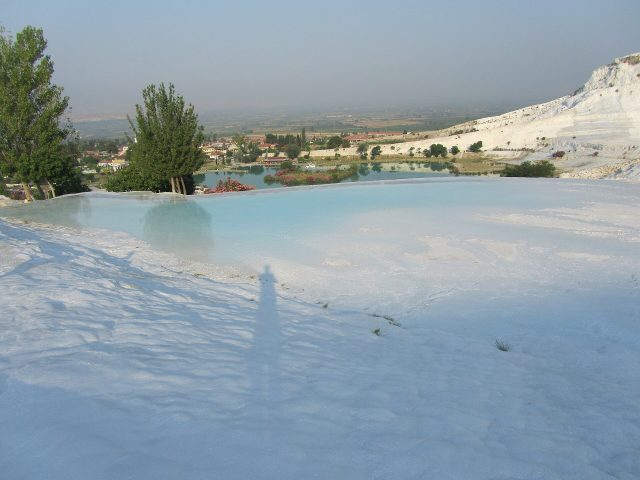
Perched on a quiet hill above Pamukkale’s famous thermal terraces, the Martyrion of Saint Philip feels like a place time forgot. Unlike the bustling crowds drawn to the gleaming white travertines below, this ancient ruin carries a different kind of weight—one of quiet reverence and the echoes of early Christianity in Anatolia. Built to honor Philip the Apostle, one of Jesus’s twelve disciples, the structure stands as a testament to the faith’s fragile beginnings in a land where pagan traditions once dominated.
The story of the martyrion is inseparable from the legend of Philip’s death. According to tradition, he preached in Hierapolis, the ruined city just a short walk away, where his teachings clashed with local beliefs. The apostle was said to have been crucified upside down, a brutal end that later turned the site into a place of pilgrimage. Archaeologists date the building to the fifth century, though its exact origins remain debated. What is certain is that it was constructed over the spot believed to be his final resting place, making it one of the earliest Christian memorials in the region.
The architecture of the martyrion is striking for its departure from the typical basilica design of the time. Instead of a rectangular hall, it takes the form of an octagon, crowned with a central dome and surrounded by galleries. This unusual shape, rare in early Christian structures, may have symbolized resurrection and eternal life. Inside, fragments of mosaic floors and faded frescoes hint at the building’s former grandeur, though much of the decoration has been lost to time. The altar, positioned in the center rather than the eastern end as was customary, suggests a deliberate connection to the site of Philip’s martyrdom.
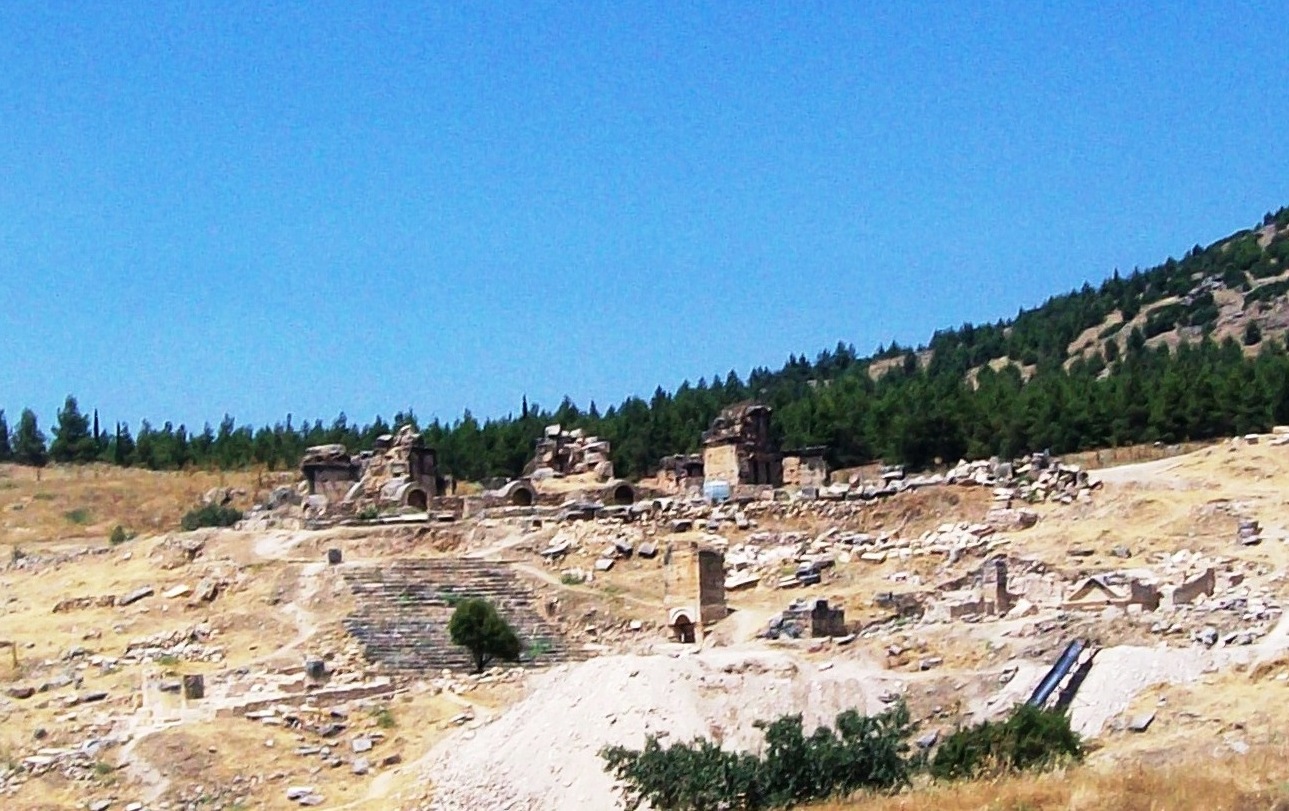
Today, only the skeletal remains of the structure endure, yet they hold a quiet power. The limestone walls, weathered but still standing, outline the octagonal plan amid the overgrown ruins. Nearby, the foundations of other buildings—likely monastic cells or service quarters—speak to a once-thriving community. Archaeologists continue to uncover new details here, each discovery adding another layer to the story of Hierapolis’s early Christian inhabitants.
Visiting the martyrion is as much about the atmosphere as it is about history. From the hilltop, the view stretches across the Meander Valley, where Hierapolis once flourished as a center of trade, healing, and faith. On clear days, the ruins of the ancient theater are visible in the distance, the same stage where Philip is said to have preached. The landscape itself feels like a palimpsest of cultures—pagan temples, Christian shrines, and Roman baths all coexisting in the same soil. It’s a reminder of how fluid belief was in this corner of the world, where one era’s sacred ground became another’s.
The best time to come is early morning or late afternoon, when the light softens the stones and the heat of the day eases. The only sounds are the distant murmur of thermal springs below and the occasional rustle of wind through the olive trees. There are no crowds here, no guided tours rushing through—just the quiet hum of history. It’s the kind of place that demands stillness, where the past isn’t just observed but felt in the cool shade of the ruins.
For those drawn to early Christian history, the martyrion offers something rare: authenticity. Unlike the grand cathedrals of Istanbul or Ephesus, it hasn’t been restored or repurposed. There are no modern reconstructions, no interpretive signs—just the raw, unfiltered remains of a place where people once gathered to honor a man who died for his faith. In that sense, it’s more than an archaeological site; it’s a living fragment of a story that began two thousand years ago and still lingers in the silence.
If you find yourself in Pamukkale, resist the urge to rush straight to the travertines. Take the path up the hill, past the gnarled olive trees, and let the ruins of the martyrion unfold before you. There’s no fanfare here, no grand narrative—just the quiet persistence of stone and the faintest whisper of the past. It’s the kind of place that doesn’t reveal itself all at once but leaves you with the sense that some stories are best discovered in the spaces between the words.