Nazareth’s Marian International Square is a place where the past doesn’t linger in the shadows—it breathes alongside the present. Tucked into the heart of the old city, the square sits where ancient trade routes once converged. Today, the streets hum with the footsteps of pilgrims, locals, and travelers drawn to the city’s layered history. It’s a crossroads of paths and meanings, where religious devotion, daily life, and centuries of history intersect.
The square is named after the veneration of the Virgin Mary, central to Nazareth’s identity. This is the town where, according to tradition, Mary spent her childhood, and where the Archangel Gabriel delivered the Annunciation in a home later incorporated into the Basilica of the Annunciation. The square extends that legacy, gathering people of different faiths and backgrounds who come to honor the events that shaped Christianity. Here, the sacred isn’t confined to church walls—it spills into the open, inviting reflection, conversation, and quiet disagreement. The square isn’t just a religious site; it’s a symbol of how stories, no matter how old, shape how people see the world.
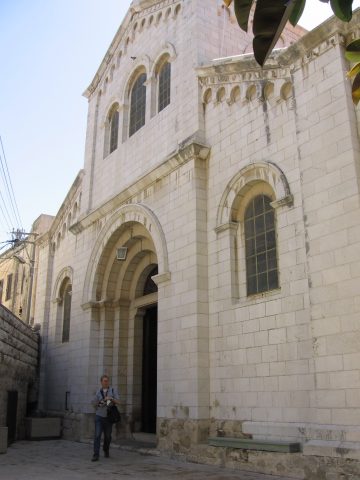
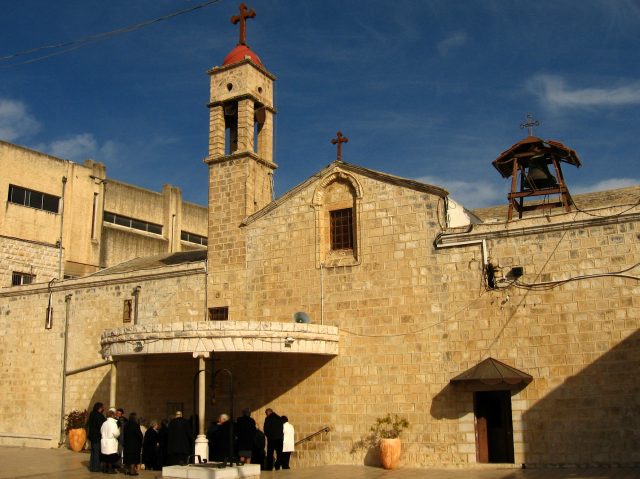
The architecture around the square reflects time’s passage. Ottoman-era houses with arched doorways and weathered stone stand beside mid-20th-century buildings. The Franciscan monastery, with its thick walls and quiet courtyards, has endured for centuries. Inside, manuscripts and artifacts preserve fragments of Nazareth’s past, though the monastery remains a living institution. Nearby, the Greek Orthodox Church of the Archangel Gabriel marks where, according to some traditions, Mary first heard the angel’s message. The Catholic Church of St. Joseph, built over what may have been Joseph’s carpentry workshop, adds another layer. These buildings don’t just coexist—they overlap, their styles and histories blending organically.
In the early morning, the square is quiet: vendors set up stalls, the scent of fresh bread drifts from bakeries, and cafés open their shutters. By midday, it fills with movement—pilgrims pause for photos, children dart between adults, and languages from around the world mix in the air. During festivals like the Feast of the Annunciation or Christmas, the square transforms. Processions wind through the streets, choirs sing hymns, and incense thickens the air. For a few days, the square becomes a stage for devotion, where past and present blur.
Yet the square is also where daily life unfolds. The morning market is a sensory experience—piles of figs and pomegranates, sacks of spices, bottles of olive oil, and trays of knafeh. Artisans sell olive-wood carvings, hand-painted ceramics, and embroidered textiles, their crafts passed down through generations. In the cafés, people linger over Arabic coffee or plates of hummus and falafel, arguing about politics or sharing stories. Here, history isn’t just remembered—it’s lived.
For many, the square is the starting point for exploring Nazareth. From here, the old city’s narrow streets lead to more layers of the town’s past. A short walk away, the Greek Orthodox Church of the Annunciation stands over a spring where Mary once drew water. Closer still is the Basilica of the Annunciation, its modernist design contrasting with older structures. The basilica’s mosaics, depicting Mary in different cultural traditions, show how her story has traveled across continents.
What makes Marian International Square special is how it holds contradictions. Devotion and commerce coexist, ancient traditions meet the modern world, and people of different faiths share the same space for their own reasons. The square mirrors Nazareth—a town where cultures, religions, and ideas have long intersected. It doesn’t demand reverence; it invites curiosity, offering a glimpse into how past and present shape each other in unpredictable ways.
To visit the square is to step into a rhythm that’s played for centuries. The stones underfoot have borne countless footsteps, the walls have absorbed prayers and conversations, and the air carries the scent of incense and fresh bread. You can sit on a bench and watch the world go by or join the flow of people moving toward the next destination. Either way, you leave feeling that Nazareth isn’t just a city to see—it’s a city to experience, where every corner holds a story, and the square is where it all begins.