The Basilica of the Annunciation in Nazareth is one of Christianity’s most sacred sites, marking the place where, according to tradition, the Archangel Gabriel appeared to the Virgin Mary to announce the birth of Jesus. This moment, known as the Annunciation, became the starting point of the Gospel narrative, and the church built here has stood as a testament to it for nearly two thousand years. Over centuries, the basilica has been more than just a place of worship—it has been a symbol of faith’s endurance through war, conquest, and time itself.
The building we see today is the result of layers of history, each era leaving its mark. The first church on this site dates back to the Byzantine period in the fourth century, when Christianity was still establishing itself as the dominant religion of the Roman Empire. Later, Crusaders constructed a grand Romanesque cathedral here, only for it to fall into ruin after their departure. In the nineteenth century, Franciscan monks, who had been granted custody of the holy site, restored parts of the structure. The final form of the basilica emerged in the mid-twentieth century, when Italian architect Giovanni Muzio designed the modern building that now stands—a structure that blends the past with the present in its very stones.
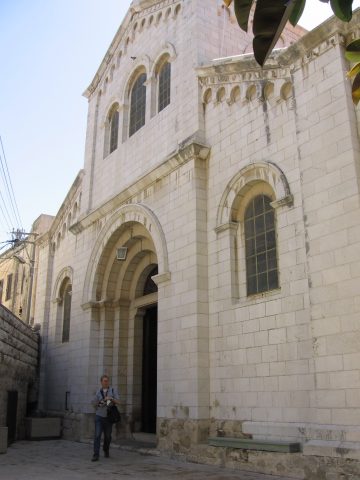
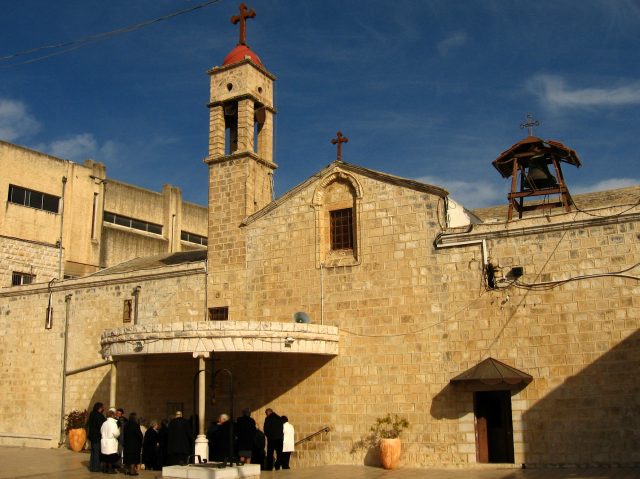
From the outside, the basilica resembles a fortress, its thick walls built from local stone. This was no accident; the design was meant not only to honor the Annunciation but also to protect the sacred space within. Inside, however, the atmosphere shifts. The interior is vast and luminous, with high vaulted ceilings and mosaics dedicated to the Virgin Mary. The focal point is the grotto beneath the main altar, believed to be the very cave where the Annunciation took place. Here, ancient frescoes and inscriptions in countless languages cover the walls, left by pilgrims over generations as silent witnesses to their devotion.
Nazareth itself is a city that moves to a different rhythm than Jerusalem or Bethlehem. There are no crowded pilgrim routes here, no hurried footsteps. Instead, life unfolds slowly, preserving the quiet charm of an Arab town. Narrow streets wind between whitewashed houses with flat roofs, while markets overflow with spices, fresh produce, and the hum of daily commerce. The basilica rises above it all, not just as a religious landmark but as a reminder of the city’s deep history. For those who visit, Nazareth offers a glimpse into a way of life that has changed little over centuries, where the past feels closer than elsewhere in the region.
While the basilica is a place of pilgrimage for Christians, it also draws those interested in history and architecture. The layers of its construction tell a story of cultural exchange: Byzantine mosaics sit alongside Crusader arches, while modern stained glass complements ancient murals. Each element reflects a different era, yet together they create a harmonious whole. The basilica is not a museum piece but a living monument, where the weight of history is palpable in every corner.
For Catholics, the basilica holds particular significance, as the Franciscan order has been its custodian for centuries. Today, services are held regularly, and during major feast days—especially the Feast of the Annunciation—the church fills with worshippers from around the world. Even on ordinary days, the space is quiet, broken only by the soft murmur of prayers or the echo of footsteps. This sense of stillness makes the basilica a place where history is not just observed but felt, where the past lingers in the air like incense.
Beyond its religious importance, the basilica is a meeting point of faith, culture, and history. It stands as a reminder of how a single moment—one fragile human encounter—can shape the course of centuries. For many visitors, the church is an unexpected revelation. There is no grand opulence here, no gilded excess. Instead, there is authenticity, a quiet power that resonates more deeply than any ornamentation. Perhaps that is why people return to this place, drawn not by spectacle but by something far more enduring: the chance to stand where history began and to feel, even briefly, a connection to something greater than themselves.