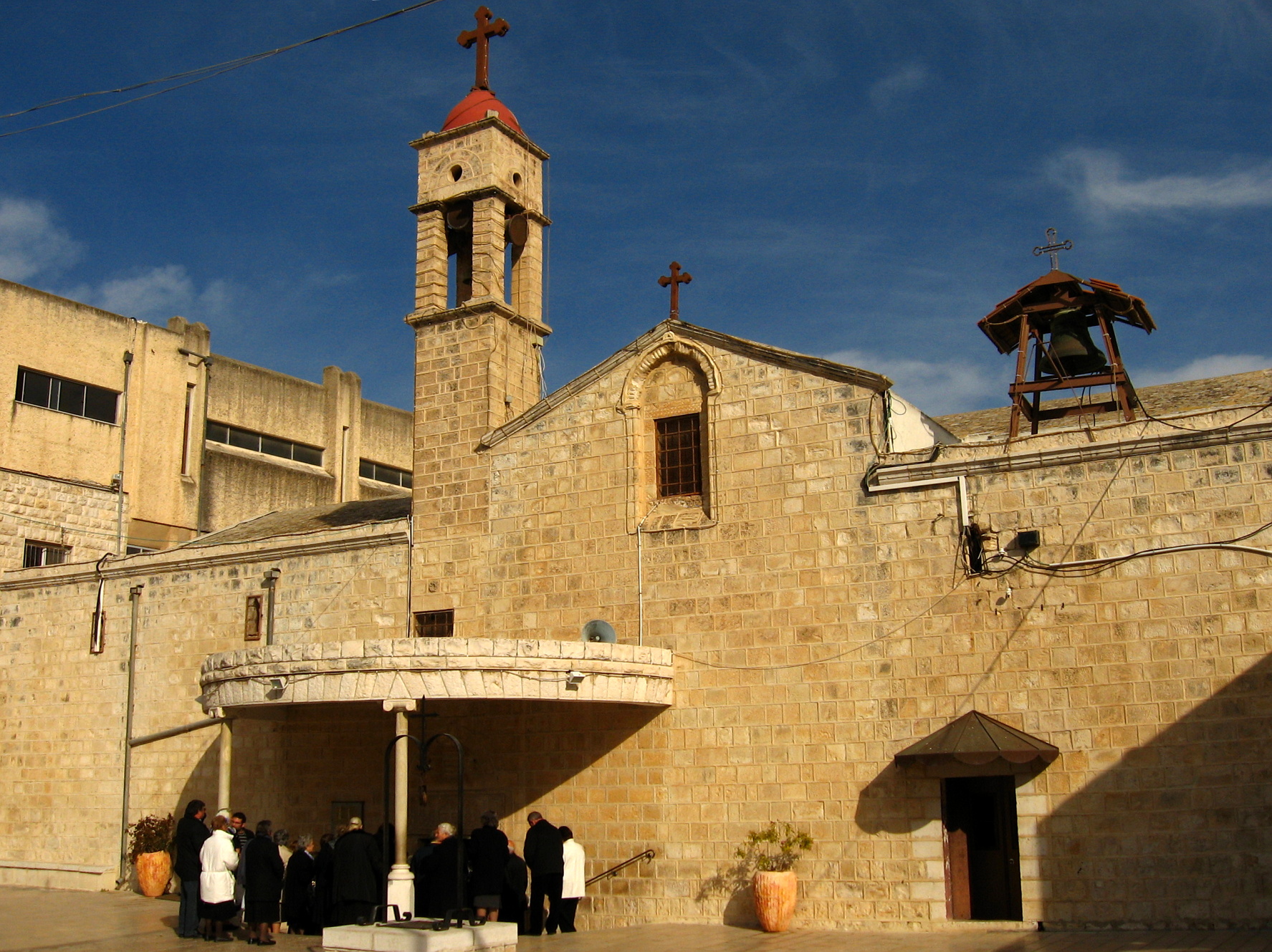
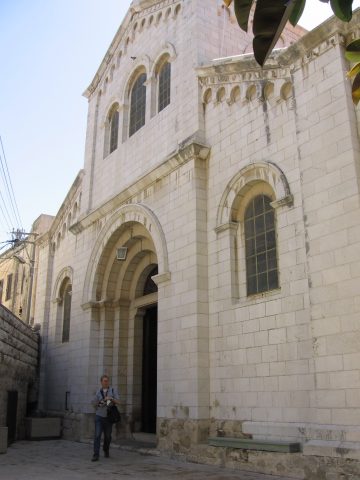
Nazareth is a place where time seems to fold in on itself, where the weight of history presses against the present in quiet, unexpected ways. The Greek Orthodox Church of the Annunciation stands on a hillside in the heart of the old city, a modest yet enduring presence amid the narrow streets and stone houses. Unlike the more famous Catholic basilica nearby, this church doesn’t draw crowds of tourists, but it holds its own kind of quiet significance—a place where faith and tradition have settled into the very bones of the building.
The church is tied to the same biblical event as its Catholic counterpart: the moment when the Archangel Gabriel appeared to the Virgin Mary. Yet the Orthodox tradition here focuses less on the dramatic revelation itself and more on the everyday setting where it unfolded. According to local belief, the church marks the site of a spring or bathhouse where Mary once drew water. This subtle shift in emphasis reflects a broader Orthodox approach to holy sites—not as mere historical markers, but as living spaces where the sacred lingers in the ordinary.
The architecture is unassuming, in keeping with many Orthodox churches across the Middle East. White stone walls rise to a simple dome crowned with a cross, and the facade offers no grand flourishes. Inside, the space is intimate, adorned with frescoes and icons in the Byzantine style. There are no gilded mosaics or elaborate carvings, just the soft glow of oil lamps and the scent of incense clinging to the air. The wooden iconostasis, darkened by time, frames the altar with a sense of reverence that feels almost tangible.
The church sits in the oldest part of Nazareth, where the past is still visible in the worn cobblestones and the low-slung houses with their flat roofs. This is a neighborhood where life moves at its own pace—where shopkeepers sell olive oil and spices from small stalls, and the call to prayer from a nearby mosque mingles with the tolling of church bells. The Greek Orthodox Church of the Annunciation feels like a natural part of this landscape, as if it has always been here, rooted in the same earth as the rest of the city.
Its history stretches back centuries, though the exact origins are difficult to trace. The first records of a church on this site date to the Byzantine era, when Nazareth was already a destination for pilgrims. Like many holy places in the region, it has been rebuilt and restored countless times—after the Crusades, during Ottoman rule, and again in the 19th century, when the Orthodox community in Nazareth began to revive. Each layer of history is still present, not just in the stones but in the way the church continues to function as a place of worship.
Today, services are held in both Greek and Arabic, reflecting the dual identity of the congregation. For the local community, this is not a tourist attraction but a living part of their daily lives. Baptisms, weddings, and funerals take place here, and the rhythms of the liturgy mark the passing of time just as they have for generations. The church is not frozen in the past; it breathes, changes, and adapts alongside the people who call it home.
Most visitors to Nazareth head straight for the grand Catholic basilica, but those who wander into the Greek Orthodox church often find something different—a stillness that feels rare in a place so steeped in history. There are no guided tours or audio explanations here, just the quiet murmur of prayers and the occasional creak of an old wooden door. The Orthodox tradition treats holy sites as places of contemplation rather than spectacle, and that sense of quiet devotion is palpable.
Nazareth itself is a city of contrasts, where ancient traditions collide with modern life in ways that can feel both jarring and seamless. The Greek Orthodox Church of the Annunciation embodies that tension. It stands as a reminder that history is not something distant or abstract—it lives in the cracks of the walls, in the flicker of candlelight, in the voices of those who gather here to pray. For some, it is a place of pilgrimage; for others, simply a refuge from the noise of the world. Either way, it endures, as it always has, quietly holding the past within its walls.