Mangup is one of those rare places where the past doesn’t just linger—it feels alive, as if the centuries have settled into the very stones beneath your feet. Perched atop a mountain plateau in Crimea, this ancient site was once a fortress of unshakable strength, the capital of the Principality of Theodoro, and one of the most influential cities along the medieval Black Sea coast. Today, its ruins tell a story more vivid than any history book, a tale of resilience, ambition, and eventual decline.
The history of Mangup stretches far beyond its medieval heyday. Archaeologists have uncovered traces of Bronze Age settlements here, but the plateau’s true significance began in the Byzantine era. In the 6th century, Emperors Justinian I and Justinian II fortified the site, turning it into a strategic stronghold to control the southern coast. By the 14th and 15th centuries, Mangup had become the heart of the Principality of Theodoro, the last bastion of Byzantine culture resisting Ottoman expansion. The city thrived—minting its own coins, constructing grand churches, and forging alliances with Moscow’s princes. Yet in 1475, after a grueling siege, Mangup fell to the Ottomans, marking the end of its independence.
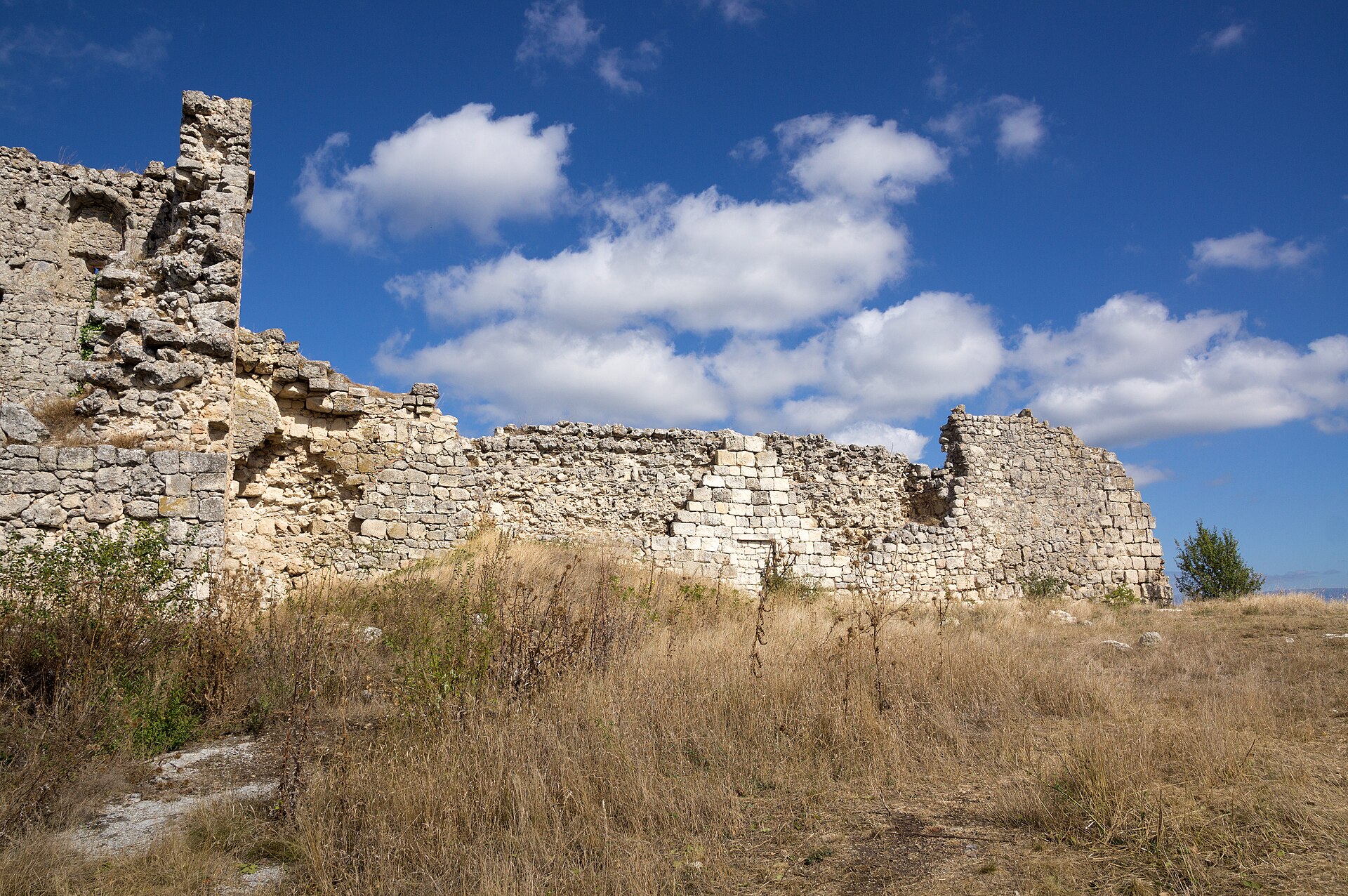
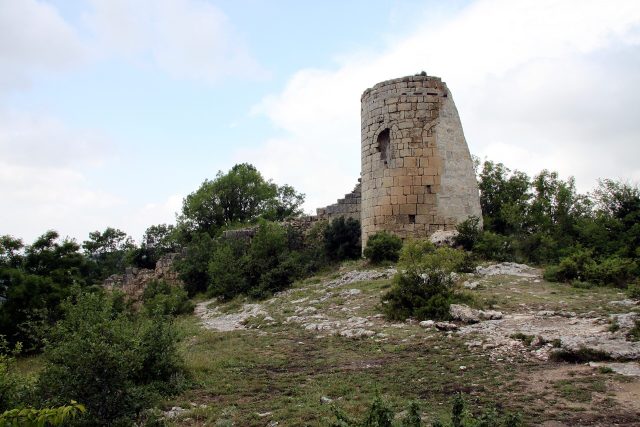
What remains of Mangup’s architecture is a silent chronicle carved into limestone. The most striking feature is the fortress walls, stretching nearly two kilometers along the plateau’s edge, following the natural cliffs. In places, they still stand several meters high, a testament to the skill of their builders. Within the walls lie the remnants of the Theodoro princes’ palace—a modest but elegant structure with carved columns and faded frescoes. Nearby, the outlines of a basilica hint at its former grandeur. Originally built during Byzantine rule and later modified by the Genoese, the church was eventually destroyed, though fragments of its mosaic floors and column capitals can still be spotted among the overgrown ruins.
The plateau is riddled with hundreds of man-made caves, each serving a different purpose. Some were simple cells for monks, while others were elaborate underground churches with niches for icons and faded murals. A few were used as storage or living quarters, a practical adaptation to the harsh mountain environment. The most famous of these is the "Church of the Three Horsemen," named for the carved figures of saints etched into the rock. These caves offer a glimpse into how people once integrated the natural landscape into their daily lives, turning stone into shelter, sanctuary, and even art.
Walking through Mangup is less about ticking off sights and more about stepping into another era. The plateau is divided into terraces, each once home to different parts of the city. The lower terrace bustled with markets and workshops, the middle held the palace and administrative buildings, and the highest was the citadel, the last line of defense. Today, the silence is broken only by the wind or the occasional murmur of visitors. Yet if you listen closely, you can almost hear the echoes of the past—the clatter of swords, the haggling of merchants, the murmurs of prayer rising from the churches.
Like many places steeped in history, Mangup is wrapped in legend. One tale speaks of Prince Alexander of Theodoro, who chose death over capture when the Ottomans breached the city’s defenses. According to local lore, he leapt from a cliff with his family, and visitors are still shown the spot where this dramatic end unfolded. Another story claims that the caves of Mangup hide treasures left behind by Byzantine emperors, though no one has ever found them. Whether these legends hold any truth is beside the point—they add to the mystique of the place, making it feel like a land suspended between history and myth.
Beyond its historical significance, Mangup is also a natural sanctuary. The plateau is home to rare plants, and its cliffs provide nesting grounds for eagles and falcons. On clear days, the view from the top is breathtaking—rolling green valleys, winding rivers, and in the distance, the shimmering expanse of the Black Sea. It’s easy to lose yourself here, to forget the modern world and imagine you’ve stumbled into a time when the land was wild and the cities were built to last.
Visiting Mangup isn’t something to rush. This isn’t a place you can see in an hour, snapping photos of the highlights before moving on. To truly understand it, you need to wander the paths, climb to the viewpoints, explore the caves, and sit quietly on the rocks, letting the landscape speak to you. There are no crowds, no souvenir stands, no cafes—just the wind, the sun, and the weight of history pressing down on you.
Mangup isn’t for everyone. It doesn’t offer comfort or entertainment, and it won’t dazzle you with grand restorations. What it does offer is something far more rare—a chance to stand in a place where the past feels tangible, where every stone carries the memory of people who lived, fought, and died here. It’s a reminder of how fleeting human achievements can be, and yet how enduring their traces remain. That, perhaps, is why Mangup continues to draw those who seek not just a destination, but a connection to something deeper.