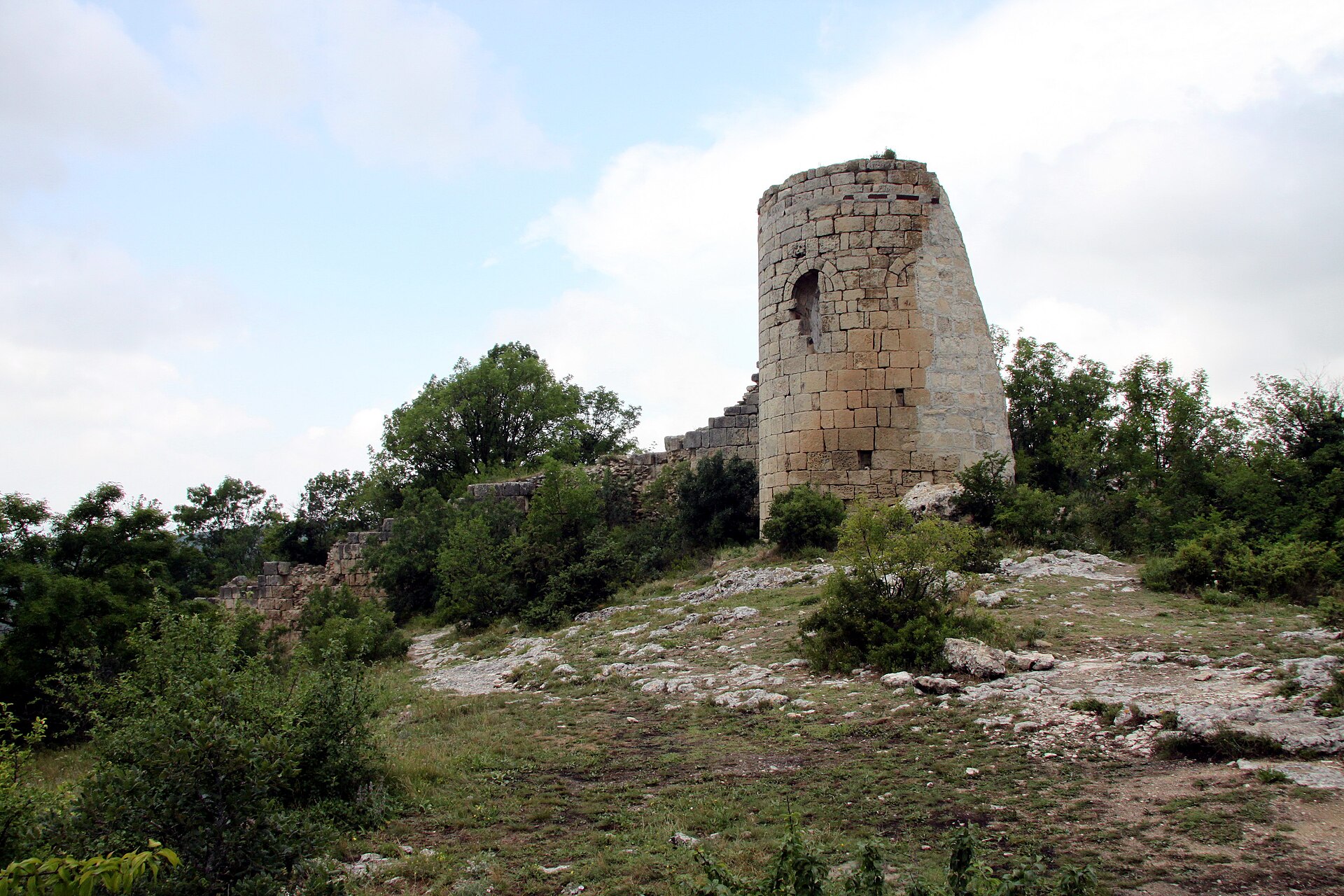
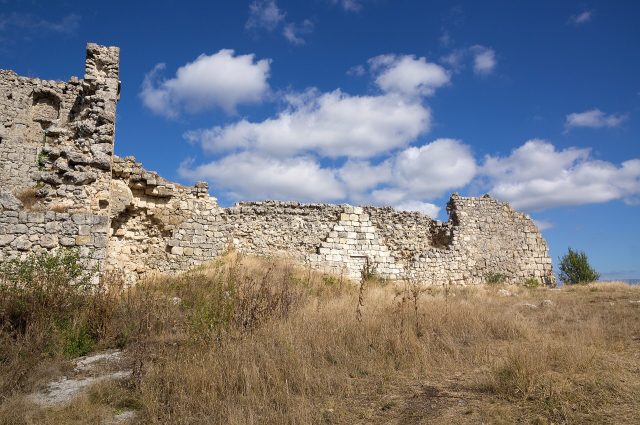
Perched on a rocky spur above the Belbek River valley, the ruins of Süyren Fortress feel like a place where time has quietly paused. From its crumbling walls, the view stretches across rolling hills and ravines that once carried trade routes and military roads, now overgrown with wild grasses and the occasional gnarled tree. The fortress itself is more a whisper of history than a grand monument—its stones still hold the echoes of those who lived, fought, and passed through here centuries ago, though today it stands in peaceful solitude, far from the well-trodden tourist paths of Crimea.
The origins of Süyren are shrouded in the kind of mystery that often surrounds medieval strongholds. Most historians agree it was built between the 6th and 7th centuries, likely by the Byzantines as a southern outpost of their empire. Later, during the Genoese period in the 14th and 15th centuries, it became part of a network of fortified trading posts linking the coastal colonies to the Crimean interior. The Genoese, who controlled much of the Black Sea trade from their base in Caffa (modern Feodosia), would have used Süyren as a waypoint for goods moving between the coast and the ancient city of Chersonesus. By the time the Ottomans took over in the late 15th century, the fortress had already begun to fade into obscurity, its strategic importance dwindling as new powers reshaped the region.
The layout of Süyren follows the natural contours of the cliff it sits on, its elongated shape dictated by the rugged terrain. The walls, built from local limestone and rubble, reach up to two meters thick in places, though time and the elements have worn them down. A few remnants of watchtowers still cling to the edges, offering glimpses of how the fortress once commanded the surrounding landscape. Inside, the ruins of living quarters, storage buildings, and even a small church hint at a community that wasn’t just military—families, craftsmen, and traders would have called this place home. The main gate, now reduced to scattered stones, was once the only way in or out, guarded against invaders and bandits.
Süyren was never a major city or administrative hub, but its role in the region’s history was far from insignificant. It served as a vital link between the coastal settlements and the Crimean heartland, providing shelter for caravans and troops moving through the valley. During times of conflict, it became a refuge for locals fleeing raids by nomadic tribes or advancing armies. The fortress withstood sieges and skirmishes, its walls bearing silent witness to the struggles of those who sought safety within them. Today, it’s hard to imagine the noise and chaos of battle when standing among the quiet ruins, but the land itself seems to remember.
What makes Süyren special is its atmosphere—one of quiet decay, where nature slowly reclaims what was once built to defy it. Weeds push through cracks in the stone, ivy climbs the walls, and the wind moves freely through the empty courtyards, as if carrying stories from the past. There are no crowds here, no guided tours or souvenir stalls, just the sound of birds and the rustle of leaves. For those who prefer their history without the polish of reconstruction, Süyren offers something rare: a sense of raw, unfiltered time. It’s the kind of place where you can sit on a fallen block of stone and feel the weight of centuries pressing down, not as a distant concept, but as something tangible.
Reaching the fortress requires a bit of effort. The journey begins in the village of Khodzha-Sala, where a narrow path winds through forests and open fields before climbing toward the cliffs. The hike takes about an hour, depending on your pace, and the route offers its own rewards—glimpses of wildlife, sweeping views of the Belbek Valley, and the quiet rhythm of walking through a landscape largely unchanged for centuries. As you approach the fortress, the trail steepens, the rocks grow sharper, and the sense of isolation deepens. There’s no entrance fee, no visitor center, just the ruins waiting at the end of the path. It’s wise to bring water and wear sturdy shoes, as the terrain can be uneven and exposed.
Unlike some of Crimea’s more famous fortresses, Süyren doesn’t try to impress with grand scale or meticulous restoration. It simply exists, a modest but enduring reminder of the people who once relied on its walls for protection. Nearby sites like Mangup-Kale and Eski-Kermen are larger and better preserved, with their own fascinating histories, but Süyren has a different kind of appeal. It feels like a secret, a place where history isn’t presented on a plaque but left to speak for itself. Here, the past isn’t curated—it’s something you stumble upon, piece by piece, as you explore the ruins.
The fortress is officially protected as a cultural heritage site, but its future depends on continued care. Weather and time are slowly eroding the remaining structures, and without restoration, some details may eventually disappear. Yet for now, Süyren stands as a bridge between the present and the past, inviting those who visit to step into a quieter, slower kind of history. It’s not a place for those seeking spectacle, but for those who appreciate the quiet persistence of the past—where every stone has a story, and every breeze seems to carry a fragment of it.