Pedernales Lighthouse stands at the southernmost tip of the Dominican Republic, where the land meets the Caribbean Sea near the border with Haiti. It’s one of those rare beacons that have become more than just a navigational aid—it’s part of the landscape, a quiet witness to the passage of time. Built in the mid-20th century, it still serves its original purpose, though these days its light guides fewer sailors and more travelers who wander off the usual tourist paths.
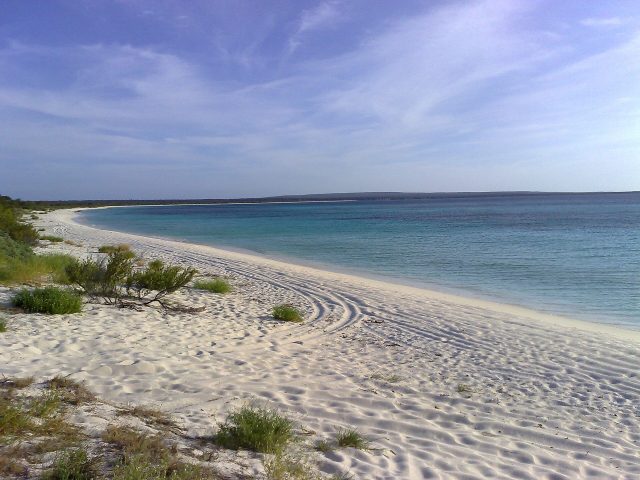
The area around the lighthouse feels suspended in time. Pedernales is a small town where life moves at its own unhurried pace, and the lighthouse has become more of a landmark than a necessity. The beaches here are wild and empty, their black sand a remnant of ancient volcanic activity, stretching toward low hills covered in dry scrub. In the distance, the mountains of Haiti rise on the horizon, a reminder that this corner of the Caribbean is where different worlds brush against each other.
The lighthouse itself is simple and unadorned—a short white tower with a small viewing platform at the top, surrounded by a low fence. Inside, the old mechanisms that once powered the Fresnel lens remain, though they’re now more relic than tool. Locals say fishermen used to come here to check the sea, but these days, the lighthouse draws mostly curious visitors rather than those who rely on its light.
Pedernales isn’t like the resort towns of Punta Cana or Puerto Plata. There are no luxury hotels, no crowded bars, no tourist traps. Instead, there’s silence, broken only by the sound of waves and the cries of gulls. In the mornings, fishermen set out in small boats, returning by evening to sell their catch on the shore. The lighthouse feels like a permanent fixture in this scene, as if it has always stood guard over this quiet stretch of coast.
For much of its history, Pedernales and its surroundings remained untouched by major events. During colonial times, the Spanish showed little interest in the area—there was no gold, and the climate was too dry for plantations. Even after the Dominican Republic gained independence, the town carried on in its own slow rhythm, barely changing. The lighthouse arrived later, in the 20th century, when maritime traffic increased, and now it’s one of the few markers of how this remote region has evolved.
Getting here isn’t as straightforward as reaching the country’s more famous spots. The drive from Santo Domingo takes several hours, with the last stretch along a rough dirt road. But the journey offers views you won’t find in travel brochures—abandoned villages, fields of cacti, goats grazing on hillsides. In Pedernales, you can stay in a small guesthouse or rent a room from locals, then head to the lighthouse on foot or by motorcycle taxi.
From the top of the tower, the view is worth the effort. On a clear day, the horizon stretches endlessly, where the sea blurs into the sky. To the west, the mountains of Haiti loom; to the east, the coastline curves toward Bahía de las Águilas. Far to the south, the tiny Isla Beata marks the last speck of land before the open ocean. Standing here, you realize how vast the world is—and how small we are in comparison.
This isn’t a place for nightlife or shopping. People come to Pedernales Lighthouse for something else: silence, solitude, a glimpse of the Dominican Republic before mass tourism arrived. There are no crowds, no hustle, no polished experiences. Just the sea, the wind, the sand, and this solitary beacon, still shining even if only a handful of people see its light each day.