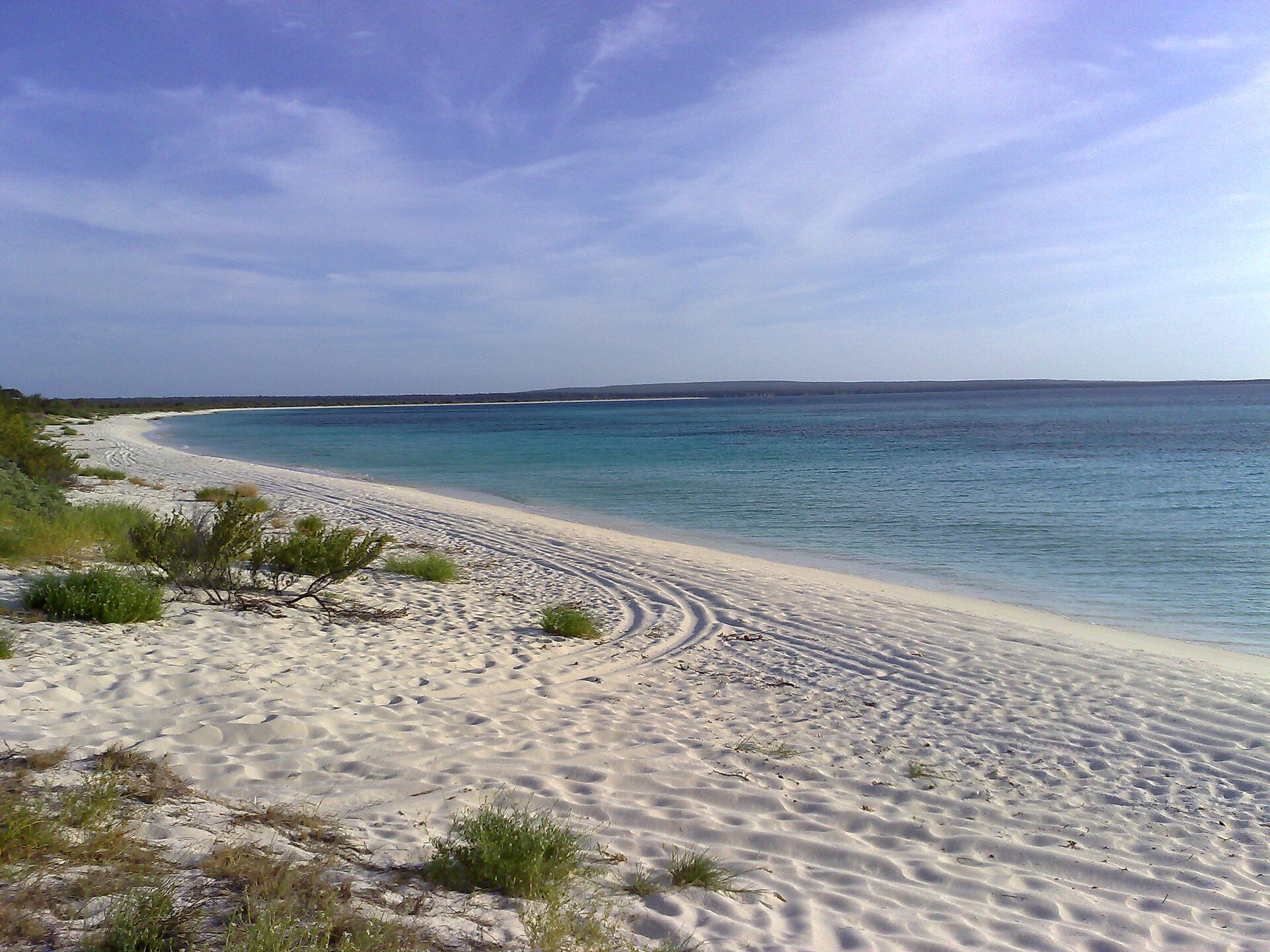
Bahía de las Águilas is one of those rare places in the Dominican Republic where nature still holds its ground, untouched by mass tourism and concrete resorts. Stretching for eight kilometers along the Caribbean coast, the beach forms a wide crescent of powdery white sand, framed by low hills covered in dry tropical forest. There are no rows of sun loungers, no beach bars blasting music, no crowds—just the sea, the sand, and the quiet, broken only by the cries of gulls and the rustle of palm leaves in the wind. The water near the shore is clear, with a faint turquoise tint, deepening into rich blue farther out, where schools of fish sometimes dart beneath the surface or dolphins glide past in the distance.
This stretch of coastline lies in the far southwest of the country, in the province of Pedernales, nearly on the border with Haiti. Until recently, reaching it was a challenge—driving from Santo Domingo took at least five hours, with the last stretch along a rough dirt road. The journey has become easier now, but Bahía de las Águilas remains a place for those who value solitude over convenience. There are no large hotels here, just a handful of eco-lodges and guesthouses built from local stone and wood, designed to blend into the landscape rather than dominate it.
The history of this place is woven into the broader story of the region. Before the arrival of Europeans, the Taíno people lived along this coast, relying on the sea for food and holding rituals on its shores. They had their own name for the bay, but the modern one—Bahía de las Águilas, or Eagle Bay—came later, when Spanish colonists noticed the nests of birds of prey in the area. During colonial times, the coast was used mostly for fishing and smuggling, and in the 19th century, it became a landing point for revolutionaries fighting for the Dominican Republic’s independence from Haiti.
There are no grand architectural landmarks here, just the natural surroundings and a few scattered fishing huts along the shore. But if you venture inland, you might stumble upon the remnants of old saltworks, where seawater was once evaporated to harvest salt. These operations date back to colonial times and continued until the mid-20th century, when they were abandoned as unprofitable. Now, only crumbling stone basins and rusted machinery remain, a quiet reminder of the industry that once thrived in this remote corner of the world.
Bahía de las Águilas is part of Jaragua National Park, which covers much of the peninsula. Established in 1983, the park protects a unique ecosystem where dry tropical forests meet mangrove swamps. It’s home to rare bird species, including flamingos, pelicans, and ibises, while the coastal waters shelter sea turtles and even manatees. For those who enjoy hiking, the park has trails leading to viewpoints that offer sweeping vistas of the sea and surrounding hills.
The atmosphere here shifts with the seasons. During the rainy months, from May to November, the beach is nearly deserted—few tourists brave the possibility of downpours, and local fishermen often wait out the storms at home. But in the dry season, from December to April, Bahía de las Águilas comes alive. Makeshift stalls appear on the sand, selling fresh fish, grilled lobster, and coconuts, while in the evenings, travelers gather around bonfires to listen to the waves and swap stories. This is also the best time to watch the sunsets, when the sky turns shades of orange and violet, and the sea briefly shimmers gold.
Despite its remoteness, the beach has started to attract visitors looking for an alternative to the crowded resorts of Punta Cana or Puerto Plata. Kitesurfers come for the steady winds and shallow lagoons, perfect for beginners. Others simply wander the shore, collecting shells or watching fishermen mend their nets and prepare their boats for the next voyage. The water stays warm year-round, though mornings are best for swimming, when the sea is calm and the sand hasn’t yet been scorched by the sun.
For those who want to explore beyond the beach, there are a few worthwhile excursions. A boat trip to Isla Beata, a small uninhabited island a few kilometers offshore, reveals white-sand beaches and rocky shores where seabirds nest. Another option is a visit to the village of Los Patos, a short drive away, where life still follows traditional rhythms. Fishing is done the old way, and homes are built from whatever materials are at hand. The village also has a small waterfall, a local gathering spot where people cool off in the shade of the trees.
Bahía de las Águilas isn’t for everyone. There are no luxury hotels, no multilingual menus, no nightclubs or souvenir shops. What it offers instead is something increasingly rare: silence, space, and the feeling of being at the edge of the world, where the sea meets the sky and time moves at its own unhurried pace. It might seem too quiet for some, but for those seeking untouched nature, it’s a revelation.