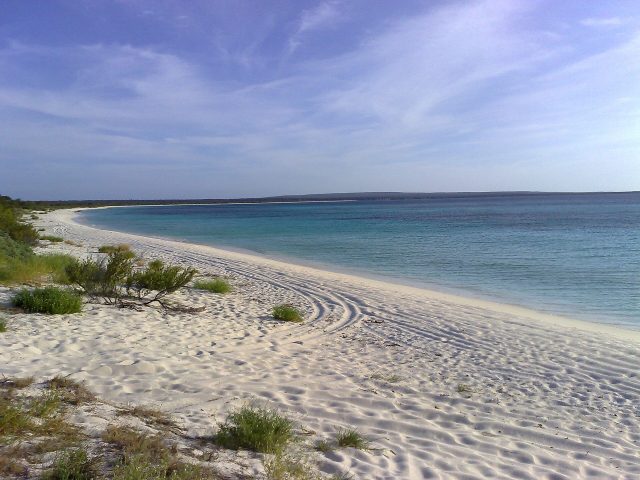
Cayo Beach is one of those rare places in the Dominican Republic that remains untouched by mass tourism. Located in the southern province of Pedernales, near the Haitian border, it offers something far removed from the crowded resorts and manicured beaches of the north. Here, the landscape is wild and unspoiled—a long stretch of white sand framed by low cliffs and coconut palms that lean toward the water. The sea isn’t the bright turquoise you might expect from the Caribbean; instead, it’s calmer, clearer, and warmer, perfect for those who want nothing more than to lie on the sand, listen to the waves, and let time slip away.
For most of its history, Cayo was known only to local fishermen and a handful of travelers seeking solitude. That changed as Pedernales began to develop its ecotourism potential, though the approach has been cautious. There are no large resorts here, just small guesthouses and beachside eateries serving fresh seafood. The surrounding landscape is stark and unexpected—dry plains and rolling hills dotted with cacti and scrubby bushes, more reminiscent of a desert than a tropical paradise. It’s a contrast to the lush greenery of the north, and that’s part of its appeal.
The water at Cayo is shallow near the shore, with a sandy bottom free of rocks or coral, making it ideal for swimming, especially with children. Waves are gentle, and the current is weak, so you can wade out or float without worry. Further from the beach, the sea deepens, and small schools of fish occasionally dart by, though there are no coral reefs to speak of. What you might see, if you’re lucky, are sea turtles coming ashore to nest, usually at dawn or dusk. It’s a quiet spectacle, one that feels like a privilege to witness.
Pedernales has long been one of the Dominican Republic’s poorest and most isolated regions. With little industry, life here has always revolved around fishing and small-scale farming. In recent years, efforts to attract tourism have been deliberate, focused on preserving the area’s fragile ecosystem rather than transforming it into another resort destination. As a result, Cayo has retained its raw, natural beauty. Even now, as more travelers discover it, the beach hasn’t become overrun. There are no crowds, no beach vendors hawking souvenirs—just the occasional wooden shelter for shade and a few stalls selling cold drinks.
There’s no grand architecture here, no grand hotels or restaurants. The landscape is simple: sand, water, sky, and the occasional palm tree bending in the wind. The rainy season, from May to November, brings a burst of life to the area, turning the dry hills green and deepening the blue of the sea. In the dry season, from December to April, the scenery is more austere, but the weather is reliably sunny, and the water stays warm enough to swim in for hours.
This isn’t a place for those seeking entertainment. There are no jet skis, no dive shops, no beach bars blasting music. Instead, there’s silence, broken only by the sound of waves and the cries of seagulls. In the evenings, the sky turns shades of orange and pink as the sun sets, and the water shimmers with reflected light. It’s easy to lose track of time here, to forget the rush of everyday life and simply exist in the moment.
For those who want to explore beyond the beach, the surrounding area has its own quiet attractions. Nearby Jaragua National Park is home to rare birds and endemic plants, while Lake Enriquillo—the largest saltwater lake in the Caribbean—hosts crocodiles and flamingos. You can visit these places by renting a car or hiring a local guide, who can point out the unique flora and fauna of the region.
Cayo Beach is for travelers who’ve grown tired of the usual resort experience and want to see the Dominican Republic as it really is—unpolished, unhurried, and unapologetically wild. There are no luxury hotels, no all-inclusive buffets, just open space and the feeling of being at the edge of the world. Maybe that’s why those who come here once often find themselves returning, as if to confirm that places like this still exist.