The Magellan Monument in Lapu-Lapu City is one of those places where history feels alive, not just preserved in stone. Standing on the shores of Mactan Island, it marks the spot where, in April 1521, a battle unfolded that would ripple through the centuries. Here, the local chieftain Lapu-Lapu and his warriors defeated Ferdinand Magellan’s expedition, an encounter that became a defining moment in Philippine history. Magellan himself fell in the fight, his body never recovered, but the monument ensures his name—and the legacy of that day—remains etched in the landscape.
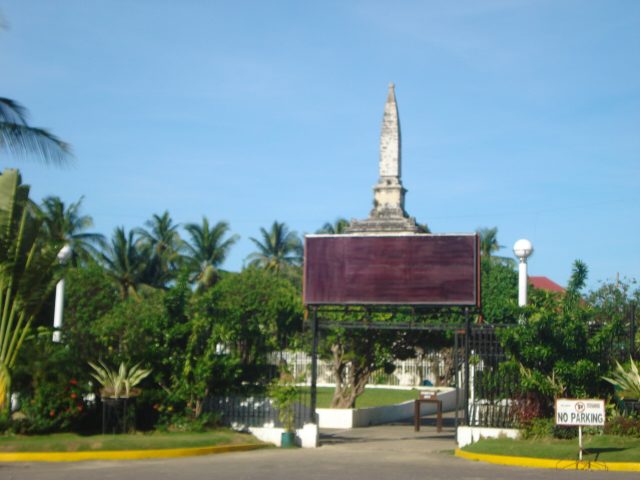
The monument itself is unassuming: a tall obelisk topped with a bronze statue of Magellan, his figure poised as if scanning the horizon. It sits in a small plaza lined with palm trees, where the pace of life moves slowly, much as it has for generations. Locals often gather here—not as tourists, but as people who live with this history every day. Some come to rest in the shade, others to take photos, and many bring their children to hear the story of how a small island resisted the first wave of European expansion. There are no crowds, no grand tourist attractions, just a quiet space where the past and present coexist.
For Filipinos, Lapu-Lapu is more than a historical figure; he’s a symbol of defiance and national pride. The battle at Mactan wasn’t just a skirmish—it was one of the earliest acts of resistance against colonialism in the region. Yet the irony is that Magellan never intended to conquer these islands. His expedition was searching for a western route to the Spice Islands, and the Philippines were merely a stop along the way. But when his forces clashed with Lapu-Lapu’s warriors in the shallow waters off Mactan, the collision of worlds became inevitable. The Europeans had guns and steel, but the locals had the advantage of knowing the land—and the will to protect it.
The monument’s design is simple, almost understated. The obelisk is made of light stone, and Magellan’s statue follows the classic European style, complete with a spyglass in hand. Around it, a small park offers benches where visitors can sit and watch the city go by. Occasionally, the plaza comes alive with local festivals, especially in April when the anniversary of the battle is commemorated. Music, dance, and traditional ceremonies fill the air, turning history into something tangible rather than a distant memory.
Attitudes toward Magellan in the Philippines are complicated. To some, he’s a pioneering explorer who connected worlds; to others, he represents the beginning of centuries of foreign domination. The monument reflects this duality—it doesn’t glorify Magellan but instead marks the place where history took a sharp turn. Lapu-Lapu City itself, named after the warrior who defied him, is a mix of old and new. It’s a bustling coastal town where fishing boats share the shore with resorts, and where the rhythms of daily life haven’t been drowned out by tourism.
If you walk up to the monument, you’ll find a small plaque with a brief account of the battle. There’s no grand inscription, no dramatic flourish—just the facts, as if the place itself is content to let history speak for it. Nearby, local guides often gather, eager to share stories with visitors. They’ll tell you about Lapu-Lapu not just as a warrior, but as a leader who understood the stakes of that first encounter. Some even weave in legends, like the idea that he foresaw how European influence would disrupt the island’s way of life long before others did.
Mactan today is best known as a resort destination, with its white-sand beaches and luxury hotels. But the Magellan Monument serves as a reminder that beneath the surface of paradise lies a deeper story. For travelers who venture beyond the beaches, this spot offers a chance to step into the past—to stand where two worlds collided and where the first chapter of the Philippines’ long struggle for identity was written. There’s no fanfare here, just the quiet weight of history, and the sense that some places don’t need to shout to be remembered.