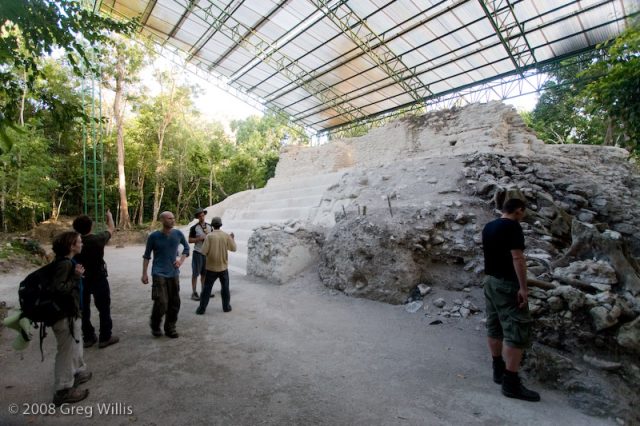
Machaquilá is a place where the past lingers in ruins. Deep in the Petén jungle of northern Guatemala, this ancient Maya city feels like a secret. There are no crowds, no souvenir stalls, no guided tours. Just stone and silence, broken by leaves rustling and howler monkeys crying in the distance. The journey here is difficult—a long ride along dirt roads through dense forest. The isolation has preserved something: the sense that you’ve stepped into a world untouched by time.
The city flourished between the 6th and 9th centuries, though its roots go back to the 3rd century. At its height, Machaquilá was a political and religious center, ruling over neighboring settlements. The evidence lies in the stelae scattered across the site. Their surfaces bear glyphs that tell stories of dynasties, battles, and celestial events. One of the most striking is Stela 3, marking the year 711. These were declarations of power and faith.
The architecture follows the Maya style of raised platforms and stepped temples, but with a quieter scale than Tikal or Palenque. The central area holds several acropolises, artificial mounds topped with the remains of structures. The tallest, Acropolis A, rises about ten meters above the ground. The staircases leading up are narrow and steep. There are no towering pyramids or vast plazas—just a sense of intimacy.
The ball court is one of the most intriguing features. It’s a smaller but well-preserved example of the sacred game played across Mesoamerica. This wasn’t sport. It was a reenactment of cosmic struggle. The court at Machaquilá is modest, with stone rings still visible along its sides. Players used their hips, elbows, and knees to keep a heavy rubber ball in motion. Some scholars believe the losing team might have been sacrificed, though there’s no direct evidence here.
The jungle has reclaimed much of Machaquilá. Roots creep over walls, and vines drape from temples. During the rainy season, from May to October, the forest becomes almost impassable. In the dry months, from November to April, the site is more accessible. You might hear scarlet macaws or spider monkeys—their calls echoing through the trees. Fresh tracks in the damp earth remind you this land still belongs to creatures older than the ruins.
Machaquilá isn’t a place you find by accident. There are no signs, no visitor centers, no marked paths. Most arrive by jeep or motorcycle, often with a local guide from nearby villages. These guides share stories passed down through generations. Occasionally, archaeologists camp here, barely noticeable among the trees.
For everyone else, Machaquilá is a place to visit to feel something. The kind of real that makes you pause and wonder how many others have stood here, looking at the same stones, centuries apart.
The site is protected, but funding for restoration is limited. Many stelae and carvings have been damaged by time and weather. Some structures were dismantled, their stones repurposed for building materials. Yet Machaquilá has a raw power. There’s no polished perfection here—just authenticity. The stones, once shaped by skilled hands, now crumble under the jungle’s weight.
If you decide to make the trip, come prepared. The journey is long, and you’ll want to spend hours exploring. Bring water, snacks, and insect repellent. Sturdy shoes are a must—the ground is uneven. The best time to visit is early morning, when the air is cool and the forest is alive with birds. Bring a camera, but don’t let it distract you from the moment.
What makes Machaquilá special isn’t its size or fame. It’s the way it makes you feel. In a world where so much has been mapped and explained, this place still holds secrets. It doesn’t demand your attention. It earns it. If you make the effort to get here, it rewards you with a sense of connection to the past, unfiltered by tourism. For a few hours, you’re not just a visitor. You’re part of the story.