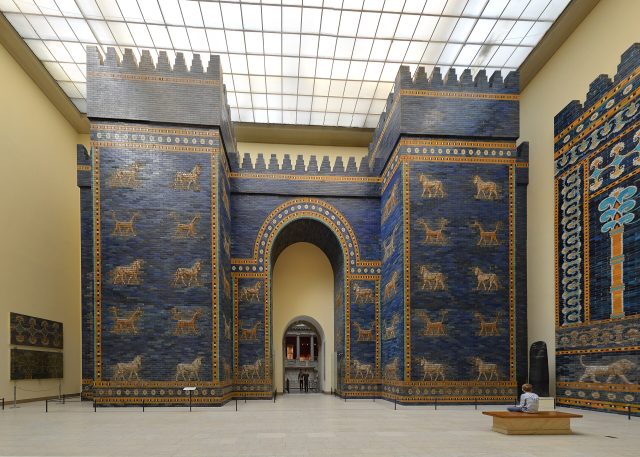
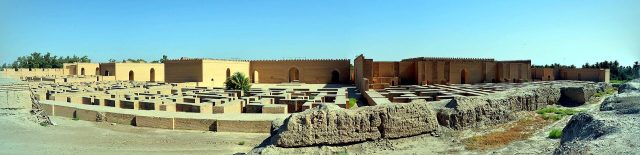
The Lion’s Pit of Babylon is one of those rare places where history feels almost tangible, as if the weight of centuries hasn’t quite settled into dust. Nestled among the ruins of what was once the heart of one of the world’s greatest civilizations, it stands not just as an archaeological site, but as a silent testament to the power and symbolism that defined Babylonian rule. The pit itself is a deep, stone-lined trench, its edges marked by the weathered remains of massive lion sculptures—once part of a formidable display meant to intimidate and impress.
These lions, carved in lifelike detail, were more than mere decoration. They were integral to the city’s defenses, their imposing forms designed to create an illusion of invincibility. In ancient Mesopotamia, such structures served a dual purpose: they protected the city while also projecting its strength. Babylon, under the rule of kings like Nebuchadnezzar II, was a place where architecture and ideology intertwined. The Lion’s Pit, if indeed constructed during his reign, would have been part of a broader vision to transform the city into a symbol of unshakable authority. Nebuchadnezzar’s legacy is one of both conquest and construction, and while the Hanging Gardens and his grand palace are more famous, the pit offers a quieter, yet no less significant, glimpse into his ambitions.
The design of the pit reveals a careful balance between function and symbolism. The lions, mounted on pedestals along the trench, were positioned to create a psychological barrier. Their presence, combined with the pit’s depth and the possibility of filling it with water or sharpened stakes, would have made any approach to the city a daunting prospect. Today, only fragments of these sculptures remain, their once-smooth surfaces now rough with age. Yet even in their broken state, they convey a sense of the pit’s original grandeur. The way the lions were arranged—facing outward, their mouths slightly agape—suggests a deliberate attempt to instill fear in those who dared challenge Babylon’s might.
Walking along the pit today, it’s easy to imagine the scene as it might have been thousands of years ago. The surrounding ruins of Babylon stretch out in all directions, a landscape of crumbling walls and scattered stones. But the Lion’s Pit holds a particular kind of presence. There’s something about the way the light catches the remaining sculptures, the way the wind moves through the empty spaces where lions once stood, that makes the past feel almost within reach. It’s not just the physical remnants that linger, but the idea of what they represented—a city that saw itself as the center of the world, a place where every stone and sculpture was a statement of power.
Visiting the Lion’s Pit is more than just seeing an ancient structure; it’s an opportunity to reflect on how concepts of power and protection have evolved. What once served as a formidable deterrent now seems almost quaint in its symbolism. Yet in its time, the pit was part of a sophisticated system of control, where even defensive architecture carried ideological weight. Babylon was a city where every decision, from the layout of its streets to the carving of its monuments, was deliberate. The lions along the pit weren’t just guardians; they were a message, meant for both enemies and subjects alike.
The ruins of Babylon, including the Lion’s Pit, are now under state protection, recognized as a site of global significance. Time and conflict have taken their toll, but efforts to preserve what remains continue. For visitors, the experience is far from polished—there are no reconstructed facades or museum displays here, just the raw, unfiltered remnants of history. The lack of modern infrastructure can make the journey feel more like an expedition than a typical tourist stop, but for those who make the effort, the reward is a direct connection to the past. There’s a certain honesty in standing among these ruins, where the layers of time are visible in every cracked stone and eroded sculpture.
In many ways, the Lion’s Pit is a reminder of how fragile the legacy of great civilizations can be. Babylon, once the center of the known world, now lies in fragments, its former glory reduced to scattered relics. Yet it’s this very fragility that makes places like the pit so compelling. They force us to confront the transient nature of power and the inevitability of decay. What remains of Babylon isn’t just a collection of stones; it’s a story of human ambition, of a city that sought to defy time through sheer will and craftsmanship. The lions, though silent now, still carry traces of that defiance.
Perhaps the most enduring quality of the Lion’s Pit is its ability to make us question what history chooses to remember. Empires rise and fall, borders shift, and names fade, but places like this endure as quiet witnesses to the past. They remind us that history isn’t just written by the victors, but by the countless individuals who lived, built, and believed in something greater than themselves. In the end, the pit isn’t just about the power of Babylon; it’s about the power of memory itself, and how even the smallest fragments can hold the weight of an entire civilization.