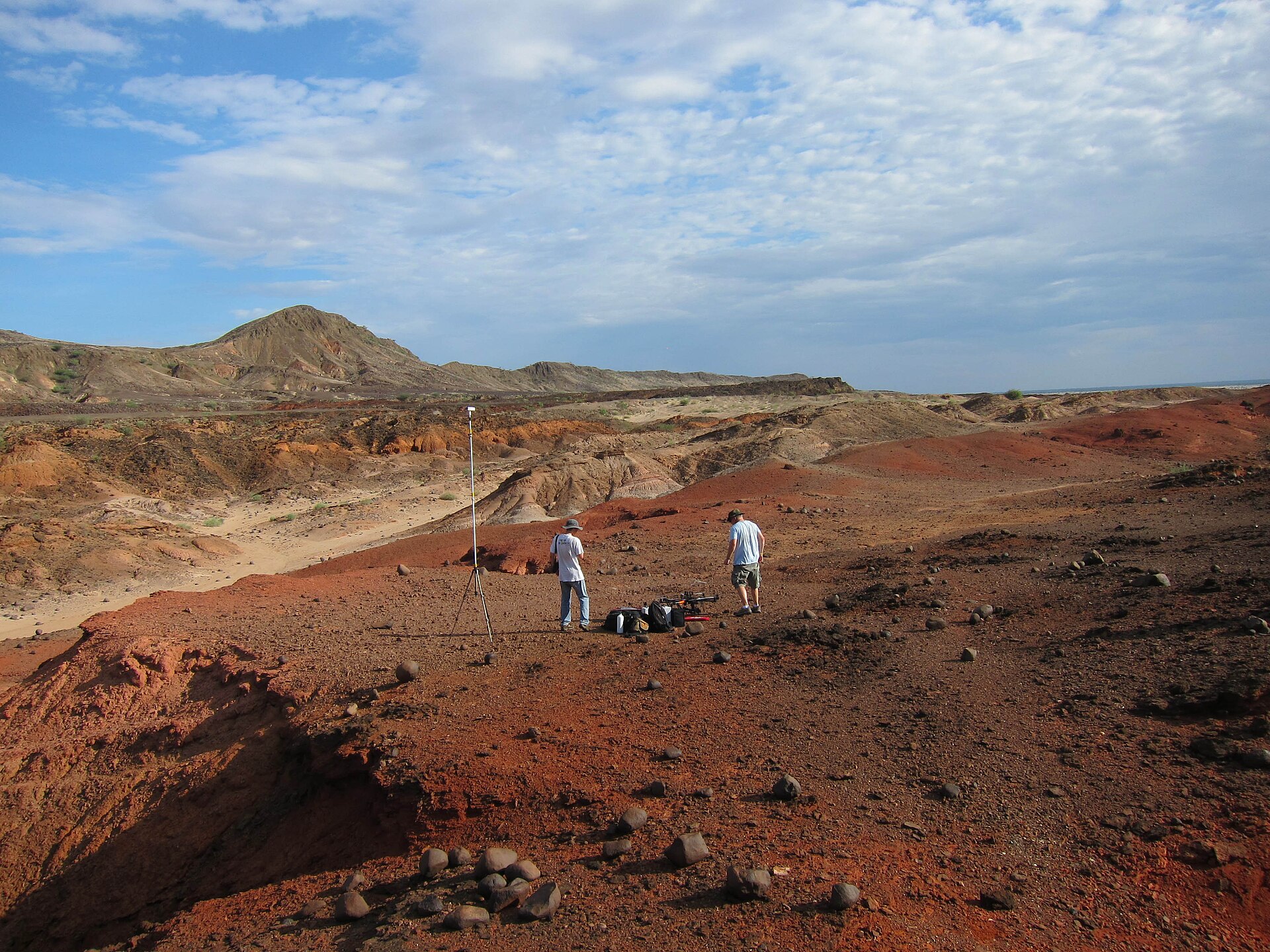
Lodwar sits in the far north of Kenya, where time moves at its own unhurried pace. The landscape here feels ancient, a vast stretch of savanna where the first humans might have once walked. Far from the usual tourist trails, the heat shimmers over the plains, and scattered acacia trees stand like silent sentinels. It’s in this remote setting that you’ll find the Lothagam North Pillar Site, a place that carries the weight of four thousand years of history.
This isn’t a grand monument like the pyramids of Egypt or the temples of Mexico. Instead, it’s a collection of modest stone circles, their rough pillars rising up to three meters high. These structures were built by a people who, while much of the world still relied on hunting and gathering, had already developed a culture sophisticated enough to leave behind such deliberate markers. The purpose of these pillars remains unclear—perhaps they were part of ancestral rituals, or maybe they aligned with celestial events. What is certain is that this site was more than just a burial ground; it was a focal point for the community, a place where social bonds were reinforced and traditions passed down.
The site was largely overlooked for centuries, its stones blending into the landscape as if they were just another part of the earth. It wasn’t until the late twentieth century that archaeologists began to uncover its secrets. The artifacts found here—beads, pottery shards, bone tools—paint a picture of a people who were skilled craftsmen, capable of shaping stone and bone with precision. Their society likely had a clear hierarchy, though the true meaning behind the pillars remains one of the site’s enduring mysteries.
Today, Lothagam North Pillar Site is a quiet place. The savanna stretches out in all directions, the same hot winds blowing as they have for millennia, the same solitary trees dotting the horizon. There are no crowds, no souvenir stalls, no signs in a dozen languages. Just the land, the stones, and the sky. It’s a stark contrast to the polished historical sites found elsewhere, a reminder that some places are meant to be experienced rather than simply observed.
Getting here isn’t easy. The journey from Lodwar takes about an hour along a rough dirt road, and few tourists make the trip. That’s part of what makes it special. There’s no comfort of familiar amenities, but there’s something far more valuable: the chance to see Kenya as it has always been—wild, untamed, and full of secrets.
Lothagam challenges the way we think about Africa’s history. For too long, the narrative suggested that complex societies only emerged here with the arrival of outsiders like the Egyptians or Phoenicians. The stone circles at Lothagam prove otherwise. Long before those influences, there were people here capable of organizing large-scale projects, of creating something that would endure for thousands of years.
If you do decide to visit, remember that this is an active archaeological site. There are no fences, no interpretive signs, no guides waiting to lead you through. The stones are fragile, and touching them risks damaging a piece of history. It’s best to come with a local guide who can explain the significance of what you’re seeing and share insights into the ongoing research. They can also help navigate the cultural sensitivities of the area, ensuring that your visit is respectful as well as meaningful.
What makes Lothagam North Pillar Site so compelling isn’t its grandeur, but its authenticity. There’s no glass separating you from the past, no carefully curated displays. Just the earth beneath your feet, the stones in front of you, and the wind carrying whispers of a time long gone. It’s a place that invites reflection, a rare opportunity to connect with history in its most unfiltered form.