Nestled along the southern coast of Crimea, Livadia Park unfolds like a quiet conversation between nature and history. The land here has always been generous—mild winters, warm summers, and the Black Sea stretching out in shades of blue just beyond the trees. But it wasn’t until the mid-19th century that this stretch of coastline became more than just another picturesque spot. Russian aristocracy, drawn by the Mediterranean-like climate, began transforming it into a retreat for leisure and reflection. Livadia, once a modest estate, grew into a place where emperors walked, diplomats gathered, and gardens were designed not just for beauty, but for contemplation.
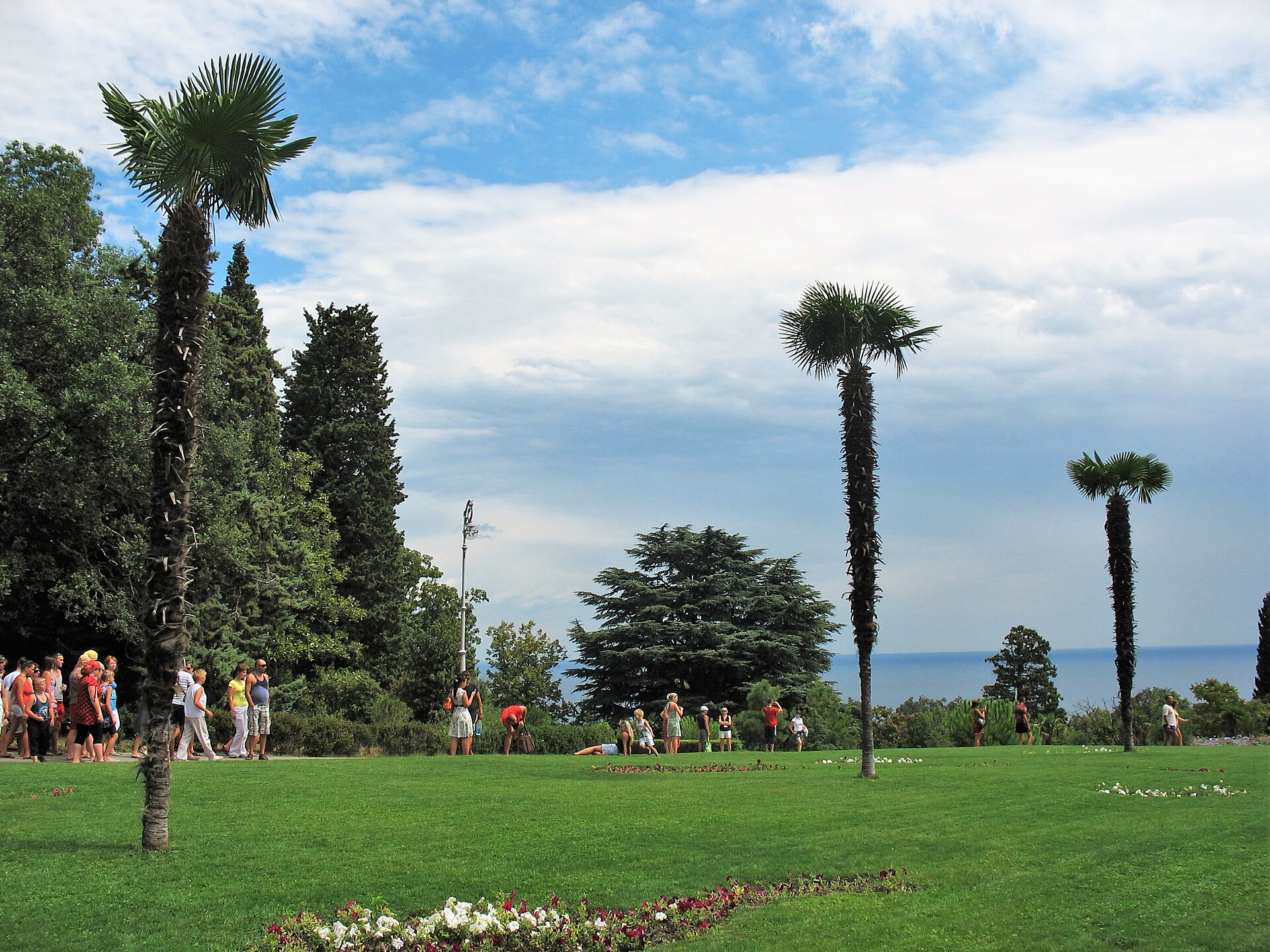
The park’s layout is a testament to the tastes of its most famous resident, Emperor Nicholas II. He chose Livadia as the site for his summer palace, and the grounds were shaped to complement the grand yet understated architecture of the building. Unlike the rigid symmetry of French formal gardens, Livadia’s design leans toward the English landscape style—meandering paths, open lawns, and clusters of trees that frame views of the sea. The effect is one of effortless elegance, as if the park has always been here, growing at its own pace rather than being forced into shape. Even today, walking through it feels less like visiting a historical site and more like stepping into someone’s carefully tended private world.
At the heart of the park stands the Livadia Palace, a structure that manages to be both imposing and intimate. Built in the early 20th century, it was the last imperial residence constructed in Russia, and its white Crimean limestone walls seem to glow in the sunlight. The palace was designed by Nikolai Krasnov, an architect who understood the importance of blending grandeur with comfort. Inside, the rooms are spacious yet lived-in, with high ceilings and large windows that let in the sea breeze. But it’s the exterior that leaves the strongest impression—the way the building sits on a gentle rise, surrounded by greenery, as if it’s part of the landscape rather than dominating it. The palace wasn’t just a home; it was a stage for history. In 1945, it hosted the Yalta Conference, where Churchill, Roosevelt, and Stalin met to shape the post-war world. The very rooms where they debated the future of nations are still there, preserved much as they were, though the weight of those decisions now feels distant, almost abstract.
Beyond the palace, the park unfolds in layers. Near the entrance, the trees are younger, their branches still reaching upward, while deeper in, ancient oaks and pines stand like silent sentinels. Some of these trees were planted by the Romanovs themselves, their gnarled trunks bearing witness to more than a century of change. The paths wind past flowerbeds that burst with color in spring and summer, though the park is never showy—it’s the kind of place where beauty reveals itself slowly. There’s a small pond, its surface dotted with lily pads, and a few stone bridges that seem too delicate for their age. In the quieter corners, benches invite visitors to sit and listen to the rustling leaves or the distant sound of waves. It’s easy to imagine Nicholas II strolling here in the evenings, or his children playing on the lawns, unaware of the upheavals that lay ahead.
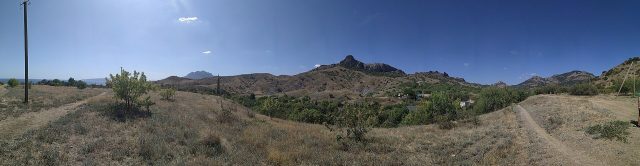
One of the park’s most striking features is the way it frames the sea. From certain vantage points, the Black Sea appears suddenly, as if the trees have parted just to reveal it. The water here is calmer than on the open coast, sheltered by the Crimean mountains that rise in the distance. On clear days, the horizon seems endless, and the light takes on a golden quality, especially in the late afternoon. The park’s designers understood this interplay between land and water, and many of the paths were laid out to maximize these views. There’s a particular spot near the palace where the sea feels almost within reach, as if you could step off the edge of the lawn and into the waves. It’s a reminder that Livadia was never just a retreat from the world, but a place where the world—at least the natural one—felt close and tangible.
The park has seen its share of upheavals. After the revolution, the palace was repurposed as a sanatorium, a place for rest and recovery rather than imperial indulgence. During the war, it was occupied by German forces, and though it survived relatively unscathed, the gardens bore the scars of neglect. For decades, Livadia was a place of quiet obscurity, known mostly to locals and a handful of visitors. It wasn’t until the late 20th century that efforts began to restore it to its former glory. Today, the park is a mix of meticulously preserved history and the gentle wear of time. Some areas feel almost untouched, while others show the marks of restoration—newly planted trees, repaired stonework, the occasional sign of modern intervention. Yet the overall effect is one of continuity, as if the park has simply carried on, adapting to each new era without losing its essence.
What makes Livadia Park special isn’t just its history, but the way it makes that history feel accessible. Unlike grander estates or more famous landmarks, there’s a sense of intimacy here. The palace isn’t overwhelmingly large, the gardens aren’t overly manicured, and the crowds, when they come, never feel oppressive. It’s the kind of place where you can wander for hours without a set route, discovering small details—a hidden bench, a particularly old tree, a view that opens up unexpectedly. In the mornings, when the mist still lingers over the sea, the park feels almost magical, as if the past and present are briefly overlapping. Even in the height of summer, when the paths are busier, there’s always a quiet corner to escape to.
Livadia isn’t a place that demands attention. It doesn’t have the dramatic ruins of ancient civilizations or the towering monuments of more famous sites. Instead, it offers something quieter—a sense of place, of time slowing down. The park has seen empires rise and fall, wars begin and end, yet it remains, much as it always was. The trees still sway in the breeze, the sea still laps at the shore, and the palace still stands, its white walls catching the light. For those who visit, it’s not just a glimpse into the past, but a reminder of how landscapes can hold stories, how nature and history can intertwine in ways that feel both grand and deeply personal. Whether you come for the history, the scenery, or simply the chance to walk where emperors once walked, Livadia Park has a way of staying with you long after you’ve left.