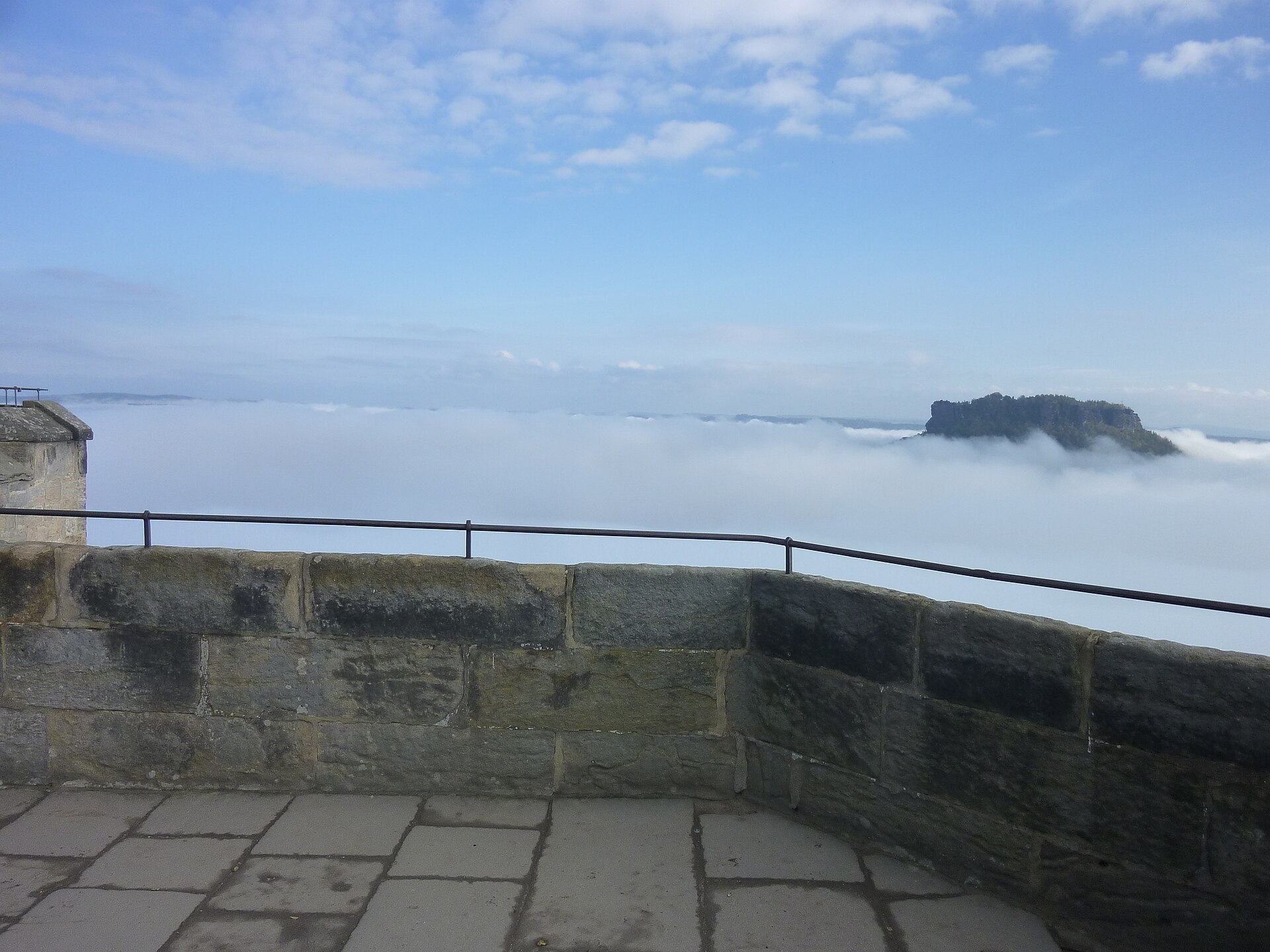
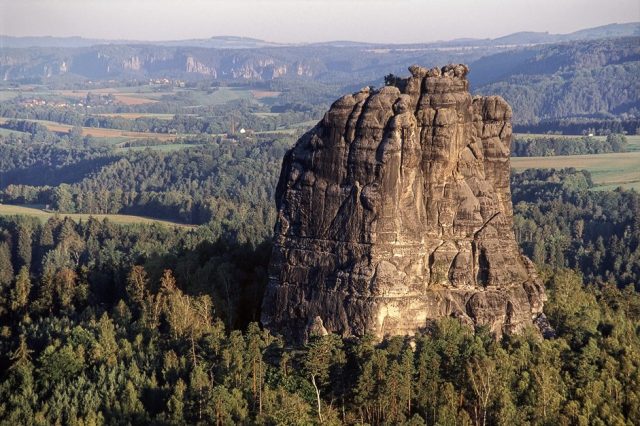
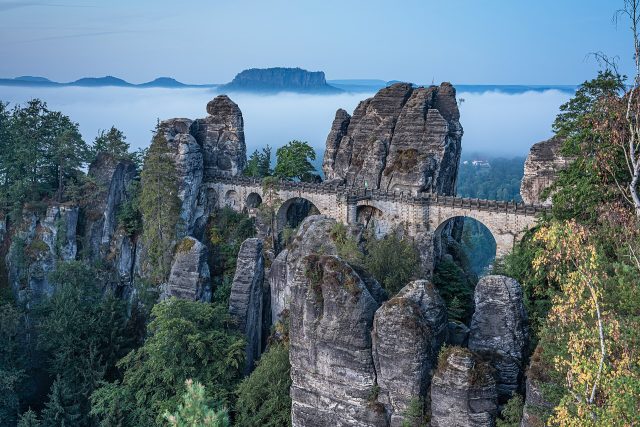
Lilienstein is one of the most striking landmarks in Saxon Switzerland, a massive sandstone table rising 415 meters above the Elbe Valley. Its flat, plateau-like summit—so distinct it looks as if sliced clean by some ancient force—earns it the nickname "Table Mountain." From this height, the view unfolds like a living postcard: the Elbe winds through the landscape in graceful curves, flanked by dense forests and jagged rock formations that seem to defy gravity. But Lilienstein is more than just a natural wonder. It carries the weight of history, layered with legends, battles, and the quiet passage of time.
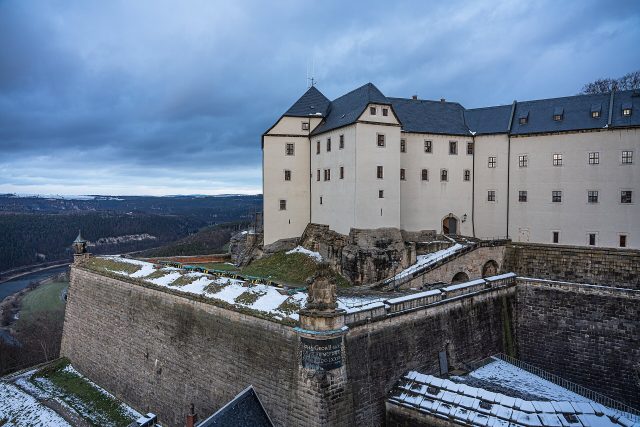
The first records of Lilienstein date back to the Middle Ages, when a fortress stood guard over the Elbe’s trade routes. Built in the 13th century, it was originally a Czech stronghold before passing into Saxon hands in the 15th century. For centuries, it served as a strategic outpost, its walls and towers designed to repel invaders. By the 18th century, however, its military importance had faded, and the fortress fell into ruin. Today, only fragments remain—crumbling walls, the skeletal outlines of towers—but they’re enough to imagine how imposing this place once was. The stones still hold the echoes of clattering hooves, shouted commands, and the creak of drawbridges.
Climbing Lilienstein isn’t just a walk; it’s a small adventure. The most popular route starts at the base and winds upward through a mix of steep paths, rocky steps, and narrow passages. Metal ladders and chains help with the trickier sections, where the sandstone is slick or the drop too sheer. The ascent takes about an hour, depending on pace, but the effort is rewarded the moment you reach the top. On clear days, the view stretches far beyond the national park, revealing rolling hills and distant villages. Below, the town of Königstein appears almost miniature, its own fortress—a much larger and better-preserved one—looking like a child’s toy against the landscape.
The summit isn’t just a viewpoint; it’s a place to pause. A small restaurant operates here, serving simple but hearty food—grilled sausages, potato soup, and homemade cakes that taste even better with the breeze carrying the scent of pine. In summer, tables spill onto the terrace, and visitors linger for hours, watching the light shift over the valley. Winter brings a different kind of beauty. The restaurant closes, but the snow transforms the rocks into something almost otherworldly, and the silence up here feels deeper, more profound.
Like many places with a long history, Lilienstein is wrapped in legends. One story claims the rock was named after Lilia, the daughter of a local lord, who leapt from the summit in despair after learning of her lover’s death. Another tells of a hidden treasure guarded by the ghost of a knight, buried somewhere in the caves below. No one has ever found gold or jewels, but the stories persist, adding a layer of mystery to the climb. It’s easy to imagine knights and maidens in these woods, their voices carried on the wind.
For the people of Saxon Switzerland, Lilienstein is more than a tourist attraction—it’s part of their identity. Families hike here on weekends, spreading out picnics on the rocks while children scramble over the boulders, pretending to be explorers or medieval warriors. In recent years, the cliff has also become a draw for rock climbers, though the sheer faces are best left to experienced hands. Despite its popularity, the summit never feels crowded. Maybe it’s the effort required to get here, or maybe the rock itself has a way of filtering out those who aren’t truly curious. Whatever the reason, the people who make the climb tend to leave with something more than just a photograph.
What makes Lilienstein special is the way it balances grandeur and intimacy. It’s a place where history feels tangible—the worn stones underfoot, the faint outlines of old walls, the way the wind seems to carry whispers of the past. Standing here, it’s not hard to picture the merchants who once traveled the Elbe, the soldiers who manned the fortress, or the travelers who, like you, came seeking a view. The rock has seen centuries of change, yet it remains unchanged, a silent witness to the passage of time.
There’s something almost magical about Lilienstein, though it’s not the kind of magic that announces itself. It’s quieter, more subtle—the way the light hits the sandstone at dusk, the way the forest sounds different up here, the way the air feels lighter. Whether you come for the view, the history, or just the chance to step away from the world for a while, the rock leaves an impression. It’s one of those rare places that feels both grand and personal, as if it’s been waiting just for you.