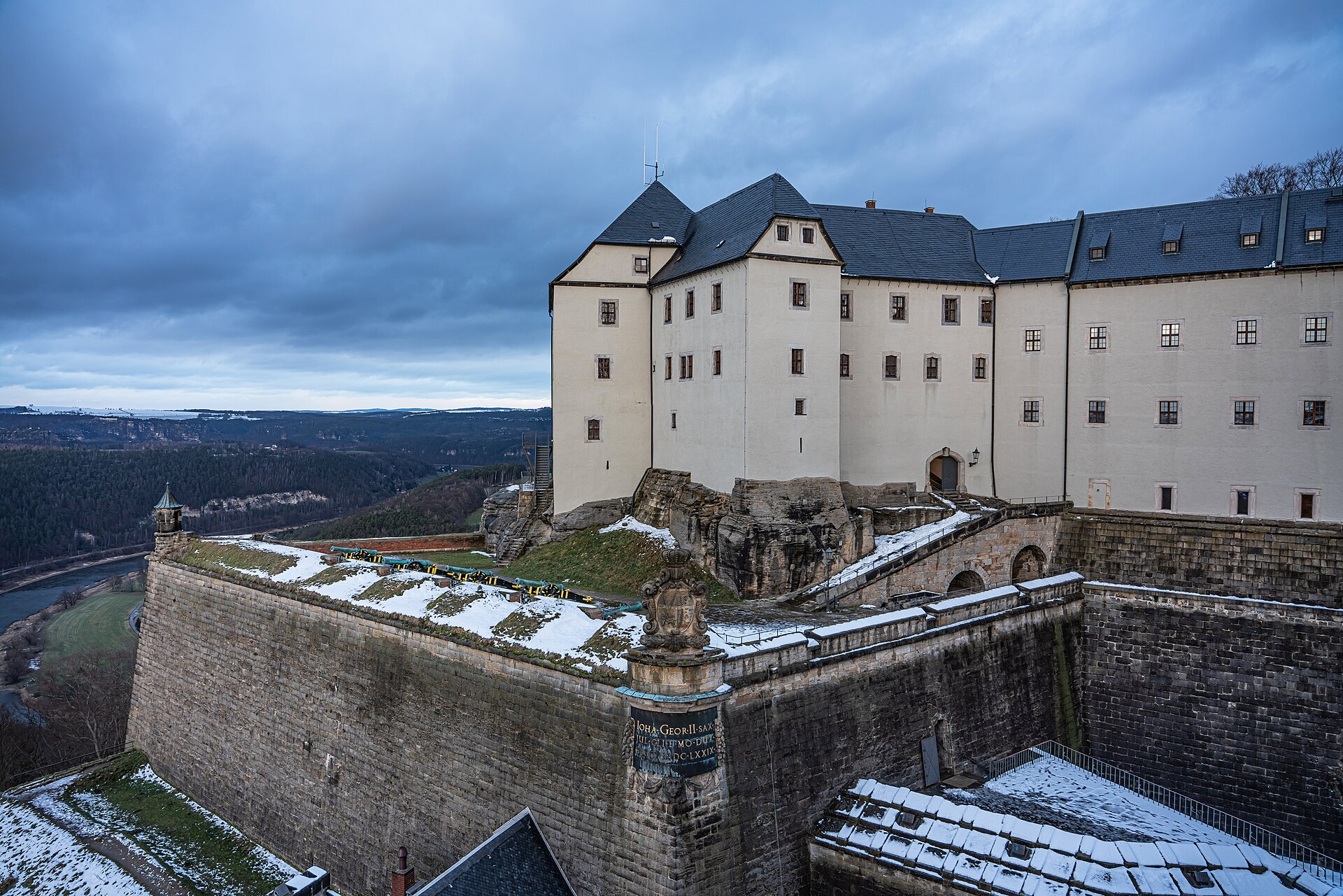
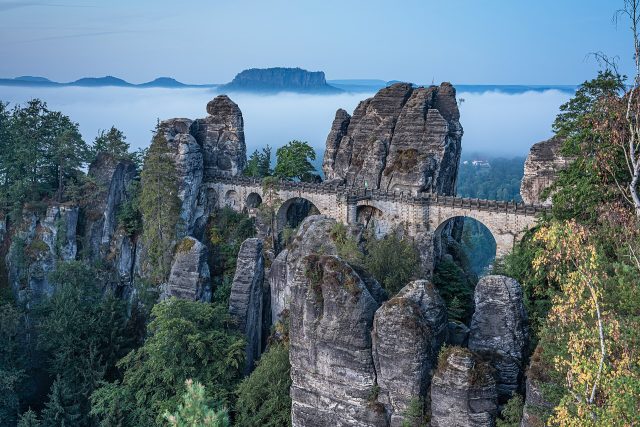
Perched high above the Elbe Valley, Königstein Fortress stands as one of Saxony’s most imposing historical landmarks. Its massive stone walls, sprawling across a rocky plateau, dominate the landscape for miles around, their sheer scale and solidity still conveying the sense of impregnability they were designed to project centuries ago. What began as a modest 13th-century castle evolved over time into one of Europe’s largest hilltop fortresses, serving not only as a military stronghold but also as a potent symbol of Saxon electoral power.
The architecture of Königstein is a layered record of changing tastes and technologies, where each era left its mark on the stone. The earliest structures, like the round tower, reflect medieval defensive traditions, while later additions—such as the Renaissance palace of Elector Augustus or the ornate gatehouse adorned with heraldic crests—speak to the wealth and ambition of Saxony’s rulers. Among the most remarkable features is the well tower, a 152-meter-deep engineering marvel that once supplied the fortress with water during sieges, a testament to the ingenuity of its builders.
Königstein’s history is deeply entwined with that of Saxony itself. Over the centuries, it has served multiple roles: a prison for high-profile captives, a vault for the electorate’s treasures, and a refuge for the royal family during wartime. During the Thirty Years’ War, it held prisoners of war, while in later years, it became a place of confinement for political detainees, including the infamous adventurer Count von Kallnoky. By the 19th century, its military significance had faded, but its walls continued to hold the echoes of the past, drawing historians and visitors alike.
Today, the fortress functions as an open-air museum, offering more than just a glimpse into its military past. Visitors can explore preserved casemates, gunpowder magazines, and barracks, as well as an 18th-century pharmacy complete with original instruments and vessels. The armory displays an impressive collection of weapons and armor, while exhibits on the fortress’s use as a prison provide a sobering look at its darker history. In the summer months, the grounds come alive with historical reenactments and festivals, filling the courtyards with the sounds of trumpets and the clatter of hooves.
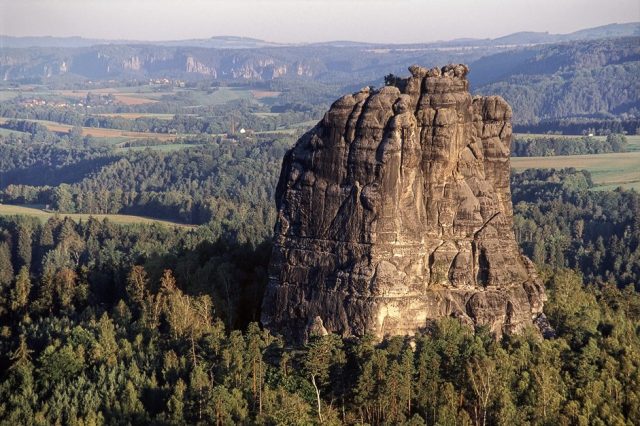
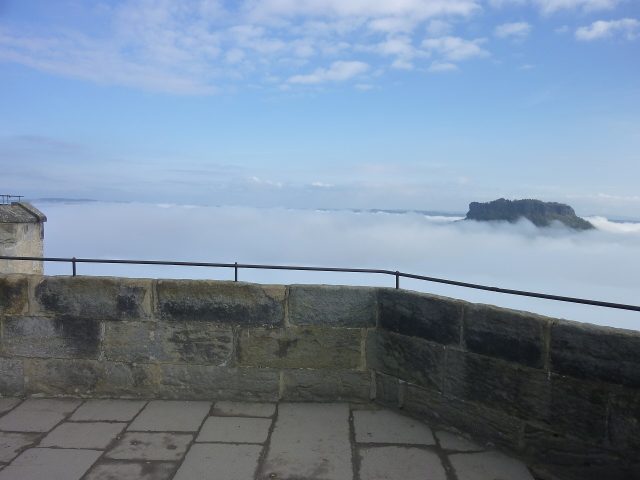
From the fortress’s ramparts, the view over the Elbe and the surrounding hills of Saxon Switzerland is breathtaking. The river winds through the landscape like a ribbon, flanked by vineyards and small towns. On clear days, Dresden’s skyline can be seen in the distance, a reminder of the region’s rich cultural heritage. Walking along the fortress walls, it’s easy to imagine the challenges faced by defenders who once stood guard here, surveying the valley below for signs of approaching enemies.
Königstein is more than just a fortress; it’s a place where history feels tangible at every turn. The absence of modern noise—save for the wind and the occasional murmur of visitors—allows the past to linger in the air. Within these walls, time seems to slow, making it possible to picture the comings and goings of electors, the quiet suffering of prisoners in the dungeons, or the disciplined march of soldiers on the parade ground. Even now, long after its military purpose has faded, the fortress retains an aura of grandeur and mystery.
A visit to Königstein is an opportunity to step into Saxony’s history, to see how people once lived and what they valued. There are no crowded tour groups or intrusive guides here, just space to wander and discover at your own pace. You might lose yourself in the maze of underground passages, climb to the lookout points for a sweeping view, or simply sit on a bench and watch the Elbe flow below. The fortress doesn’t narrate its story—it lets the stones, the walls, and the landscape speak for themselves, leaving room for reflection and imagination.