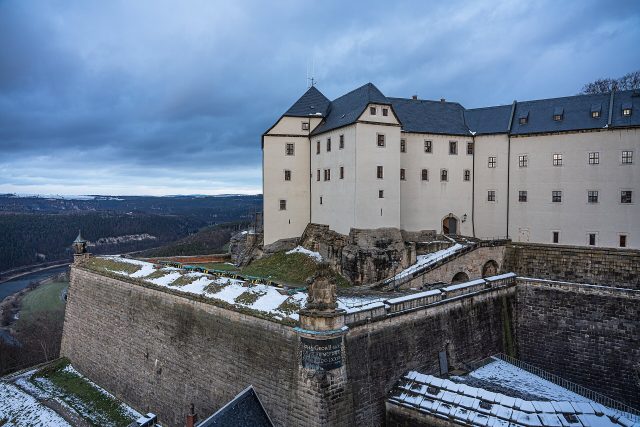
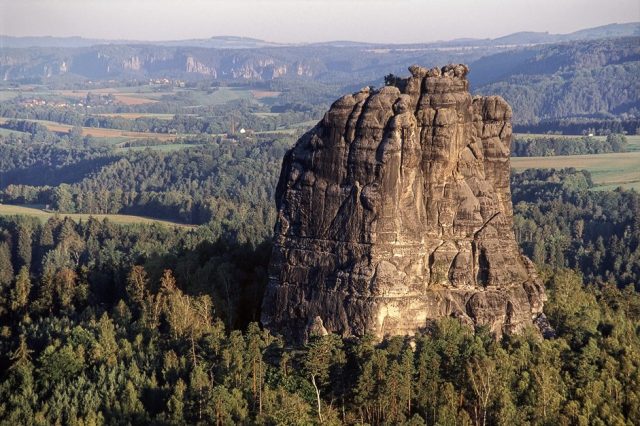
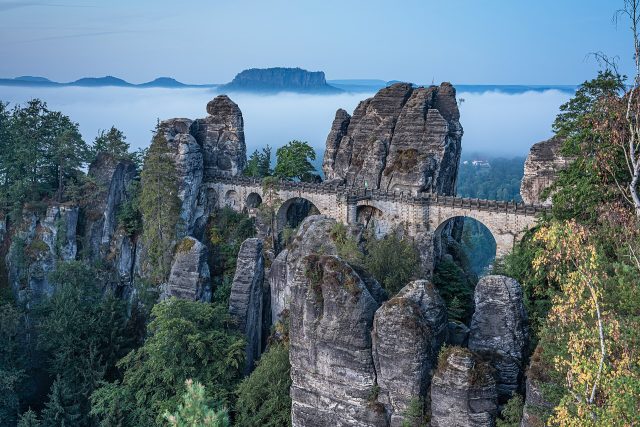
Perched on a rocky plateau high above the Elbe Valley, Königstein Fortress commands the landscape with a quiet, enduring presence. Its massive sandstone walls, weathered by centuries, rise seamlessly from the cliffs as if carved by nature itself rather than human hands. This is not a place of delicate beauty or ornate palaces—it is a fortress in the truest sense, built to withstand sieges, repel invaders, and assert power. Yet today, its imposing silhouette tells a different story, one of resilience, transformation, and the slow passage of time.
The fortress was conceived in the 16th century as a cornerstone of Saxony’s defenses, but its role extended far beyond military strategy. Over the centuries, it became a microcosm of European history, a place where the fates of rulers, prisoners, and soldiers intertwined. The thick walls that once echoed with the footsteps of guards and the clatter of weapons now stand as silent witnesses to the shifting tides of power. Walking through its gates, you step into a world where every stone seems to hold a memory—of battles fought, secrets kept, and lives lived in the shadow of duty.
One of the most striking features of Königstein is its sheer scale and the ingenuity of its design. The fortress was constructed to be self-sufficient, a necessity for withstanding prolonged sieges. At its heart lies a well over a hundred meters deep, an engineering marvel of its time. Carved directly into the rock, it ensured a steady water supply even when the fortress was cut off from the outside world. Descending its narrow spiral staircase today, you can almost feel the weight of history pressing in—the dim light, the damp air, the knowledge that generations of soldiers once relied on this lifeline. Nearby, the vast parade ground and barracks hint at the daily rhythms of military life, where discipline and routine were as much a part of the fortress as its walls.
Königstein’s history is also one of captivity and confinement. It served as a prison for some of Europe’s most notable figures, including Johann Friedrich Böttger, the alchemist credited with discovering the secret of European porcelain. His imprisonment here was not merely a matter of punishment but a calculated move by Augustus the Strong, who sought to exploit Böttger’s talents for Saxony’s gain. Later, during the Seven Years’ War, Prussian officers were held within these walls, followed by French prisoners during the Napoleonic Wars. The fortress’s casemates, once used to store gunpowder and weapons, now house exhibits that trace these stories, offering a glimpse into the lives of those who were held against their will. The contrast between the grandeur of the fortress and the grim reality of its use as a prison is a reminder of how power has always been wielded in complex, often contradictory ways.
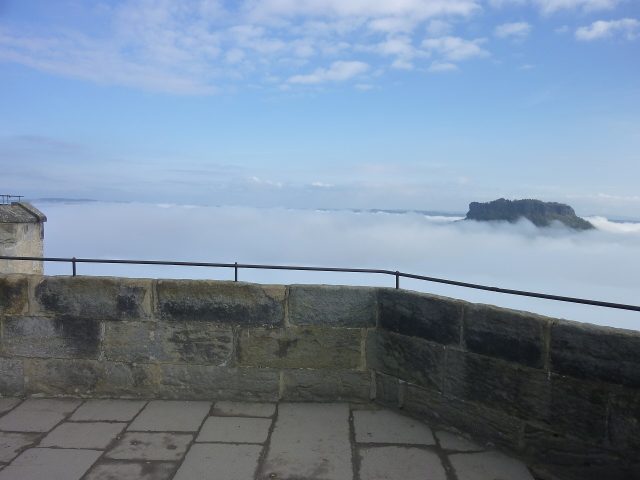
By the 19th century, as the need for military strongholds waned, Königstein began to take on a new identity. Artists and writers, drawn to its dramatic setting, flocked here to capture the rugged beauty of the Elbe Valley. The fortress’s panoramic views, stretching across rolling hills and the winding river below, became a favorite subject for Romantic painters like Caspar David Friedrich. His works, with their moody skies and solitary figures, evoke the same sense of awe that visitors still feel today when standing on the fortress’s ramparts. The landscape has changed little since then—vineyards still cling to the hillsides, and the river glints in the sunlight, just as it did centuries ago. It’s easy to see why this place inspired such reverence, why it became a symbol of both human endurance and the sublime power of nature.
Today, Königstein is a living museum, a place where history is not just preserved but actively brought to life. Guided tours delve into the fortress’s past, from the daily routines of its garrison to the strategic decisions that shaped its fate. In summer, historical reenactments transform the courtyards into scenes from another era—soldiers in Renaissance armor drill on the parade ground, while blacksmiths demonstrate ancient techniques. The fortress takes on a different character in winter, when frost clings to the stone and the wind howls through empty corridors. It’s a stark reminder of the harsh realities of life here in centuries past, when survival depended on strength, vigilance, and the unyielding will to endure.
What makes Königstein so compelling is its refusal to be anything other than itself. It is not a place of comfort or prettiness, nor does it try to soften its edges for visitors. Instead, it stands as a testament to the raw, unvarnished truth of history—one that encompasses both triumph and suffering, power and vulnerability. Walking along its battlements, you can’t help but reflect on the countless lives that have passed through these gates, each leaving behind a trace, however faint. The fortress doesn’t offer easy answers or neat narratives; it simply exists, as it always has, a silent observer to the passage of time.
For those who make the journey to Königstein, the fortress is more than just a stop on a tourist itinerary. It is a place that demands engagement, a space where the past feels tangible and immediate. There are no flashy attractions or souvenir stalls here—just the quiet weight of history pressing in from all sides. You can spend hours exploring its nooks and crannies, climbing its towers, or simply sitting on a bench, taking in the view. As the sun sets over the Elbe, casting long shadows across the stone, the fortress seems to settle into a kind of quiet anticipation, as if waiting for the next chapter of its story to unfold. And in a way, it is—because history is never truly finished, and places like Königstein are always ready to add another layer to their legacy.