Eger Lyceum is one of those rare places where history isn’t just preserved—it lingers in the air, almost as if the building itself is quietly sharing its stories with anyone who walks through its doors. Built in the 18th century, it wasn’t just another school; it became a cornerstone of the city’s intellectual and cultural life. Today, it remains an active high school, but the building itself is a living archive, its walls holding layers of time that unfold with every step.
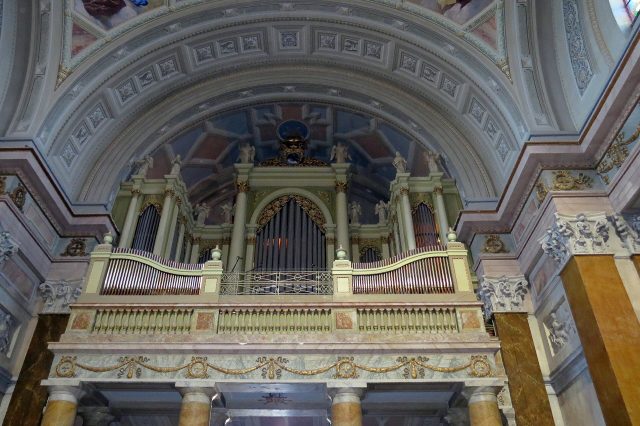
The architecture reflects the restrained elegance of Hungarian Baroque, though later additions softened some of its original severity. The façade is understated yet striking, with tall windows and symmetrical lines that give it a sense of quiet authority. Inside, the design feels purposeful—long corridors with high ceilings, spacious classrooms, and a library lined with wooden shelves that seem to remember the hands of the first students who once reached for its books. The grand hall, with its intricate plasterwork and antique chandeliers, was once a gathering place not just for school events but for public assemblies, a space where ideas were exchanged and debated.
Founded in 1702 at the initiative of the Archbishop of Esztergom, the lyceum was meant to rival the finest European schools of its time. What began as a small seminary soon expanded into a full-fledged institution, offering a broad curriculum that went beyond theology to include natural sciences, philosophy, and languages—subjects considered essential for an educated mind in that era. By the 19th century, the lyceum had become a hub of Hungary’s national revival, shaping and being shaped by figures who would later leave their mark on the country’s history.
What makes the lyceum special today is that it’s still a working school. The morning bell rings, students fill the corridors, and lessons carry on as they have for centuries. Yet the past isn’t locked away—it’s woven into the present. Modern textbooks rest on the same desks where students sat a hundred years ago, and the walls are adorned with portraits of former directors and distinguished alumni. The library still holds 19th-century books, some signed by their authors or original owners, their pages yellowed but their contents as relevant as ever.
One of the lyceum’s most fascinating features is its astronomical observatory, one of the oldest in Hungary. Established in 1776, it served both as a teaching tool and a scientific center, where scholars mapped the stars and made observations that contributed to European astronomy. Though it’s no longer in regular use, the observatory’s equipment and archives remain intact. Occasionally, visitors are allowed inside, where they can climb beneath the dome, examine the antique telescopes, and imagine the nights when astronomers peered into the sky, charting the unknown.
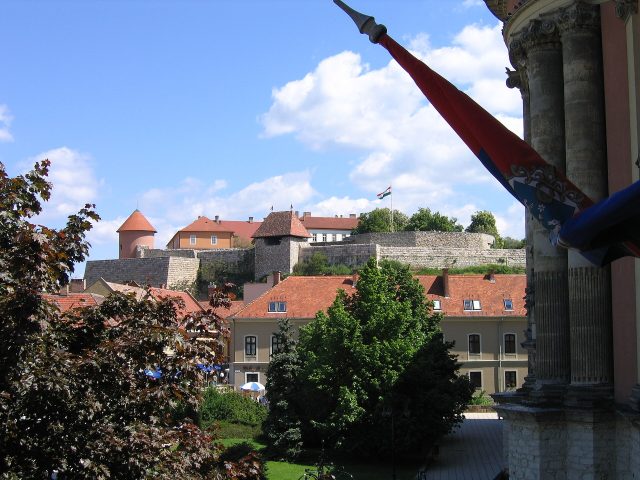
The lyceum isn’t just a school—it’s part of Eger’s identity. Perched on a hill, it overlooks the old town, its silhouette visible from across the city. For locals, it’s a familiar landmark, but its significance hasn’t faded. Many notable Hungarians—writers, scientists, politicians—passed through its doors, some returning later as teachers, continuing a tradition that began in the 18th century. The building has witnessed generations of students, each leaving their own mark while carrying forward the legacy of those who came before.
There’s a warmth to the lyceum that’s unexpected in such an old institution. It’s academic, yes, but not cold or distant. Perhaps that’s because it was never just a place of learning—it was a part of the city’s life. Concerts, lectures, and debates were held here, drawing not just students but the wider community. Even now, when the school is more private, that sense of openness remains. On certain days, the doors are thrown open to the public, inviting visitors to wander the halls, peek into classrooms, and feel the weight of history around them.
If you find yourself in Eger, it’s worth stopping by, even for a few minutes. You don’t need to seek out anything in particular—just stand in the courtyard, look up at the façade, and listen to the sounds drifting from inside. Maybe then you’ll understand why this city feels different. It’s not just that its past is preserved; it’s that the past is still alive here, breathing alongside the present.