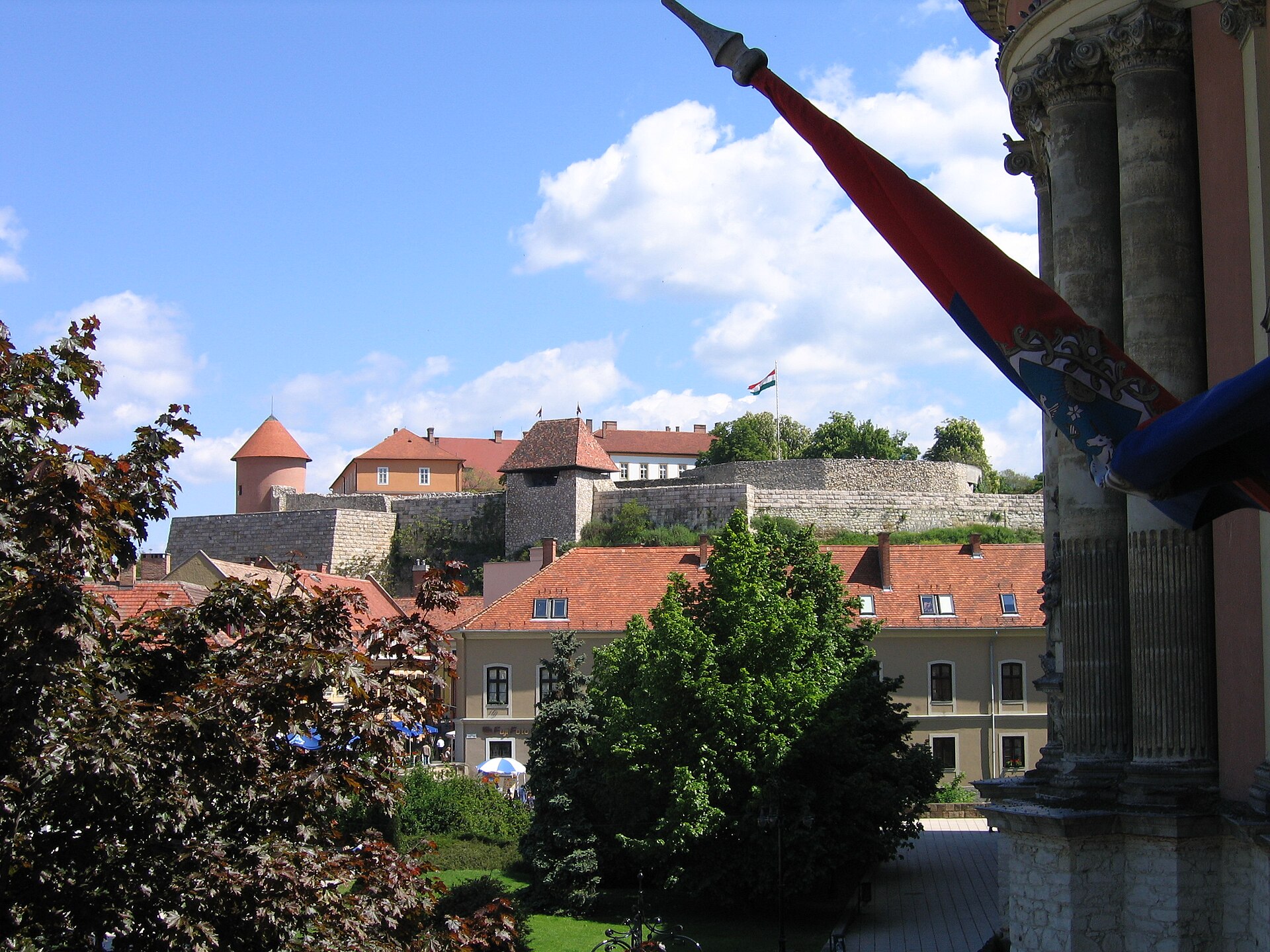
Perched on a hill above Eger, the fortress overlooks the town like a guardian of its past. Its stones remember sieges, battles, and the men who fought here—not just for land, but for something larger. When you climb the path to the entrance, you’re walking where they once stood, where decisions shaped a nation’s future.
The first walls went up in the 13th century, hurriedly built after the Mongols swept through Hungary. Wood and earth didn’t last; by the 14th century, stone replaced them. The bishop’s palace rose nearby, serving as both home and command center. Eger wasn’t just a fortress—it was a shield for the northern frontier, a place where power and faith intersected.
The siege of 1552 made the castle famous. István Dobó and a few hundred defenders held off thousands of Ottoman soldiers. The underground casemates still tell that story: weapons, maps, and letters from the time. One exhibit shows the wine barrels the Hungarians drank from during the battle—some say it’s why the phrase about blood being thicker than water stuck.
The fortress is a mix of eras. Medieval towers share space with Renaissance gates. Tunnels from the 1500s lead to storage rooms where gunpowder once sat. The Tower of István Dobó dominates the skyline; climb it, and you’ll see Eger spread below, the Mátra mountains hazy in the distance. Inside, the museum keeps swords, helmets, and tools—things people actually used, not just displayed.
By the 17th century, the castle had no more wars to fight. It became a prison, then a warehouse, then a museum. Restoration began in the 1800s, but not too much—just enough to keep the walls from crumbling. That’s why it still feels real. The stones are worn, the towers uneven, the air in the passages damp. It’s not a perfect reconstruction; it’s a place that’s lived.
Walk the ramparts. The stairs are narrow, the corridors echo. In summer, reenactors bring the past to life with tournaments and drills, but even without them, the fortress doesn’t feel empty. You can imagine the guards changing shifts, the gates groaning open for supplies, the shouts of lookouts warning of approaching danger.
Eger Castle doesn’t just show history—it lets you touch it. The cracks in the walls, the rough texture of the stones, the way the light slants through the arrow slits—it’s all here. If you’ve ever wanted to step into the past instead of just reading about it, this is where you do it.
The town of Eger stretches below, with the fortress at its heart. People come for the view, for the stories, for the way the walls glow at sunset. It’s not just a landmark; it’s a place that makes you pause. Why did they fight so hard? What would you have done in their place?
The hill is steep on the way down. But the questions linger.