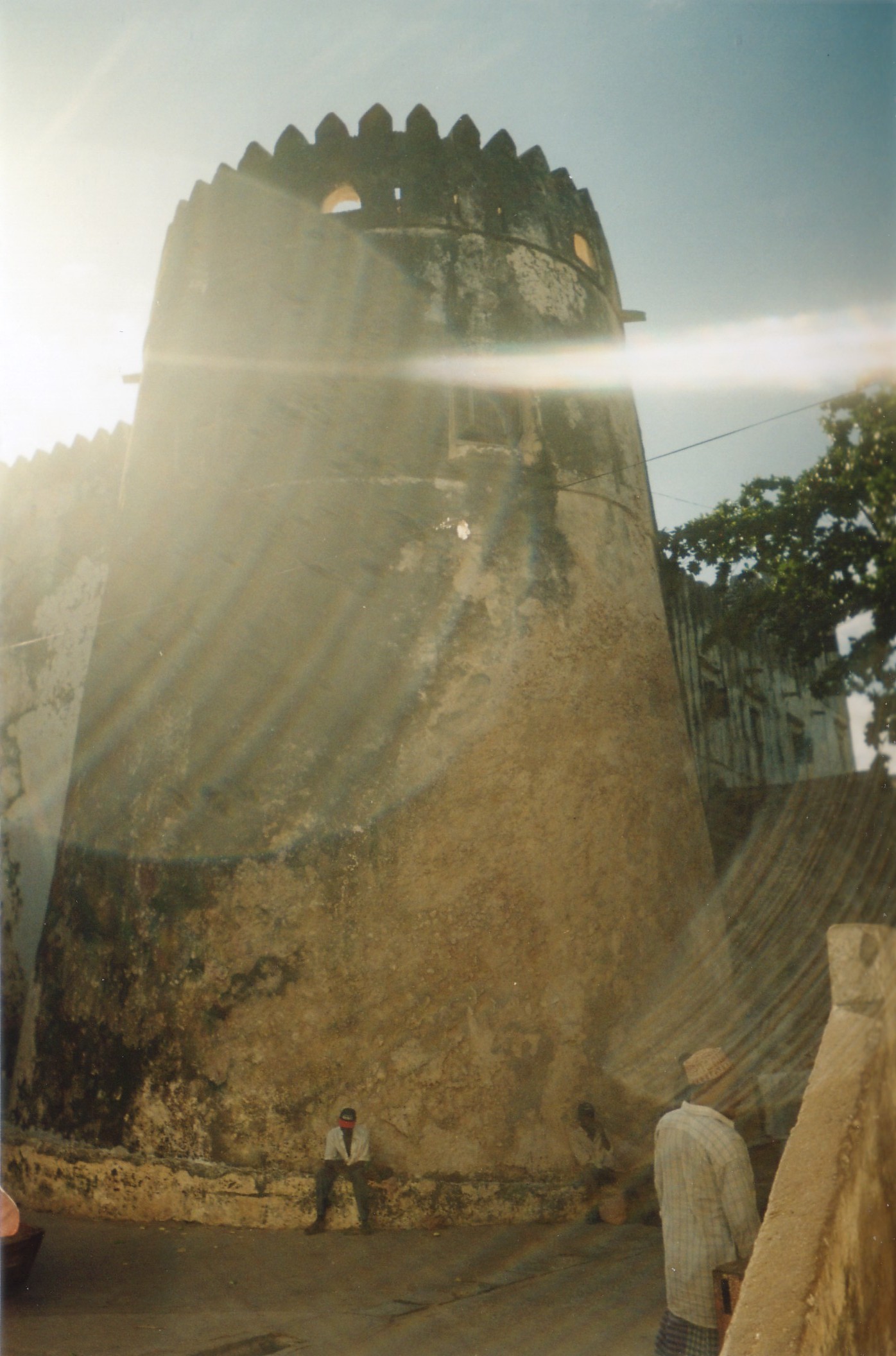
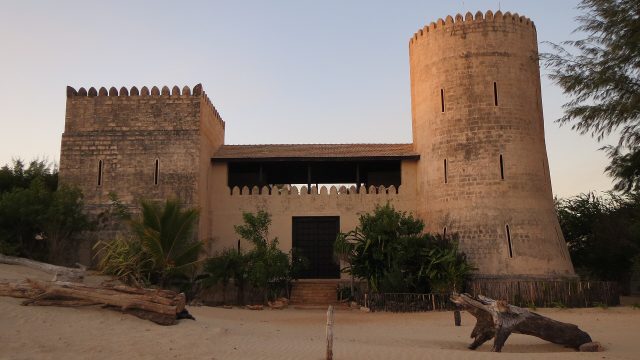
Lamu Fort stands as a quiet sentinel on the eastern edge of Lamu Island, its weathered coral walls bearing witness to centuries of trade, conflict, and cultural exchange along Kenya’s Swahili Coast. Built in the early 1800s under the orders of Omani Sultan Fumo Madi ibn Abubakr, the fort was meant to assert control over a region where Arab merchants, African communities, and European powers had long vied for influence. Construction dragged on for years, with laborers cutting coral stone from the island’s reefs to shape the thick, imposing walls. By the time the fort was finally completed in the 1820s, its original purpose had already shifted—Portuguese threats had faded, and Lamu was flourishing as a hub of commerce rather than a battleground.
The fort’s design reflects both its military origins and its later role as a center of local authority. Its square tower and arched inner courtyard were built to house soldiers, prisoners, and supplies, though the cannons mounted along its ramparts never saw real combat. Instead, the fort became a place where disputes were settled, taxes collected, and trade agreements negotiated. The Swahili Coast had long been a crossroads of the Indian Ocean world, and Lamu’s port thrived on the movement of ivory, spices, and other goods bound for Arabia, India, and beyond. The fort stood at the heart of this network, a symbol of stability in a region shaped by constant movement.
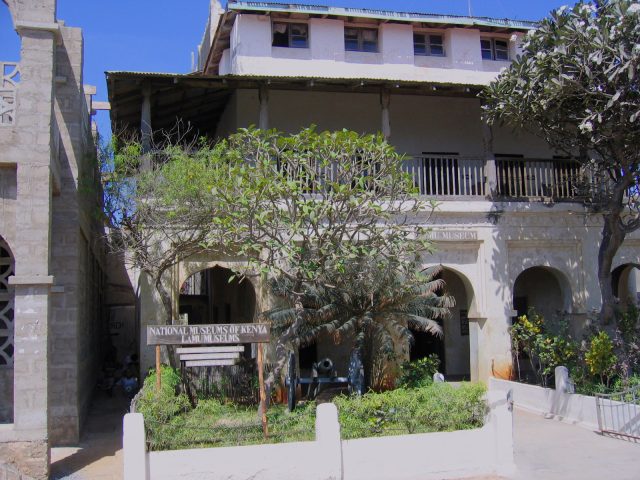
Inside, the fort’s thick walls now hold a small museum that offers a glimpse into Lamu’s past. The exhibits include intricately carved wooden chests, pottery, and old maps that hint at the island’s former wealth. One display focuses on Swahili architecture, showcasing the distinctive features of Lamu’s coral-stone houses—elaborate wooden doors, inner courtyards, and narrow verandas designed to catch the sea breeze. These elements are still visible in the town’s oldest neighborhoods, where time seems to move at a slower pace. The fort itself, with its rusted cannons and crumbling plaster, feels like a relic of another era, yet it remains a living part of the island’s identity.
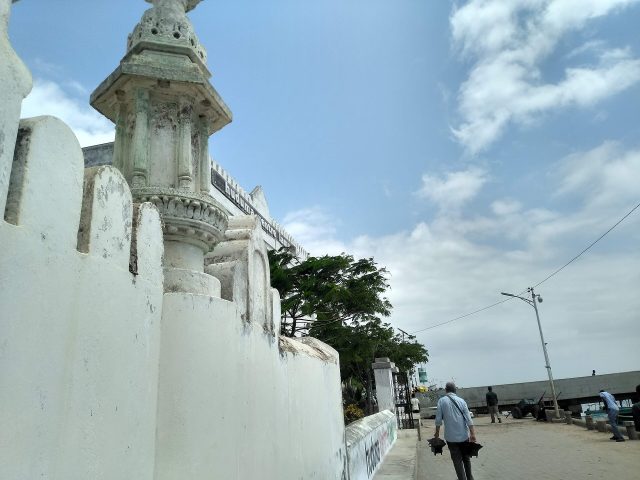
From the fort’s upper terrace, the view stretches over Lamu’s labyrinth of narrow streets, where donkeys—still the main mode of transport—amble between whitewashed houses. The town’s minarets rise above the rooftops, their calls to prayer blending with the sound of waves breaking against the shore. Traditional dhows, their lateen sails catching the wind, drift along the horizon, just as they have for centuries. The fort’s position overlooking the ocean makes it one of the best places to watch the sunset, when the light softens the rough edges of the coral walls and the air fills with the scent of salt and spices.
Lamu Fort is more than just a historical monument; it’s a reminder of how this small island once connected distant worlds. In its prime, Lamu was a place where African, Arab, and Persian cultures merged, creating a unique Swahili identity that endures today. The fort’s later years were less dramatic—by the 20th century, it had fallen into disrepair, its walls cracked and its rooms overgrown. But in the 1980s, restoration efforts brought it back to life, allowing visitors to walk through its corridors and imagine the bustle of its past. Today, it stands as a quiet counterpoint to the modern world, a place where history feels tangible rather than distant.
The fort’s atmosphere is one of stillness, a quality that defines Lamu itself. There are no cars here, no traffic noise, just the occasional creak of a wooden door or the distant hum of a motorboat. The island moves to its own rhythm, shaped by the tides and the seasons rather than the demands of tourism. For those who visit, the fort offers a chance to step outside of time, to wander through its cool, shadowed rooms and then emerge onto the sunlit terrace, where the ocean stretches endlessly before them. It’s a place that invites reflection, not just about the past, but about the quiet persistence of life in a corner of the world that has seen empires rise and fall.
What makes Lamu Fort special is its ability to evoke the layers of history without overwhelming the visitor. There are no grand reconstructions or flashy exhibits, just the raw, unpolished reality of a structure that has survived wars, neglect, and the slow passage of time. The fort’s walls hold stories—of traders haggling in the courtyard, of prisoners waiting in the cells below, of guards keeping watch over the harbor. But it also holds silence, the kind that allows you to hear the echoes of those stories if you listen closely enough. In a world that often feels too fast, too loud, Lamu Fort offers a rare sense of pause.