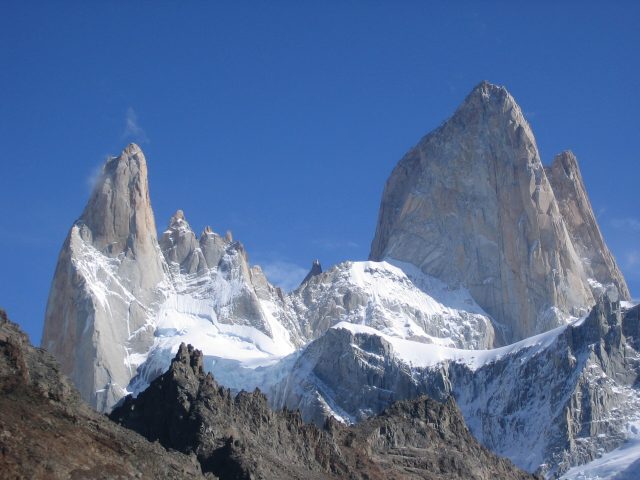
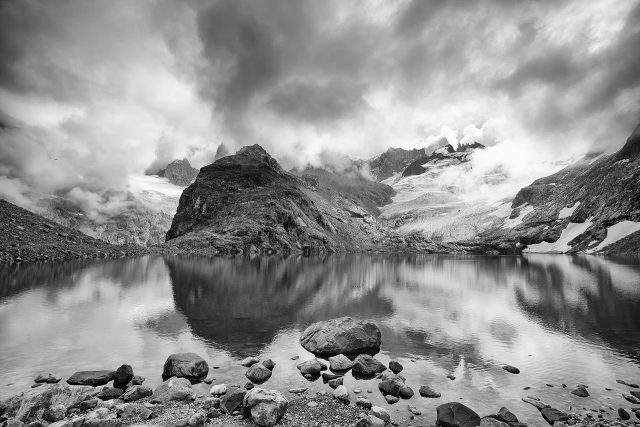
Laguna Capri might be one of Patagonia’s best-kept secrets—not because it’s hidden, but because those who seek it out are usually in search of something far quieter than a checklist of sights. Tucked away from the more crowded trails of Los Glaciares National Park, this small mountain lake sits cradled between jagged peaks and glaciers that seem to defy approach even from a distance. The only way to reach it is on foot, following a winding path that cuts through rocky slopes and patches of hardy vegetation. On clear days, the water takes on an impossible shade of turquoise, mirroring the sky and the snow-dusted summits above. More often, though, the wind ripples the surface, and low clouds drift in and out, obscuring the view as if the mountains themselves are playing hide-and-seek.
The name *Capri*—or *Capote*, meaning "cloak" or "cape"—fits the place perfectly. It’s easy to imagine the surrounding peaks draping themselves over the lake like a protective shroud. At nearly a thousand meters above sea level, Laguna Capri lies deep within the national park, where the landscape is defined by raw, untamed beauty. Unlike the trails leading to Laguna de los Tres or the base of Mount Fitz Roy, this one sees fewer visitors, making it ideal for those who prefer solitude over spectacle. The only sounds here are the wind, the occasional cry of a condor circling overhead, and the distant rumble of shifting ice.
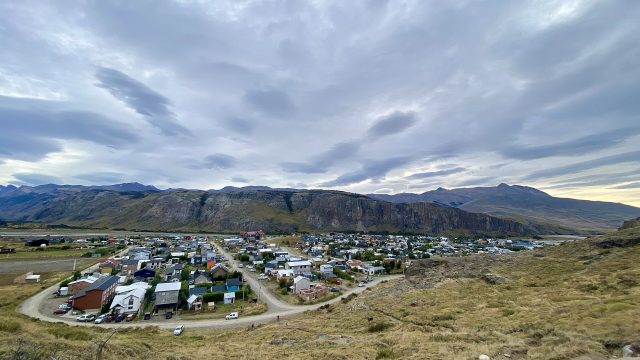
The hike begins in El Chaltén, a small village perched on the edge of the Patagonian steppe. While the route doesn’t require technical climbing skills, it’s far from effortless. The trail climbs steadily, with steep sections that test your stamina, especially when the weather turns—something that can happen multiple times in a single day. Loose scree demands careful footing, and small streams, which are little more than trickles in dry weather, can swell into rushing torrents after rain. Yet every switchback reveals something new: a sweeping view of the Fitz Roy River valley, the slow creep of Piedras Blancas Glacier down the mountainside, or the sudden appearance of the lake itself, its still waters framed by sheer rock walls.
This land has always been shaped by those who pass through it, rather than those who stay. Long before hikers and climbers arrived, the Tehuelche people considered these mountains sacred. They called the peaks *Chaltén*, meaning "smoking mountain," a reference to the clouds that often cling to the summits like smoke. By the early 20th century, explorers and mountaineers began venturing into the region, drawn by its untouched wilderness and the challenge of its unclimbed peaks. Today, the trail to Laguna Capri is part of that legacy—a path for those who want to experience Patagonia as it has always been: vast, indifferent, and breathtakingly wild.
The lake itself is a remnant of the glaciers that once carved these valleys. Its shores still bear the scars of their retreat, with moraines and polished rock telling a story of ice and time. The water is bitterly cold, rarely rising above ten degrees Celsius even in summer, though that doesn’t stop a few hardy souls from taking a dip. The landscape around the lake is sparse—no trees, just low shrubs and mosses clinging to life in the thin, wind-scoured soil. The air feels lighter here, as if the altitude and the proximity of the ice have stripped it of everything but clarity.
Laguna Capri isn’t the kind of place you visit for a quick photo or a story to impress friends back home. There are no viewing platforms, no cafés, no signs pointing out the obvious. It’s a destination for those willing to spend hours walking just to sit on a rock, watching the water and the mountains, and feeling the weight of something much larger than themselves. In moments like these, it’s easy to understand why Patagonia has always drawn people in. Here, the noise of the world fades, replaced by the kind of silence that makes you realize how small you are—and how lucky.
The return journey is usually quicker than the ascent, but the memory of the hike lingers. Even if the weather closes in and the lake disappears behind a curtain of rain, the experience remains vivid. After all, in a place like this, the destination is only part of the story. The rest is written in the rhythm of your steps, the changing light, and the way the wind carries the scent of damp earth and distant ice. El Chaltén and its surroundings offer something rare: a chance to step off the map entirely, whether that means standing by a remote lake, tracing the edge of a glacier, or simply following a trail that leads nowhere in particular. It’s a reminder that some of the best places aren’t destinations at all—they’re the quiet spaces in between.