Nestled along Sanatornaya Street in Gurzuf, the Laboratory Building is one of those quiet places that reveal their stories only to those who take the time to look. Built in the mid-20th century, it was once part of a scientific complex dedicated to medical and biological research. At the time, Gurzuf was already a well-known resort town, celebrated for its mild climate and breathtaking landscapes, but here, away from the bustling promenades, scientists worked on understanding the natural world and its impact on human health.
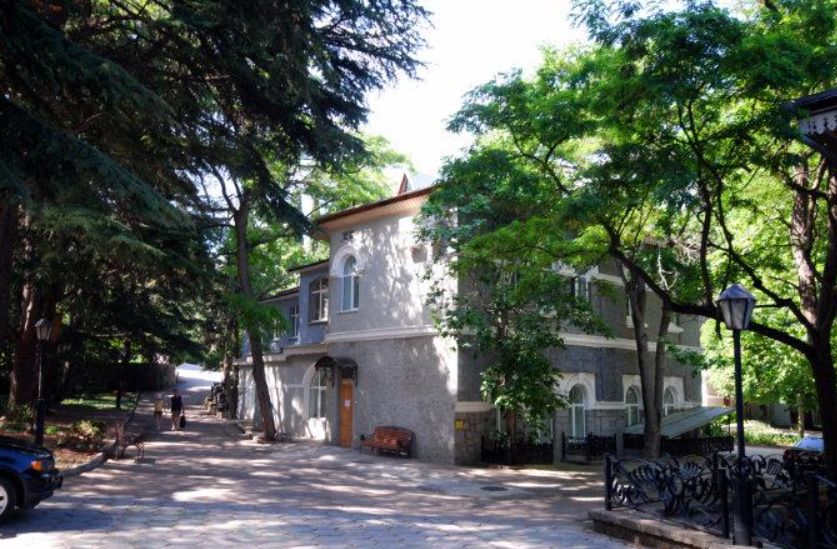
The building’s architecture is a clear example of Soviet functionalism—clean lines, minimal ornamentation, and a layout designed for practicality. It’s a modest two or three stories tall, with large windows that once flooded the laboratories with natural light. Today, the structure bears the marks of time, its weathered facade adding a layer of character rather than detracting from it. Old trees surround the building, and it blends seamlessly into the landscape, as if it has always been part of the scenery.
During the Soviet era, the laboratories here focused on marine biology and balneology, the study of therapeutic bathing and climate. Gurzuf’s unique microclimate and proximity to the Black Sea made it an ideal location for such research. Scientists explored the healing properties of sea air, water, and local flora, possibly laying the groundwork for practices later adopted across Crimean resorts. The specifics of those studies have faded over time, but the building itself remains a silent witness to that period of discovery.
Like many scientific institutions in Crimea after the Soviet Union’s collapse, the Laboratory Building fell into disrepair. Funding dried up, equipment became obsolete, and the structure was gradually abandoned. Yet it never vanished entirely—over the years, it served various purposes, some far removed from its original scientific mission. There have been whispers of restoration in recent years, but for now, those plans remain unrealized.
Today, the building is less a tourist attraction and more a curiosity for those with an eye for history. Few casual visitors stumble upon it, but those drawn to Soviet-era science or the allure of abandoned places find it easily. Inside, traces of its past life linger—peeling paint, remnants of old laboratory equipment, faded room numbers—all hinting at the bustling activity that once filled its halls. It’s easy to imagine the hum of research that once took place here, decades ago.
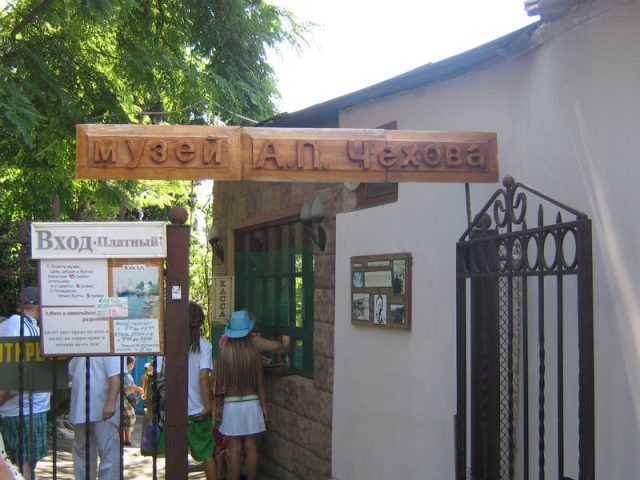
Gurzuf itself is a place steeped in history. Pushkin, Chekhov, and Gorky all spent time here, and in the Soviet era, the town became a hub of resort life. The Laboratory Building is just one small piece of that story, but it offers a glimpse into a different side of the resort—one of work, inquiry, and the pursuit of knowledge. It reminds us that even in a place known for leisure, there was once a world of discovery unfolding quietly in the background.
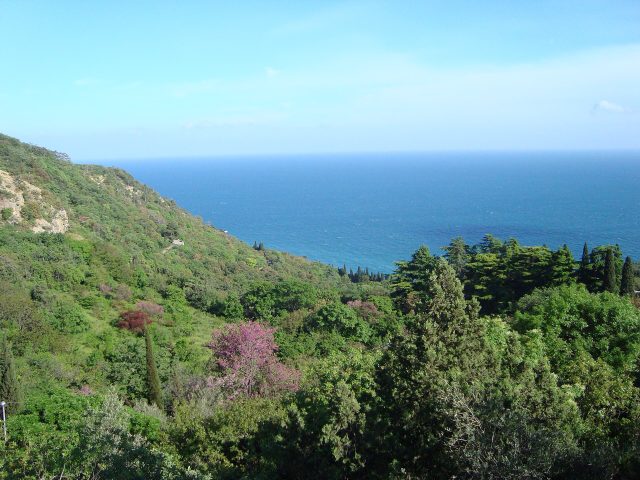
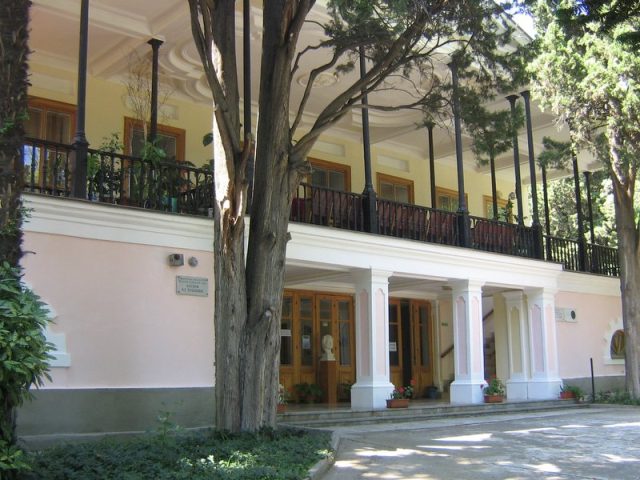
The area around the building reflects the layers of time that have shaped Gurzuf. Nearby stand grand old sanatoriums with their columns and balconies, modern hotels, and, just beyond, wild beaches and untouched cliffs that have remained unchanged for centuries. The Laboratory Building fits into this mosaic as a quiet reminder that even in a resort town, there was once a working life, with its own achievements and mysteries.
Perhaps one day, the building will find new purpose. It could house a museum of scientific history, a small research center, or even an artists’ studio. For now, it remains a quiet relic of the past, holding onto its secrets. But for those willing to look closely, it has stories to tell—if only you take the time to listen.