La Corona is one of those places in Guatemala that few know about, yet it leaves visitors with the sense of having found something rare. Tucked within the jungles of Petén, this ancient Maya city has lived in the shadow of its neighbors, like Tikal or El Mirador. Unlike those sites, La Corona invites you to linger, to piece together its story at your own pace rather than rush past ruins. It’s not a place for quick snapshots—it’s a conversation with history, one that unfolds beneath the canopy of ceiba trees and howler monkey calls.
The city flourished between the 6th and 9th centuries, though its roots stretch back to the 3rd century. Originally called Sak Nikte’, or "White Flower," it sat at a crossroads, linking Tikal with other Maya centers, including Calakmul in Mexico. This position made it a hub for trade, diplomacy, and cultural exchange. Caravans carrying jade, obsidian, and quetzal feathers passed through its plazas, while rulers met to forge alliances or negotiate war. The city’s influence wasn’t in size but in its role as a bridge between dynasties.
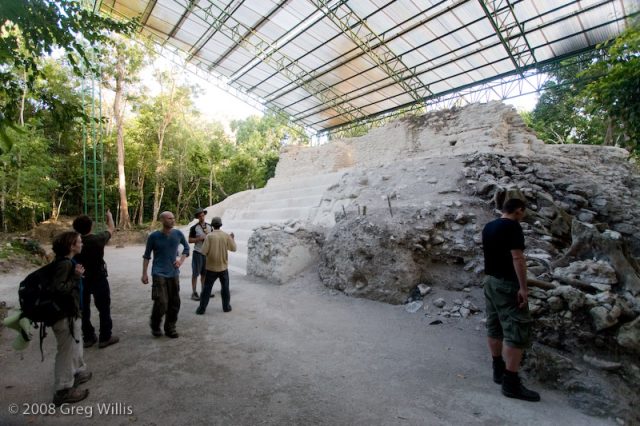
What remains of La Corona today is modest. There are no soaring pyramids, no vast ceremonial centers. Instead, the ruins feel intimate—low temples with crumbling staircases, stelae carved with glyphs, and palace remnants where nobles once gathered. Stela 1 depicts the reign of a ruler named Chak Ak’ Tok Ich’aak. The carvings record battles, marriages, and religious ceremonies. They also show La Corona’s allegiance to Calakmul during its rivalry with Tikal.
In 2012, archaeologists uncovered the Hieroglyphic Stairway, a stone block with inscriptions. It confirmed La Corona’s role in the power struggle between Tikal and Calakmul. The block referenced the end of a Maya calendar cycle in 2012, a date the Maya saw as a transition, not an apocalypse. Such discoveries show that history is often more complex than the myths around it.
Visiting La Corona is as much about the journey as the destination.
The site lies far from the well-trodden paths of Petén. From Santa Elena de la Cruz, travelers reach La Libertad, then endure hours of rough roads that turn to mud in the rainy season. There are no signs, no tourist buses. What you find instead is a place where the past and present coexist without modern tourism. The air hums with cicadas and distant chainsaws—archaeologists still work here, uncovering more of the city’s secrets.
The jungle has reclaimed much of La Corona. Vines creep over stone walls, roots split ancient platforms, and toucans flit between the trees. The ruins are scattered, so you might wander for an hour without seeing another soul. There’s a sense of discovery in every step, as if the jungle decides what to reveal.
For those who make the effort, La Corona offers a chance to experience history without crowds or souvenir stands. You can sit on a weathered stone and trace the carvings, wondering about the hands that shaped them centuries ago. The silence here is full of echoes, of voices that once filled these spaces. Time feels fluid, where the past isn’t just remembered but felt.
The people who live near La Corona see it as a living connection to their ancestors. Many work on excavations or guide travelers through the jungle, sharing stories passed down through generations. You might hear about local legends, like the spirits said to guard the ruins, or rituals still performed in nearby villages. These encounters show that the Maya world didn’t vanish—it adapted while holding onto old traditions.
La Corona is a reminder that the Maya civilization included countless cities like this one, each with its own struggles. There’s no pomp here, no attempt to impress. The place exists on its own terms. It doesn’t demand your attention; it waits, letting you decide what it means to you. For some, it’s a window into the past. For others, a retreat into nature. For a few, just a quiet corner where the weight of history feels lighter.