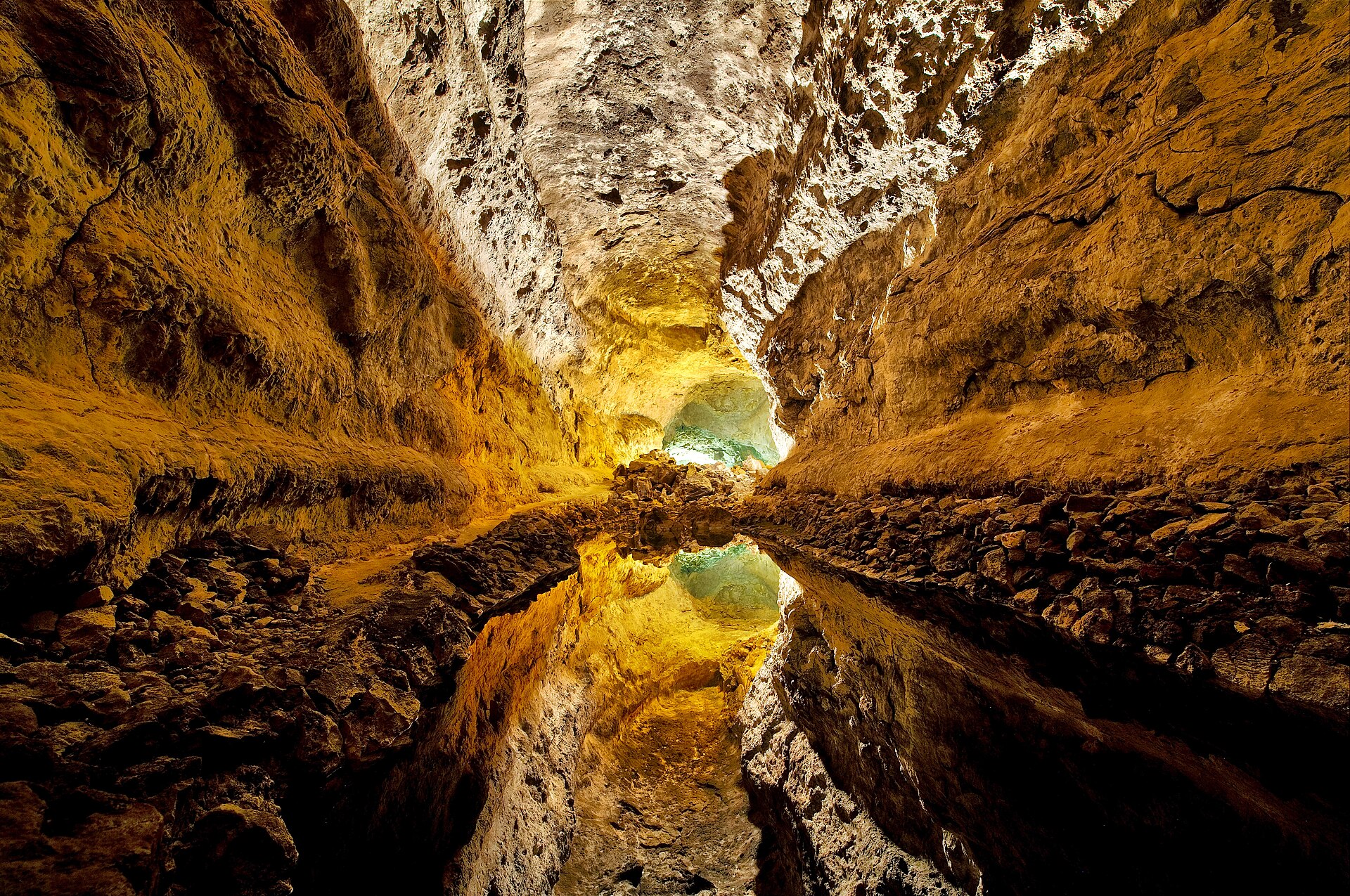
Cueva de los Verdes is one of those rare places on Lanzarote where time seems to stand still. Formed around three thousand years ago during the eruption of the La Corona volcano, this lava tube is a remnant of the island’s fiery past. As molten rock flowed toward the ocean, its outer layers cooled and solidified, while the lava beneath continued to drain away, leaving behind a vast underground tunnel. Today, only a fraction of its length is open to visitors, but even this short stretch offers a glimpse into the raw power of nature.
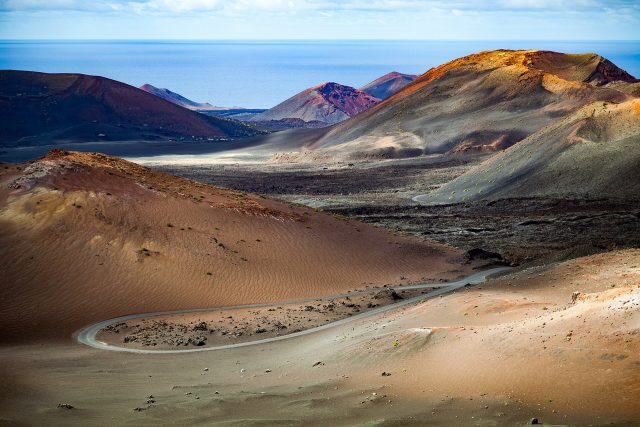
The entrance lies in the island’s rugged northern reaches, where black volcanic rock meets the endless Atlantic. The approach itself feels like stepping into another world—barren lava fields stretch in every direction, dotted with patches of hardy lichen, while the wind carries the salt tang of the sea. For centuries, locals knew of the cave’s existence, but it remained hidden from outsiders until the mid-20th century, when it was carefully adapted for visitors without disturbing its untamed character.
Walking through Cueva de los Verdes is less about sightseeing and more about experiencing the island’s geological heartbeat. The walls are a canvas of frozen lava, their textures shifting from smooth ripples to jagged formations that look like sculptures carved by unseen hands. In some places, the ceiling has collapsed, letting in slivers of sunlight, but most of the path winds through dimly lit chambers, where the only colors are shades of black, gray, and ochre. The air is cool and still, broken only by the occasional drip of water from above.
One of the most striking features is the so-called Concert Hall, a cavern with remarkable acoustics. Occasionally, small musical performances are held here, and the sound carries in a way that feels almost otherworldly, as if the cave itself is singing. Even without music, the space has its own rhythm—the whisper of wind through narrow passages, the echo of footsteps, the distant plink of water. It’s easy to imagine how this place might have felt to those who sought refuge here long ago.
The cave’s history is deeply woven into Lanzarote’s past. Centuries ago, when pirate raids were a constant threat, locals used it as a hiding place for livestock, supplies, and even families. The entrance could be sealed off, making it nearly impossible for intruders to find. Today, there are no visible traces of that era, but the cave’s atmosphere still carries a sense of quiet resilience, as if it remembers those who once relied on its shelter.
The guided walk takes about an hour, covering just a small portion of the cave’s total length. Yet even this brief journey leaves a lasting impression. In some sections, the walls are so smooth they look polished, though they were shaped not by human hands but by the slow work of water and wind over millennia. It’s a reminder of how much the island has been molded by forces far greater than any human effort.
Stepping back into the daylight, it’s hard not to wonder what other secrets Lanzarote keeps beneath its surface. Cueva de los Verdes is just one of many lava tubes on the island, but it stands out as a testament to the island’s untamed beauty. There are no grand palaces or bustling resorts here—just silence, stone, and the vastness of the ocean, a humbling reminder of nature’s enduring power.
Visiting the cave doesn’t require any special preparation, though comfortable shoes and a light jacket are a good idea—the temperature inside stays cool year-round. Guides lead tours regularly, sharing stories about the cave’s geology and the legends that have grown up around it. But even without their words, the cave speaks for itself. All you have to do is listen.