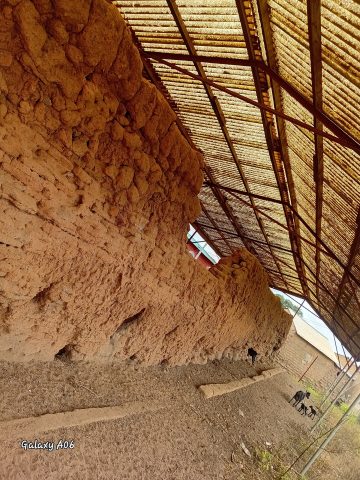
Wa Fort is one of those rare places where time seems to have paused, not just preserving stone and mortar, but the very essence of an era. Perched on a gentle rise in the heart of Wa, the capital of Ghana’s Upper West Region, it overlooks the surrounding savanna and the low, earthen houses with thatched roofs that still define the landscape. Unlike the more famous coastal forts tied to the transatlantic slave trade, Wa Fort carries a quieter but no less significant history. Built in the early 19th century by the Wala people, it was more than a military stronghold—it was a symbol of authority, a hub of commerce, and the administrative heart of a thriving kingdom.
The architecture reflects the practical needs of its time, blending local techniques with the demands of defense. The walls, thick in places and built from clay and stone, were designed to withstand attacks and the relentless sun. Inside, the remains of living quarters, storage rooms, and even prison cells hint at the daily life that once filled these spaces. The main gate, framed by heavy wooden doors, opens into a courtyard where the past lingers in the worn steps and the shadows cast by nearby acacia trees. There’s no grand restoration here, no polished surfaces—just the raw, unfiltered texture of history.
For the Wala people, the fort was the nucleus of their world. Wa sat at the crossroads of trade routes linking the interior of West Africa to the coastal cities, and the fort ensured the safety of merchants dealing in salt, gold, cloth, and, yes, enslaved people. The Wala were known for their warrior culture and diplomatic skill, and the fort was their anchor in both war and peace. Even after the British arrived in the late 19th century, it remained an administrative center, though its influence gradually waned as colonial rule reshaped the region.
Today, the fort feels quietly abandoned, and that’s part of its charm. There are no crowds, no guided tours, no signs urging visitors to hurry along. The pace here is slow, almost reluctant, as if the place itself is still adjusting to the passage of time. Locals treat it with familiarity rather than reverence—it’s part of their history, not a relic to be gawked at. You might find shepherds bringing their livestock to graze in the courtyard or children playing in the shade of the walls. In the late afternoon, when the sun dips below the horizon, the fort glows in the golden light, and the silence feels heavy with stories waiting to be told.
Visiting Wa Fort isn’t like stepping into a museum. There are no plaques explaining its significance, no audio guides narrating its past. Instead, it invites you to wander, to touch the rough walls, and to imagine the voices that once filled this space—traders haggling over goods, warriors preparing for battle, rulers making decisions that shaped lives. Beyond the fort, the city of Wa moves at its own rhythm. Women sell produce in the market, men gather under trees to discuss the day’s affairs, and goats and chickens wander freely through the streets. Here, the past and present coexist without friction, each leaving the other undisturbed.
The fort is a reminder that Ghana’s history isn’t just about the coastal forts and colonial legacy. It’s also about the inland kingdoms, the trade networks, and the people who built their lives far from the ocean. Wa Fort stands as a silent witness to a time when Wa was a key city in the north, a place of power and influence. It may not have the grandeur of European castles, but its strength lies in its authenticity. There’s no need for embellishment when the truth is this compelling.
For travelers who venture beyond Ghana’s beaches and wildlife reserves, Wa Fort offers something rare—a glimpse into the country’s deeper, less polished history. There are no souvenir shops or cafes here, no curated experiences. Instead, there’s space to reflect, to sit quietly, and to see Ghana from a different angle. Time moves differently in Wa, and perhaps that’s why the fort still holds so many untold stories, waiting for those willing to listen.