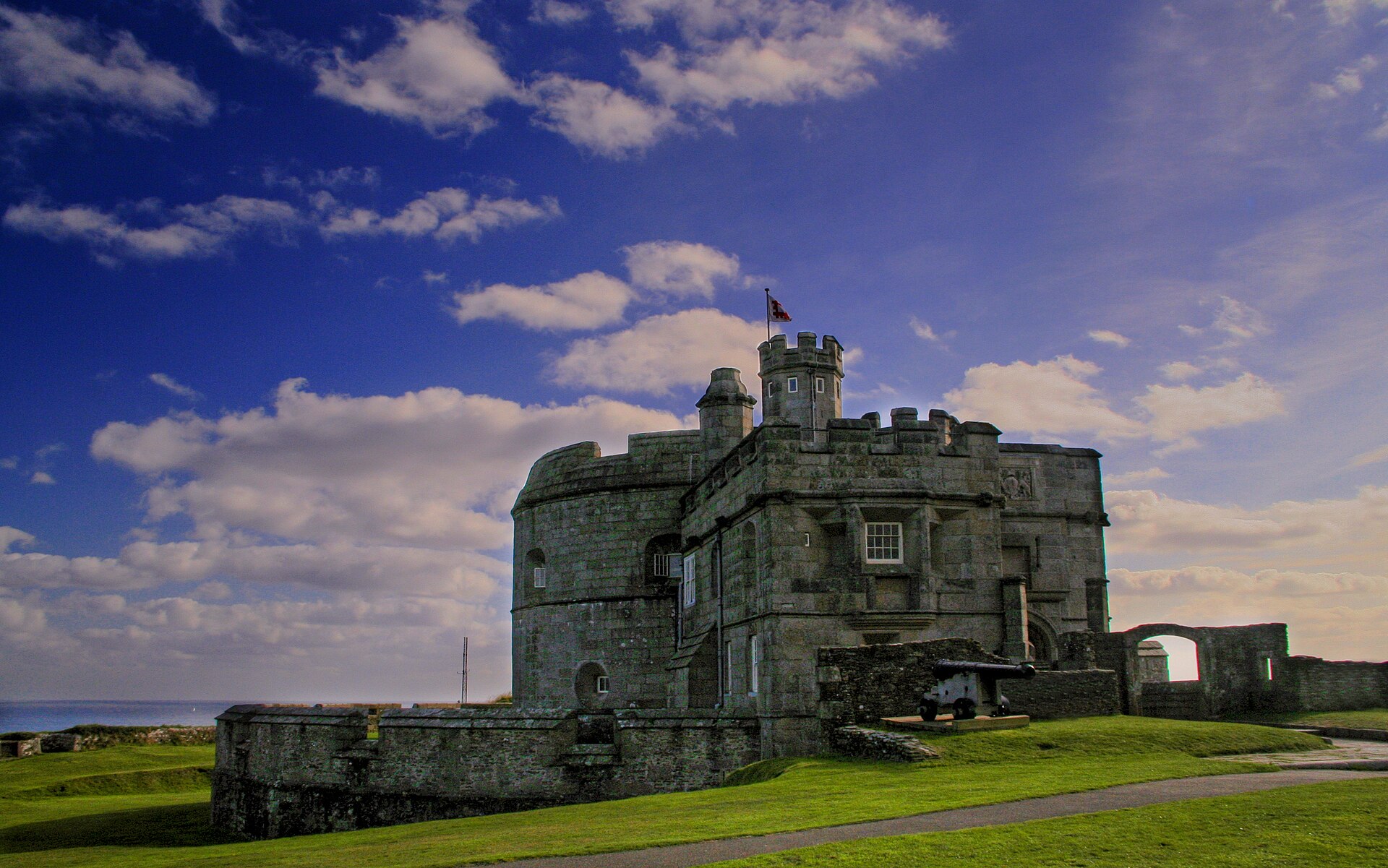
Perched on a jagged headland where the Fal Estuary meets the English Channel, Pendennis Castle has stood guard over Cornwall’s southern coast for nearly five hundred years. Built in the 1540s on the orders of Henry VIII, it was part of a chain of coastal fortresses designed to defend England from invasion, a response to the growing threat of Spanish naval power. Alongside its sister fortress, St Mawes, just across the water, Pendennis was meant to block enemy ships from reaching Falmouth, one of the deepest natural harbours in western Europe. The location was chosen with care—high enough to command sweeping views of the sea, yet close enough to the shore to control the narrow entrance to the estuary. From here, gunners could track every vessel that passed, ready to fire at a moment’s notice.
The castle’s design reflects the brutal pragmatism of Tudor military engineering. At its heart lies the circular keep, a squat, thick-walled structure that was both living quarters and last line of defence. Surrounding it are earthworks and ditches, originally flooded to slow down attackers, along with a series of gun platforms and bastions. The most imposing of these is the Grand Battery, its low, sloping walls built to absorb cannon fire while offering a clear line of sight over the water. Inside, the casemates—vaulted chambers where artillery was once housed—still bear the marks of centuries of use. Narrow embrasures, barely wide enough for a cannon’s barrel, frame the same views that sentries once scanned for enemy sails. Even the underground passages, twisting through the rock, were designed for more than just storage; they allowed troops to move unseen between different parts of the fortress.
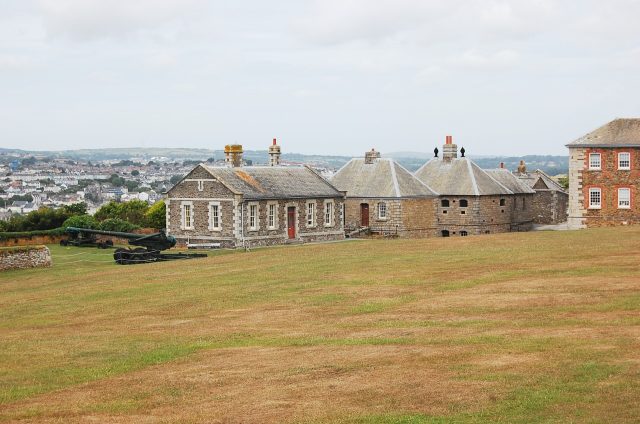
Pendennis played a dramatic role during the English Civil War, becoming one of the last Royalist strongholds to fall. In 1646, after Parliamentarian forces laid siege, the garrison held out for five months, enduring hunger and dwindling supplies before finally surrendering. The siege was a grim affair, with defenders reduced to eating horses and dogs, yet their resistance became a point of pride in Cornwall, a region that had long chafed under distant rule. Even after the war, the castle remained a military asset. In the 18th and 19th centuries, it was repeatedly updated—new gun emplacements were added, walls were reinforced, and the defences were adapted to keep pace with advances in artillery. By the time of the Napoleonic Wars, Pendennis was part of a network of coastal batteries ready to repel a French invasion that never came.
During the Second World War, the castle found itself on the front lines once again. Anti-aircraft guns were installed on its ramparts, and its underground tunnels were repurposed as command centres and storage for munitions. The threat this time came from the air, but the principle was the same: to protect the approaches to Falmouth, which had become a vital supply port for Allied convoys. Today, the wartime modifications are still visible—graffiti left by soldiers on the tunnel walls, rusted remnants of equipment, and the faint outlines of gun positions. Walking through these spaces, it’s easy to imagine the tension of those years, the waiting, the sudden alarms, and the relief when the all-clear sounded.
What makes Pendennis more than just a collection of old stones is the way it sits in the landscape. The headland is exposed to the full force of the Atlantic, with winds that can whip the waves into a frenzy and gulls that wheel overhead, their cries echoing off the cliffs. On a clear day, the view stretches for miles—past the estuary, where boats bob at anchor, to the open sea beyond. The light here is different, sharper, as if the air itself carries the salt and spray of countless storms. It’s a place that feels remote, even though the town of Falmouth is just a short walk away. That sense of isolation is part of its character; for centuries, this was a world unto itself, a self-contained fortress where the rhythms of life were dictated by the tides and the ever-present possibility of attack.
Cornwall has always been a place apart, with a history shaped by its rugged coastline and its people’s stubborn independence. Pendennis embodies that spirit. It was never a grand palace or a showpiece of royal power, but a working fortress, built to endure. The men who served here—soldiers, gunners, engineers—lived hard lives, far from the comforts of London or the courts of kings. Their world was one of damp stone, salt-stiffened uniforms, and the constant vigilance of watch duty. Yet there was pride in it, too. This was a place that mattered, a bulwark against invasion, a silent sentinel over the sea lanes that connected England to the wider world.
Visiting Pendennis today is less about admiring architecture than about stepping into a different time. There are no ornate interiors or manicured gardens here, just the raw, unpolished reality of a fortress that has seen war, siege, and centuries of quiet decay. The buildings are solid, unadorned, their purpose always more important than their appearance. The best way to experience the castle is to walk its ramparts, to stand where the gunners once stood, and to look out over the water as they did. On a still day, the sea is a sheet of glass, reflecting the sky; on a stormy one, it churns and crashes against the rocks below. Either way, it’s easy to understand why this place was chosen, why it was defended so fiercely, and why it still feels like a threshold between land and sea, past and present.
What lingers after a visit to Pendennis isn’t just the history, but the sense of continuity. The castle has outlasted the empires that built it, the wars it was meant to fight, and the generations of soldiers who called it home. It has watched as sail gave way to steam, as wooden ships were replaced by ironclads, and as the threats to England’s shores shifted from Spanish galleons to German bombers. Yet through it all, it has remained what it was always meant to be: a fixed point in a changing world, a reminder that some things—land, sea, the need to defend what is yours—endure. The wind still howls through its battlements, the waves still break against the rocks, and if you listen closely, you might just hear the echoes of the past in the sound of the surf.