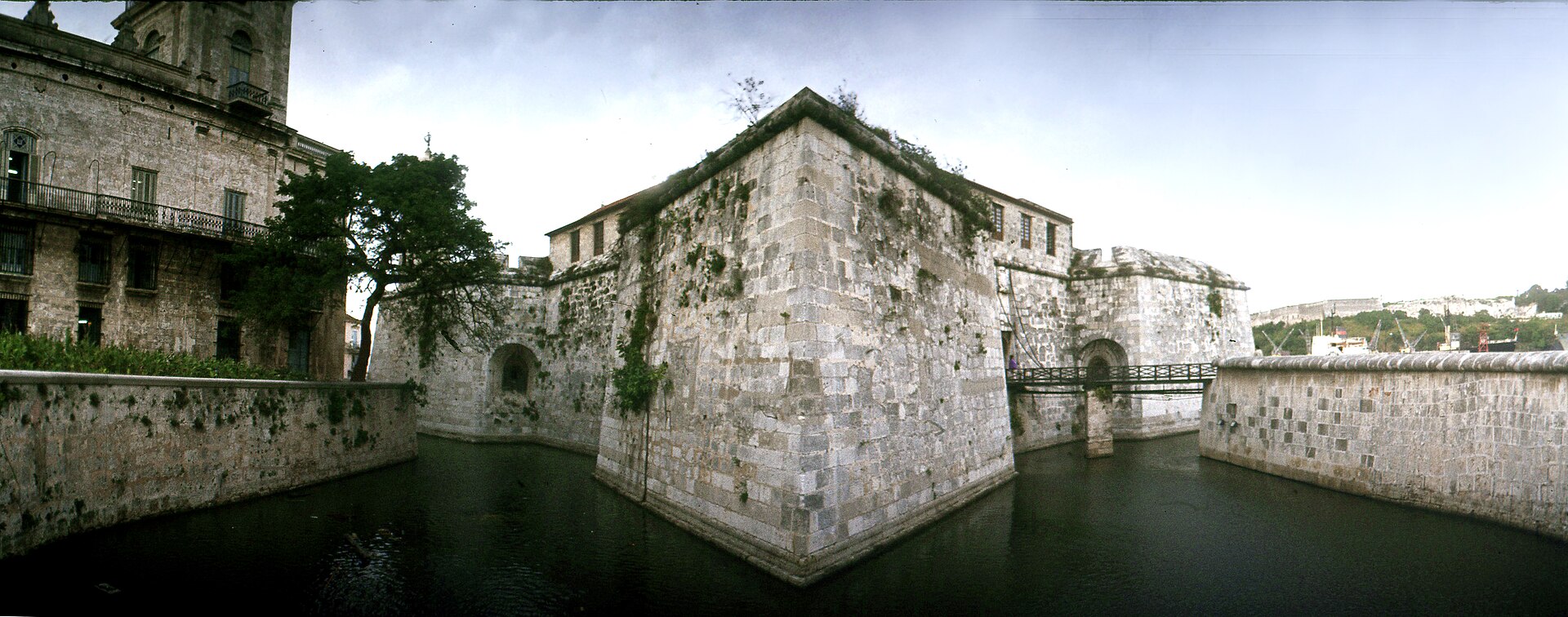
La Real Fuerza is one of those rare places in Old Havana where time seems to slow down, as if the centuries have settled into its stone walls like salt in the sea air. Perched on the edge of the bay, it has watched over the water for nearly five hundred years, its presence so constant that it feels less like a fortress and more like a silent witness to the city’s unfolding story. Built in the mid-1500s, it was Cuba’s first stone fortress, conceived not just as a military stronghold but as a statement—proof that the Spanish crown could hold its ground in the turbulent Caribbean. Today, its thick walls and sturdy bastions no longer fend off pirates or invading fleets, but they still carry the weight of history, heavy with the echoes of a time when Havana was little more than a vulnerable outpost on the edge of an empire.
The architecture of La Real Fuerza is a textbook example of Spanish colonial military design, practical and unadorned, built to withstand sieges and cannon fire. The low vaulted ceilings, narrow gun slits, and massive stone blocks give it an air of impregnability, though in truth, the fortress saw little actual combat. Its real power lay in deterrence—its mere existence was meant to discourage attacks before they began. Inside, the old casemates where gunpowder and weapons were once stored now stand empty, their dark interiors cool even in the midday heat. The underground passages leading to the sea, once used to smuggle supplies or escape under cover of night, are now quiet, their purpose long forgotten. But if you listen closely, the past doesn’t feel so distant. The creak of wooden wheels, the murmur of soldiers, the distant clang of a blacksmith’s hammer—these sounds are no longer here, but the fortress remembers them.
The most recognizable feature of La Real Fuerza is its tower, crowned by a weather vane known as La Giraldilla. This slender bronze figure of a woman, her dress billowing in an eternal breeze, has become one of Havana’s most enduring symbols. She represents Inés de Bobadilla, the wife of one of Cuba’s earliest governors, who, according to legend, spent years scanning the horizon for her husband’s ship. He never returned, and neither did she—at least not in the way she had hoped. The story is likely more myth than fact, but that hasn’t diminished its hold on the city’s imagination. Today, La Giraldilla is more than just a decorative flourish; she’s a reminder of how history and legend intertwine in Havana, where every stone seems to carry a story, and not all of them are true.
Inside the fortress, a small but thoughtful museum traces Cuba’s maritime history, from the days of Spanish galleons to the rise of the island as a key player in Caribbean trade. The exhibits are modest—old maps, scale models of ships, navigational instruments, and a few rusted cannons—but they offer a glimpse into a world where Havana was a vital link between the Old World and the New. The museum is rarely crowded, and the quiet makes it easy to linger over the details: the delicate lines of a 16th-century astrolabe, the worn edges of a sailor’s logbook, the sheer size of the cannons that once guarded the harbor. There’s a sense of intimacy here, as if the past is being shared in confidence, not shouted for the benefit of tourists.
But La Real Fuerza is more than just a museum or a monument. It’s a place where history and everyday life overlap, where the past isn’t preserved behind glass but woven into the fabric of the city. From its ramparts, the view of Old Havana is one of the best in the city: the red-tiled roofs of colonial buildings, the spires of churches, the fishing boats bobbing in the harbor, and beyond them, the endless blue of the sea. In the late afternoon, when the sun dips low and the light turns golden, the fortress casts long shadows over the plaza below. Locals come here to escape the heat, to sit on the stone benches with their children, or to steal a quiet moment with someone they love. For them, La Real Fuerza isn’t just a tourist attraction; it’s part of the neighborhood, as familiar as the corner bodega or the old man who sells newspapers on the street.
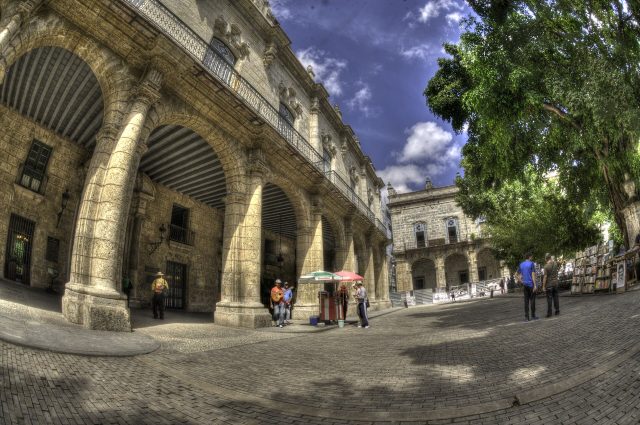
The fortress has never been cut off from the life of the city. Even in its military heyday, it was surrounded by bustling activity—markets, trials, even the occasional festival. Today, the plaza in front of it is a lively gathering spot, especially on weekends, when musicians play son cubano, artists display their paintings, and the air fills with the scent of roasted peanuts and strong coffee. In the shade of the walls, old men play dominoes with the intensity of generals planning a battle, while young couples pose for photos in front of the cannons. The fortress doesn’t feel like an open-air museum; it feels alive, still shaping and being shaped by the city around it.
If you visit early in the morning, before the crowds arrive, you might catch a glimpse of the fortress as it was meant to be seen—not as a relic, but as a living part of Havana’s rhythm. The only sounds are the cry of seagulls, the lap of waves against the seawall, and the occasional clatter of a bicycle on the cobblestones. In those quiet moments, it’s easy to imagine what it must have been like four centuries ago, when Havana was a tiny settlement clinging to the edge of a vast and dangerous sea. Back then, La Real Fuerza was the city’s only shield, its last line of defense. Today, it’s something else entirely—a symbol of endurance, a place where the past isn’t just remembered but still felt, in the cool touch of the stone, the salt on the breeze, and the way the light falls across the bay.